













by Wayne Campbell
“Bees provide essential services to our ecosystems and are the major pollinators of many of our staple foods.” Dr Alice Hughes.
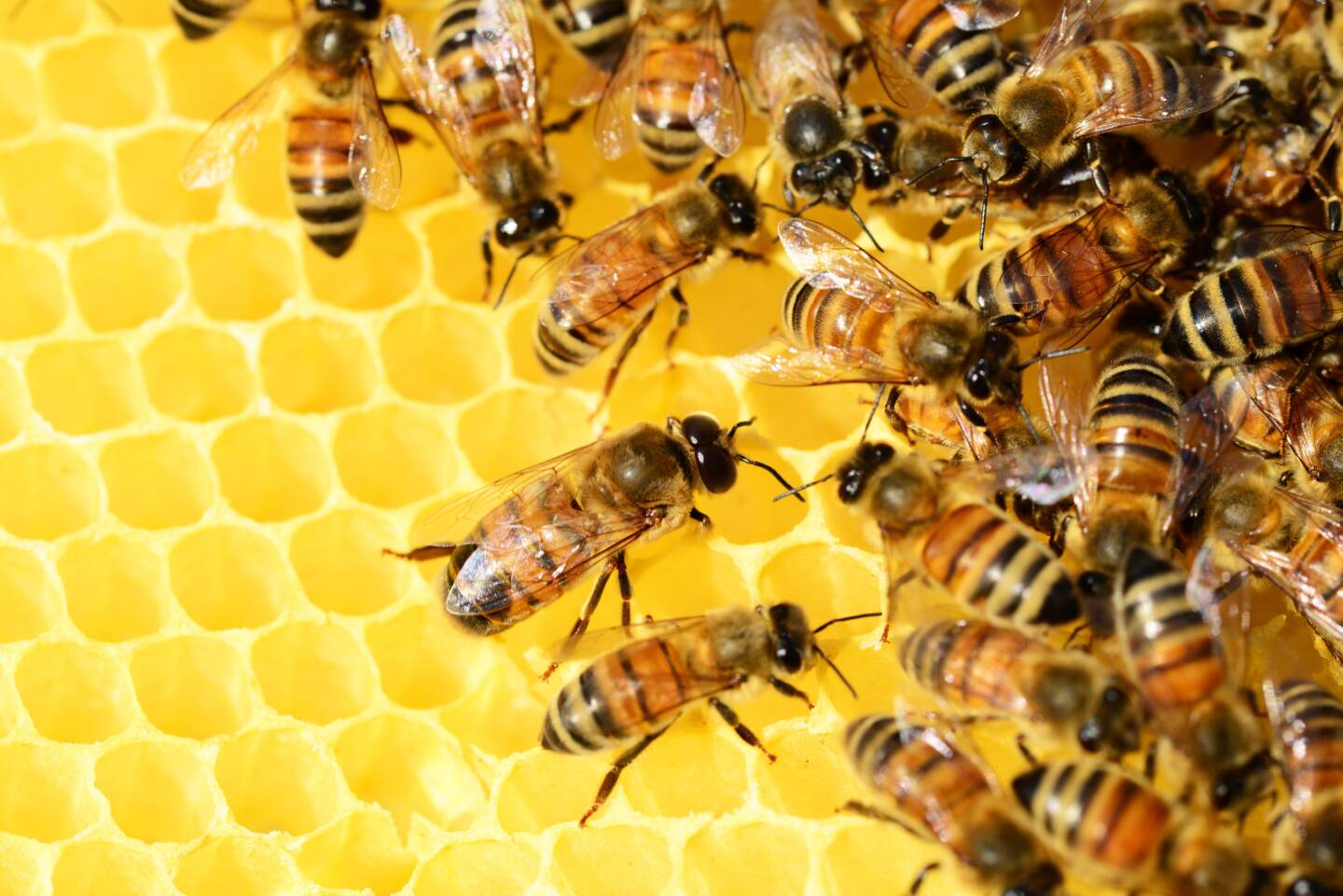
Did you know that there are over 20,700 different bee species (and counting) that have been discovered and described by science around the world? To put this in perspective, that is more than all of the world’s bird and mammal species combined! New bee species continue to be found every year. Some species, such as honeybees, bumblebees and stingless bees, live in colonies, while others are solitary insects. Although some groups, such as bumblebees, are well studied, the vast majority, more than 96% of bee species, are poorly documented. Additionally, there are over 600 stingless honey bee species found across the tropical and subtropical regions around the world. These bees live in large colonies, usually in tree hollows, and they make delicious and healthy honey.
Since 2018, the international community has been observing World Bee Day. World Bee Day is observed annually on 20 May. This day provides an opportunity for all of us, whether we work for governments, organisations or civil society or are concerned citizens, to promote actions that will protect and enhance pollinators and their habitats, improve their abundance and diversity, and support the sustainable development of beekeeping. The date for this observance was chosen as it was the day Anton Janša, a pioneer of modern apiculture, was born. Janša came from a family of beekeepers in Slovenia, where beekeeping is an important agricultural activity with a long-standing tradition.
This year’s theme is “Bee Together for People and the Planet. A partnership that sustains us all.” It highlights the enduring, historical connection between humans and bees, as well as the need for collaborative action to protect pollinators from modern threats. World Bee Day 2026 focuses on how humans and bees have been working together to nourish and sustain people and the environment. It will highlight the evolution of beekeeping across diverse cultures and landscapes over thousands of years, while promoting innovative approaches that improve bee production and health, and support the livelihoods of beekeepers, including women and youth. World Bee Day also emphasises how both traditional knowledge and modern technologies can contribute to sustainable beekeeping, and how partnerships and inclusive approaches can help secure a sustainable future for both pollinators and people, while advancing the transformation of agrifood systems.
In recognition of World Bee Day, the Caribbean Agricultural Health and Food Safety Agency (CAHFSA) highlights the important role bees and other pollinators play in supporting agriculture, biodiversity, and food security across the Caribbean. CAHPSA is an intergovernmental institution established by the Caribbean Community (CARICOM) dedicated to enhancing regional agricultural health, food safety, and facilitating agricultural trade. By raising awareness of the importance of bees and pollinator protection, CAHFSA continues to support efforts that promote safe, resilient, and sustainable agricultural systems throughout the region.
Pollinators are disappearing at an alarming rate. Wild bees, butterflies, hoverflies, moths and other species are under growing pressure from habitat loss, intensive agriculture, pollution, invasive species and climate change. The consequences reach far beyond nature. Pollinators support food systems, ecosystem resilience and biodiversity worldwide. The Food and Agriculture Organisation (FAO) is currently consulting governments, researchers and stakeholders on the development of a Global Pollinator Platform aimed at improving global cooperation, knowledge-sharing and policy support for pollinator conservation.
Beekeeping in Jamaica
Beekeeping in Jamaica is a rapidly growing, lucrative agricultural sub-sector. Bees play an essential role in food security and crop yields, and apart from being great pollinators of fruits and seed crops, they provide high-quality food. While the most well-known of such bee-produced food is honey, there is also royal jelly, pollen and beeswax. Other bee-related products include propolis and honeybee venom. Beekeeping also provides a critical source of income for many people and can be a very lucrative venture, particularly through the sale of honey. Due to the global threat of Colony Collapse Disorder, Jamaica strictly bans the import of foreign bee products. This has shielded local bees from outside diseases but means beekeepers must manage their own wax production and colonies.
The Apiculture Unit continues to pursue its mandate of spearheading the development of the beekeeping industry in Jamaica. The Chief Plant Protection Officer, Apiculture Unit, Ministry of Agriculture, Fisheries and Mining, states that many Jamaicans are showing an interest in being a part of the buzzing community of beekeepers and establishing their own apiaries. There are frequent expressions of beekeeping interest monthly. Outside of that, we have other interest groups… many groups have been applying for training for beekeeping, because they want to go into the industry. The beekeeping industry is currently now more than 100,000 colonies of bees. Pollinator insects such as bees, wasps, beetles, flies, ants and butterflies play an important role in agriculture.
Bee Together for People and the Planet: A partnership that sustains us all
For centuries, bees and people have shared a close and evolving connection, shaped by the ways communities across the world have relied on bees for food and livelihoods, with bees often becoming part of their cultural identity. From honey hunting to a large variety of beekeeping systems, this relationship has continually adapted to different environments, technologies, and socio-cultural needs. World Bee Day 2026 focuses on how humans and bees have been working together to nourish and sustain people and the environment. This important day will draw attention to the evolution of beekeeping across diverse cultures and landscapes over thousands of years, while promoting innovative approaches that improve bee production and health, and support the livelihoods of beekeepers, including women and youth.
Youth and beekeeping
The power and potential of youth as agents of change regarding the beekeeping industry cannot be discounted. Youth are the future beekeepers and stewards of the environment. Young people have the vigour and vision to continue to advocate for pollinators and provide innovative and technological solutions to ensure sustainable development. Young people are already engaged in discussions about apiculture (beekeeping) and pollinators’ protection. Young people in St Elizabeth, Jamaica, are being urged to get into beekeeping, to satisfy the huge local and international demand for honey and other bee by-products. “Jamaica has potential; very, very big potential in beekeeping, because honey is in short supply both locally and internationally,” said First Deputy Chairman of the Jamaica Federation of Commercial Apiculturists (JFCA) Elton Cawley. Currently, training in beekeeping is provided by the HEART Trust/NTA’s Ebony Park Academy in Clarendon and the Jamaica 4-H Clubs.
On this World Bee Day, let us bee together for people and the planet in forging a partnership that sustains us all.
In the words of St Francis de Sales, the bee collects honey from flowers in such a way as to do the least damage or destruction to them, and he leaves them whole, undamaged and fresh, just as he found them.
Wayne Campbell is an educator and social commentator with an interest in development policies as they affect culture and or gender issues.