









by Kerry Simmons, PhD
In recent years, households across Grenada have increasingly felt the impact of rising prices. From food and fuel to transportation and construction materials, the cost of living has become a central issue in public discussion and a growing concern for many households.
While these pressures are often debated in domestic political terms, the reality is that global forces beyond national control frequently drive inflation in small island economies. Economists often describe this condition as structural vulnerability, a challenge faced by many small island states whose economies are highly exposed to external shocks because of their size, geographic isolation, and reliance on imports.
The real challenge, therefore, is not merely controlling prices but building economic resilience in an increasingly volatile and uncertain global environment. These challenges are unfolding during a period of economic recovery and policy transition under the administration of Dickon Mitchell. Like many governments worldwide, the current leadership is navigating inflation, supply chain disruptions, and geopolitical uncertainty. In this context, Grenada’s broader policy conversation should focus on strengthening economic resilience while expanding opportunities for future growth.
Looking at how other small economies have responded to similar challenges offers useful lessons for Grenada.
Imported inflation: A structural challenge
Like many Caribbean nations, Grenada imports most of its food, fuel, and manufactured goods. As a result, global supply disruptions quickly translate into higher local prices.
During the Covid-19 pandemic and the supply chain disruptions that followed, many small island states experienced sharp increases in food and energy costs. Countries such as Barbados and Jamaica faced similar inflationary pressures because they relied on imported goods.
In response, Caricom launched the Vision-25-by-2025 initiative, which aims to reduce the region’s food import bill by 25% by 2025. Efforts include investments in climate-smart agriculture and hydroponic farming, support for young farmers, and expanded food-processing capacity.
The underlying lesson is straightforward: when countries produce more of what they consume, they become less vulnerable to global price shocks.
Policy constraints in small economies
Small economies often have limited monetary policy tools. Grenada operates within the Eastern Caribbean monetary system, meaning interest rate policy is largely managed at the regional level.
This reality is not unique to the Caribbean. Other small economies, such as Mauritius and Seychelles, have faced similar constraints when confronting inflation and global price volatility.
Mauritius responded by combining targeted subsidies for essential goods with long-term investments in renewable energy. Over time, the country expanded solar and biomass energy production, reducing dependence on imported fossil fuels and limiting exposure to global energy price shocks.
For small island economies, reducing external dependency often becomes one of the most effective ways to strengthen long-term economic stability.
Fiscal stability as a protective strategy
Following the debt crisis of the early 2010s, Grenada implemented significant fiscal reforms to restore economic stability and reduce public debt.
Maintaining sound public finances remains critical during periods of economic uncertainty. Governments with stable fiscal frameworks are better positioned to provide targeted support to vulnerable households without jeopardising long-term financial sustainability.
Countries such as Singapore have demonstrated how strong fiscal reserves allow governments to cushion citizens during periods of global economic disruption while preserving long-term stability.
While Grenada operates on a much smaller scale, the principle remains the same: prudent fiscal management strengthens a country’s ability to respond to external shocks.
Tourism recovery as an economic buffer
Tourism continues to serve as the primary economic engine for many Caribbean economies.
Following the pandemic, countries such as St Lucia, and Antigua and Barbuda focused on rapidly rebuilding tourism activity to restore employment and generate foreign exchange. Grenada has experienced a similar rebound in visitor arrivals. However, heavy reliance on tourism also exposes economies to sudden disruptions, including global recessions, travel restrictions, and natural disasters.
One lesson from countries such as Iceland is that diversification within tourism itself can increase resilience. After the 2008 financial crisis, Iceland expanded cultural, eco-tourism, and year-round tourism, reducing its dependence on seasonal travel.
Recognising these structural realities is only the first step. The more important question is how small island states can design policies that reduce vulnerability while expanding long-term economic opportunity.
Diversification: The long-term imperative
Economists have long argued that economic diversification is essential for small island states seeking long-term resilience.
One frequently cited example is Mauritius, which successfully transitioned from a sugar-dependent economy to one that now includes tourism, manufacturing, financial services, and technology.
Similarly, Estonia invested heavily in digital infrastructure and education, transforming itself into one of the world’s most digitally advanced economies despite its small size.
These examples demonstrate that diversification is not an overnight solution but the result of sustained investments in education, innovation, and institutional capacity.
Agriculture, Youth Employment, and Opportunity
Another lesson from successful small economies is the link between agricultural modernisation and youth employment.
In Jamaica, government programmes have encouraged young entrepreneurs to enter agriculture through technology-driven farming, agribusiness incubators, and improved access to financing.
Modern agriculture increasingly includes greenhouse farming, hydroponics, agri-processing, and digital supply chains. These innovations make agriculture more attractive to younger generations while strengthening national food security.
For Grenada, revitalising agriculture could serve 2 important purposes: reducing dependence on imported food and creating new opportunities for youth entrepreneurship.
Diaspora investment and returning nationals
Another dimension that deserves greater attention in discussions about national development is the role of the diaspora.
Grenadians living abroad continue to play an important role in supporting families and communities through remittances and professional networks. However, diaspora engagement can extend far beyond household transfers.
Countries such as Israel and India have successfully mobilised diaspora investment through development bonds and targeted investment initiatives.
For Grenada, strengthening incentives for returning nationals, such as reducing duties on equipment, construction materials, or business start-up inputs, could encourage diaspora entrepreneurs to invest and build locally.
When returning nationals are empowered to invest, their contributions extend beyond remittances to include job creation, entrepreneurship, and knowledge transfer. Harnessing diaspora capital is not simply about attracting money; it is about strengthening the economic partnership between Grenadians at home and those living abroad.
Resilience after disaster: Lessons from Carriacou and Petite Martinique
The devastation caused by Hurricane Beryl in Carriacou and Petite Martinique serves as a reminder that small island economies must contend not only with global inflation and geopolitical uncertainty but also with climate-related shocks.
In the aftermath of disasters, rebuilding efforts create an opportunity to rethink development strategies. Countries such as Dominica have pursued “build back better” approaches after major hurricanes, investing in climate-resilient infrastructure, renewable energy, and climate-smart agriculture.
For Grenada, rebuilding Carriacou and Petite Martinique could strengthen local agriculture, support fisheries, and expand eco-tourism initiatives that generate sustainable economic activity. By integrating disaster recovery into long-term development planning, small island states can turn moments of crisis into opportunities to build stronger, more resilient economies.
From vulnerability to resilience
For small island states such as Grenada, economic vulnerability is often shaped by geography, size, and exposure to global shocks. Rising prices, climate events, and geopolitical uncertainty will likely remain recurring challenges.
While governments can introduce policies to mitigate the immediate effects of rising prices, long-term resilience ultimately depends on whether national strategies produce measurable improvements in productivity, employment, and economic diversification.
The real question, therefore, is not whether external shocks will occur, but how effectively national policies and institutions are designed to absorb them. Countries that successfully navigate these challenges tend to focus on strengthening domestic production, investing in human capital, expanding renewable energy, and deepening partnerships with their diaspora communities. When these elements come together, small economies can gradually shift from a position of vulnerability toward one of long-term resilience and sustainable development.
For Grenada, the challenge is not only to respond to today’s economic pressures but also to lay the foundation for a more resilient and diversified future. The decisions made today will ultimately shape whether the next generation inherits an economy defined by vulnerability or one strengthened by innovation, opportunity, and sustainable growth.
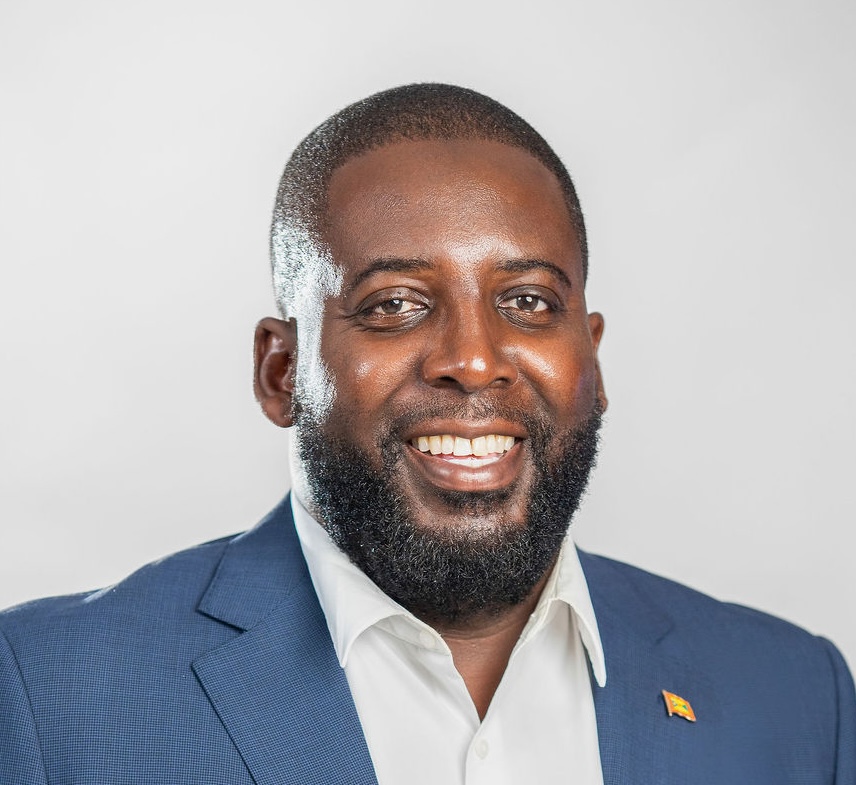
Kerry Simmons, PhD, is a professor, author, and researcher focusing on governance, leadership, and economic development in small island states.