














by Winston Strachan
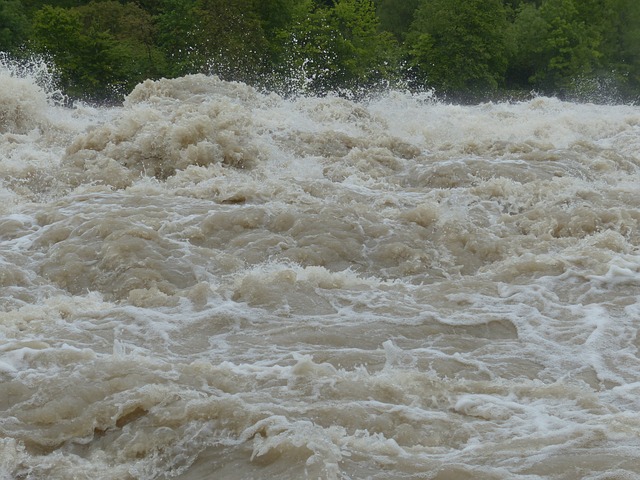
Grenada should seek support from the Netherlands to at least help solve some of the issues the country has been experiencing with major coastal and rivers flooding which according to experts will only get worse if radical and bold steps are not taken now to improve the country’s flood defences.
Background:
I should say up front that I am not an expert in these matters however, I was rather fortunate as a County Councillor on the now debunked Northamptonshire County Council to be one of the authority’s representatives for approximately 4 years on Anglian (Northern) Regional Flood and Costal Committee, and over those years I managed to learn a few things about flood defences and the extreme costs involved. I am currently a Councillor on West Northamptonshire Unitary Council and will retire from this position at the end of April.
While Lead Local Flood Authorities (LLFAs) such as the then Northamptonshire County Council are responsible for managing the risk of flooding from surface water, groundwater and ordinary watercourses and lead on community recovery; in England the Environment Agency (EA) which was established 1996 to protect and improve the environment, have the responsibility for several things including water quality and resources, fisheries, inland rivers, estuary, harbour navigations, and managing the risk of flooding from main rivers, reservoirs, estuaries and the sea.
Regional Flood and Coastal Committees: These were set up by the Environment Agency under the Flood and Water Management Act 2010. They bring together members appointed by LLFAs and independent members with relevant experience for 3 purposes:
- To ensure they are coherent plans for identifying, communicating and managing flood and coastal erosion risks across catchments and shorelines
- Ensure efficient, targeted and risk-based investment in flood and coastal erosion risk management that represents value for money and benefits local communities
- To provide a link between the Environment Agency, the LLFAs, other risk management authorities and other relevant bodies to buildan understanding of flood and coastal erosion risk in its area
The Committee’s Key Priorities:
- National Flood and Coastal Erosion Risk Management Strategy
- Funding
- Water Framework Directive
Dutch to the rescue:
I don’t want to dwell too much on flooding issues in the UK because this article is about Grenada and perhaps how the little resources made available for flood and coastal defence installations are best spent in terms of value for money and long-term protection of properties in floodplain areas.
Billions of British Pounds Sterling are spent each in England on major flood alleviation schemes that can include various mechanical pumping stations, flood barriers and flood water management however, despite the availability of British flood management experts, advance advice in terms of collaborations is sometimes sought from the Dutch for their input long before a final decision is made for the go-ahead of several major projects.
In the Caribbean, we have been educated with the knowledge that the land of Holland is below sea level and when it comes to major flood and coastal defence schemes the Dutch are the best people to approach for advice and support beforehand. They have been building dykes to protect their homeland from the sea (coastal flooding) for hundreds of years therefore, who better to approach?
River Road flood defence:
I believe the current flood defence installation in parts of the St John River on River Road St George’s was a missed opportunity and money poorly spent. It also gave the business community and people living in the immediate area a false sense of security. This area is in a floodplain located in a gorge; with lots of valuable properties on either side of the road alongside the river and within 5 to 10 minutes walking distance of the centre of town but, instead of enhancing the area with walled walkways that support pedestrian walking in parts, display the beauty and tranquillity of the riverfront and surroundings, a wall is installed of such magnitude it hides the river altogether and serves little or no purpose in terms of protecting what is a busy main road into and out of the capital and properties along its front, from flooding.
As I have mentioned before, flood alleviation schemes are not cheap. Constructions are extremely costly and can be time-consuming if properly thought out, especially for the long term, and that’s what is needed for the River Road area of St George’s. At the same time, consideration should also be given to a long-term main road for heavy goods vehicles wanting to travel across town from Kirani James Boulevard to the National Stadium and beyond. We should not be using the current routes of Lowthers Lane via Marrast Hill which was never built to accommodate the new types of heavy goods vehicles now in use.
Any flood alleviation scheme for River Road in my view should include consideration for lifting the road to a height that will allow surface water from the eastern side of the road to run underneath it and into the river to prevent the road from future flooding. The scheme should also include widening the river on Steel’s side as well as deepening it, even if this means having a barrier close to the mouth of the river as protection against flood tide. Just dredging the river is not good enough. The current large stones in use to slow river flow down may still be needed but I leave that one to the experts. Any improvement should take the form of a low Flood Risk Category of (200 to 1) chance of flooding each year or less. Similar requirements are needed in areas of St Andrew where major flooding takes place every year causing havoc to the locals who have no alternative in terms of living accommodation. Year after year those people are having to put up with flooded homes which is detrimental to their health, welfare and wellbeing.
Funding:
The question is likely to be where the monies are likely to come from for the developments and installations of such ambitious schemes. I suspect apart from Grenadians through the exchequer contributing a small sum, the bulk of funding is likely to come from international programmes such as the United Nations Climate Change Conference known as (COP29), Climate Resilience, Climate Finance for Vulnerable Countries. A lot is being said about the urgency to protect small island countries such as Grenada from flooding due to climate change. Good thought-out expensive schemes are likely to progress slowly and in stages due to funding pressures. For example, a River Road scheme could be delivered in 3 stages. The first stage, widening and deepening the river; the second stage lifting the road and the final stage enhancing the area to include pedestrian walkways, safety railings and upgrading the bridge across the river.
Consultation:
On major projects such as flood alleviation schemes which are likely to change the landscape and affect communities, it is important for the people especially those in the affected area to be allowed to have their say therefore, the government should embark on a public consultation exercise with the heading “have your say”. How long and how wide the consultation ought to be, should be determined beforehand.
Perhaps a scheme such as the one described for River Road should have a consultation exercise covering at least the entire Parish of St George. While local knowledge is vitally important; the area is also a major transport route into and out of the capital. People of all persuasions use this route on public transport as well as private transport, it is also a tourism route for our visiting guests so it is important to gain as much public information as possible before a final decision on construction is made.







Thank you for thinking and wanting better for our beautiful little island. I wish our elected officials wanted the same. There is increased flooding in Grenada, not because the land is low-lying, but because the current government is granting permission on a hyperscale and illegally to those “investors” who cut our trees down, build, degrade, and pave where they should not, and still complain that the flooding is due to climate change so they need money to fix it.