











We are not surprised that so few parents have bothered to comment on the Age of Civil Responsibility (ACR) Bill. That is typical.
In the Caribbean, only a very few parents ever discuss responsible sex with their children. Even then, it’s usually one chat, tick the box and move on.
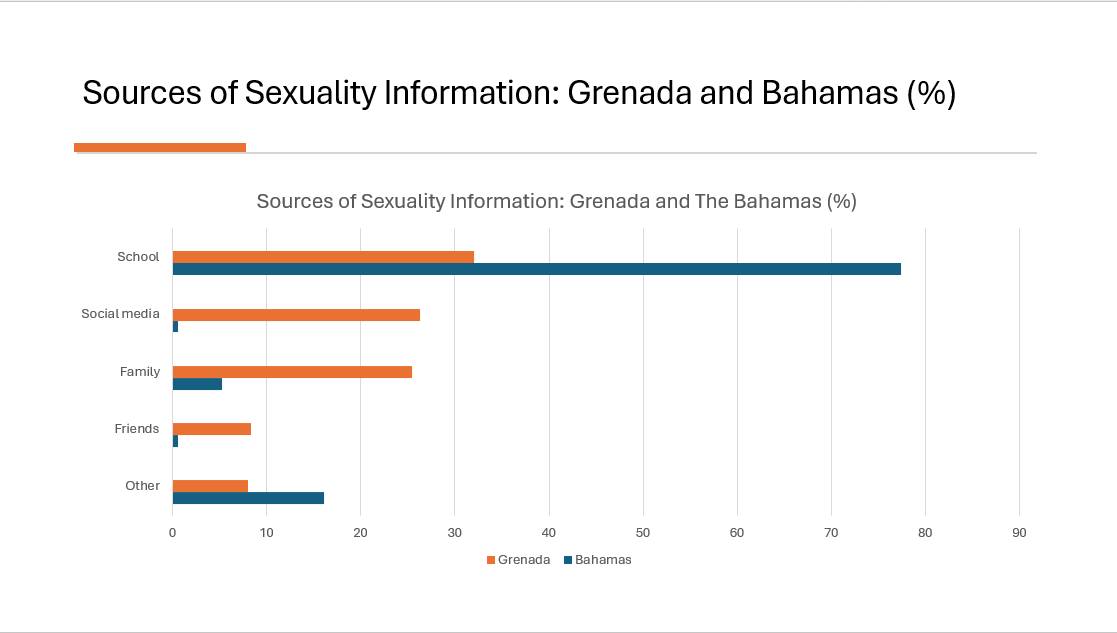
We have recently conducted a large survey in which we asked women attending public health clinics in the Bahamas what was their source of information about sex. The Bahamas has a well-established sex education programme for public schools. And clearly, parents largely defer (or default) to that programme. Some 77% of the women got their information at school. We learned that only 5% of these women learned about sex from their parents.
In August and September, we conducted a poll of older teens in Grenada. The populations are obviously quite different. However, four things stand out: First, among these older teens in Grenada, many more learned about sex from their parents. That’s the good news.
Second, compared to the Bahamas, fewer than half as many learned about sexuality from formal instruction in school. That is a major challenge.
Third, and most disturbing, more than a quarter (26.3%) educated themselves through a wide range of social media platforms, Tik Tok, Chat GPT, X, Flow, and YouTube. Of course, there is no assurance that these are sources of reliable or appropriate information.
Fourth, despite their great concern about sex, in neither country were religious leaders or their institutions a source of guidance or information. Not even one respondent mentioned the church, or the mosque, or the temple, of the tent.
In study after study, when adolescents are asked to identify their preferred source of sex information, the number one choice is parents, which invariably meant their mother.
Across the Caribbean, limited parental engagement is clearly a major cultural problem. The stigma of all matters about sex causes great inhibition and avoidance. Parental reticence results in adolescent ignorance. That ignorance yields vulnerability. And that vulnerability is being exploited.
If the awareness aroused by the ACR serves to encourage parents to change gears from detachment to engagement, that alone would be a huge gain. We do not need to choose between school programmes and parental engagement. We should have both.
I hope those of us who support the bill can find ways to nudge and nurture much more parental ease in discussing sex with their children.
We need to work together to make this very important parental duty a common practice. We must learn what help parents need so they can have these discussions. We must leap from below 6% to well above 60% in the next 12 months. This is a crisis.
Sincerely,
Tonia Frame, President, Grenada Planned Parenthood Association (GPPA)
Fred Nunes, Consultant, Advocates for Safe Parenthood: Improving Reproductive Equity (ASPIRE)