








On the International Day of Remembrance of the Victims of Slavery and the Trans-Atlantic Slave Trade, the Caricom Reparations Commission pays tribute to the 15 million African men, women, and children who endured the horrors of chattel enslavement for over 300 years in the Americas.
We remember the untold suffering caused by the trauma of the Middle Passage, the brutality of slavery and the despair of being denied their humanity, their freedom and their dignity.
However, we also remember their countless acts of courage and defiance against a racialised system of European domination. We honour their relentless resistance towards ending one of the greatest injustices in human history, which was perpetrated against African people.
We honour their memory by carrying forward their fight for freedom and justice in accordance with the Caricom Ten Point Plan for Reparations, which outlines the region’s collective vision for justice in the context of regional development priorities. We renew our call for restitution and compensation through comprehensive programmes of repair and the implementation of sustained measures to dismantle structural and institutional racism.
The commission reaffirms that the crimes against humanity of racialised chattel enslavement, the trafficking of enslaved Africans and genocide, were carefully orchestrated to fuel the growth of Europe and systematically underdevelop Africa and the Caribbean. The legacies of these deeply entrenched historical systems of exploitation continue to shape global inequality until today.
We welcome the declaration of the African Union Decade for Reparations (2026–2035), as a historic commitment that strengthens the global reparations movement and provides a framework for deeper collaboration between Africa, the Caribbean, and the wider diaspora. Together, we are forging a unified front to ensure that reparatory justice is recognised as a matter of rights, historical truth, moral and legal accountability.
As we reflect, we also recommit to continued dialogue, advocacy and public education. The struggle for reparatory justice is at a defining moment, with growing global awareness and an expanding coalition within Global Africa.
The commission recognises and celebrates the resilience of our ancestors to slavery and transatlantic trafficking in the face of crushing adversity. The commission further calls on the international community to take decisive action to repair the harmful legacies, recognising that justice for the victims of African enslavement is justice for humanity.
Caricom
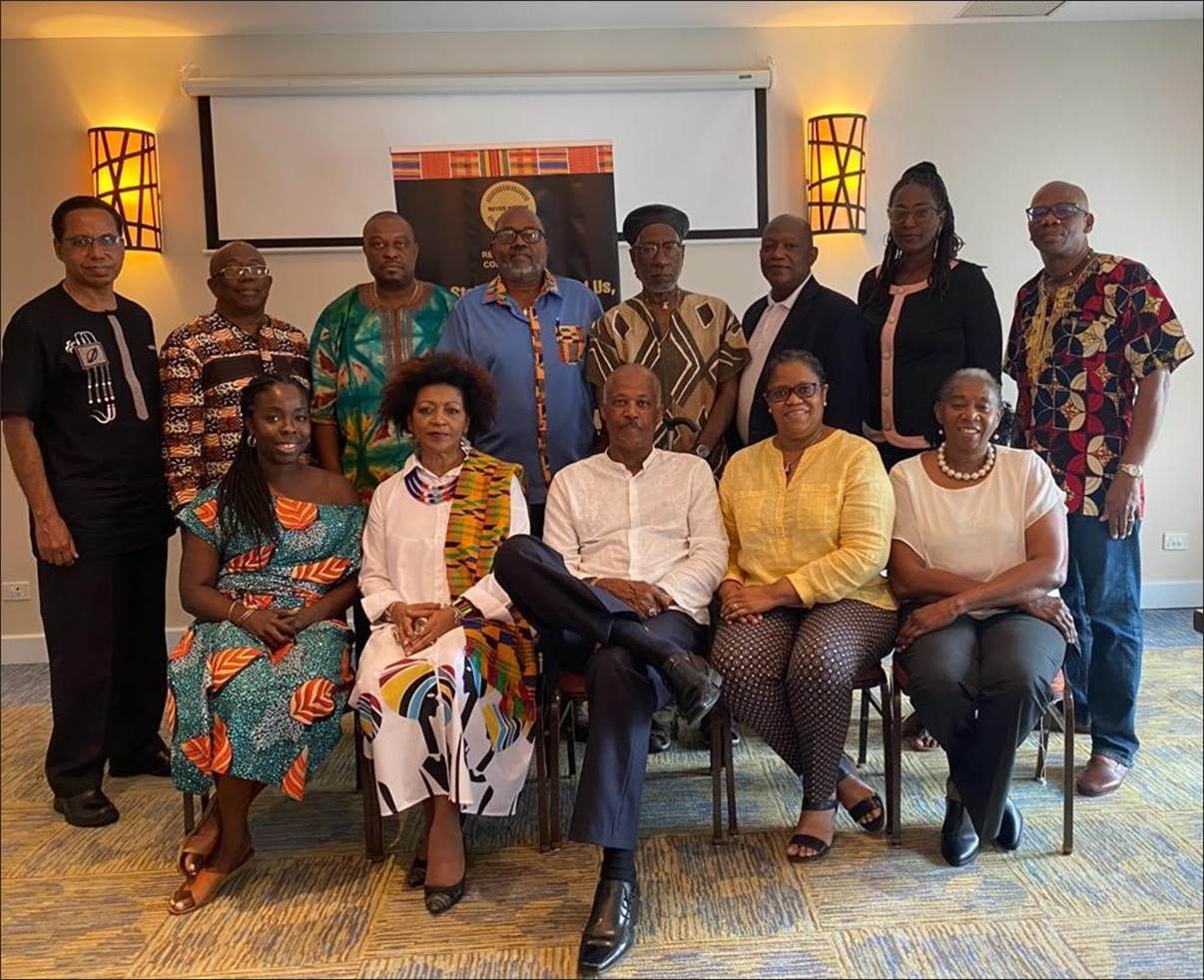
Photo: The Caricom Reparations Commission: seated (L-R) Dr Niambi Hall Campbell Dean, The Bahamas; Professor Verene Shepherd, Vice Chair, Research; Professor Sir Hilary Beckles, CRC Chairman, The UWI; Dr Hilary Brown, CARICOM Secretariat; Ms Laleta Davis Mattis, Jamaica. Standing (L-R) Ambassador David Comissiong, Barbados; The Hon. Trevor Prescod, Barbados; Ambassador Arley Gill, Grenada; Dorbrene O’Marde, Antigua and Barbuda; Earl Bousquet, St Lucia; Eric Phillips, Guyana; Carla Astaphan, St Kitts and Nevis; and Dr Damien Dublin, Dominica.









As I said my grandparents were slaves my family were enslaves all those years ago but you have to or you can’t put the clocks back you have to go forward yes it’s a shame it’s not very nice it’s not a human but you can’t turn the clock back unfortunately you have to look to the future what’s done is done. That’s why there’s so much hatred in this world we’ve got to live in peace but he cannot turn the clock back you have to look forward at least our generation and future generation would never go that way as I said my family were slaves I can go right back but unfortunately you can’t turn the clocks back you have to go forward please God at least we are in a civilized world today hopefully god bless you all to keep safe and be happy God bless
As much as I hate slavery all over the world but you can’t turn the clock back now you have to go forward is not very nice but you have to go forward the past is the past as much as I hate slavery by countries all over the world but now you have to look forward if you’re not turn the clock back unfortunately if you could there will be a better place the world will be a better place to live unfortunately what’s done is done my parents were enslavery so you have to now look forward to a better future
Misguided as usual. Caricom doesn’t know if its coming or going. Africans don’t consider Caribbean people as true Africans. They consider us as children of enslaved people. So this nonsense about bridging Caribbean and Africa is pipe dream that was probably developed by people who love tho watch Africans movies.