





A groundbreaking documentary linking Grenada’s Waltham Estate in St Mark with Paxton House in Scotland will screen this weekend at the 1261 Film Festival, marking its first public showing on home soil.
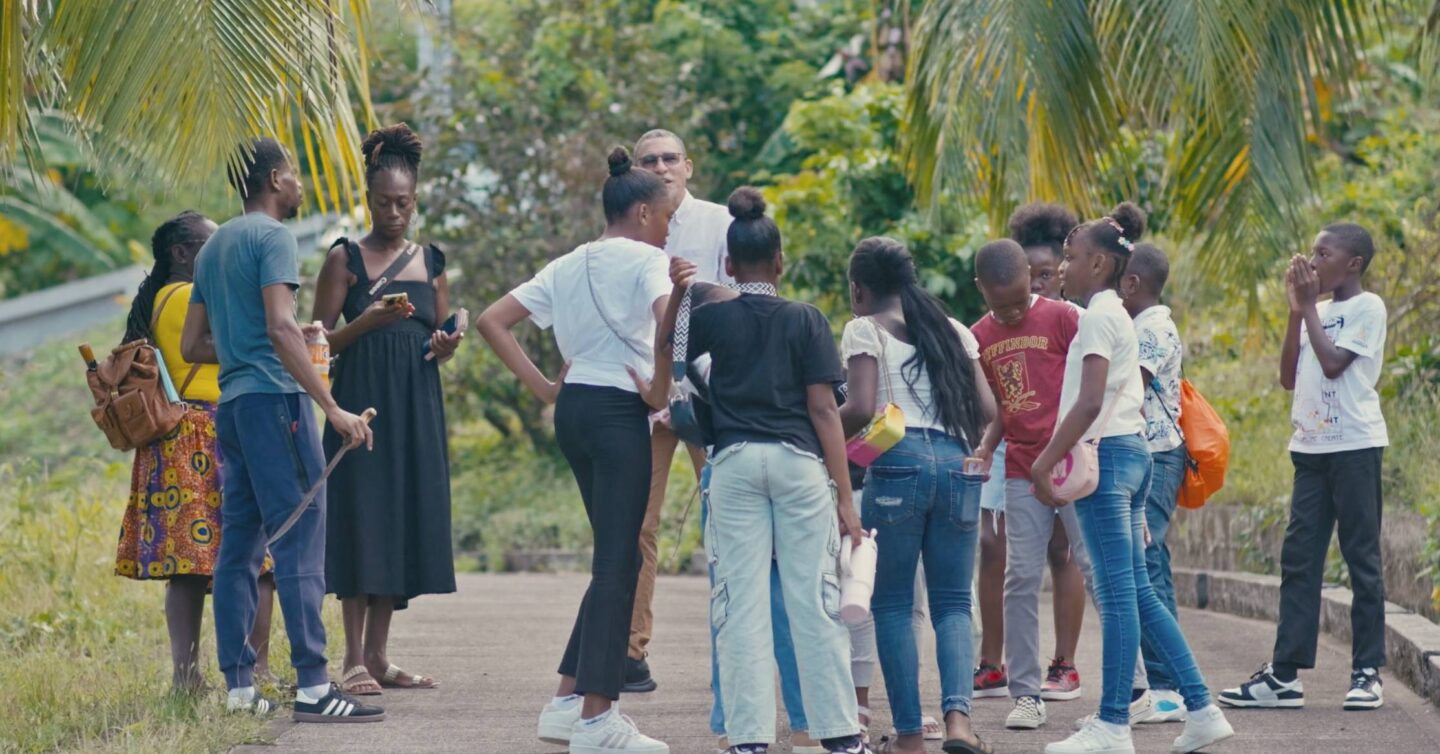
The documentary, Echoes of Waltham, featuring students from Bonaire Government School, elders from Waltham and Dr Angus Martin, is part of a broader project by Island Echoes, founded by British–Grenadian journalist Zoe Smith.
The film’s homecoming marks more than just a premiere — it heralds the first step towards the launch of the Island Echoes Symposium, an international gathering planned for 24–26 April 2026 that aims to redefine how Grenada engages with its pre-colonial and colonial past while exploring possible intersections with education and heritage tourism.
The symposium is set to bring scholars, artists, and heritage tourism experts to St Mark for three days of panels, archaeological workshops, and community programming — all strategically timed to complement the annual St Mark Organisation for Development week of celebrations.
“The intention is for this to be much more than just another boring academic conference,” says Zoe Smith, founder of Island Echoes, the initiative behind both the film and the symposium. “The symposium is the catalyst, but what we’re really creating is a sustainable model for heritage-based economic development.”
Putting Waltham on the map
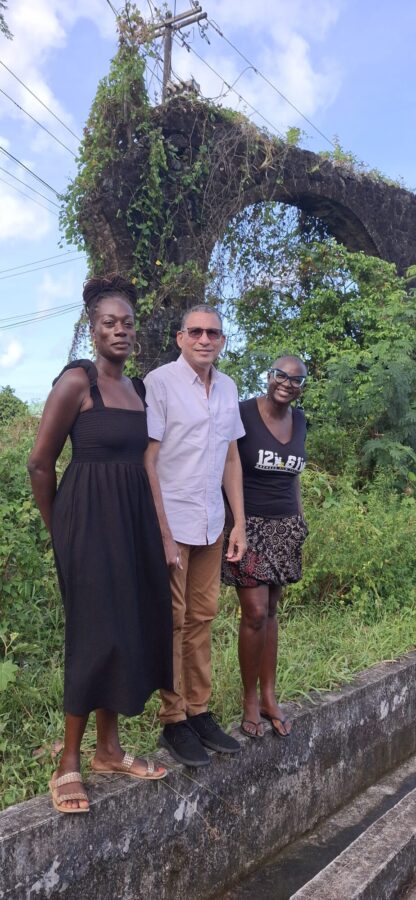
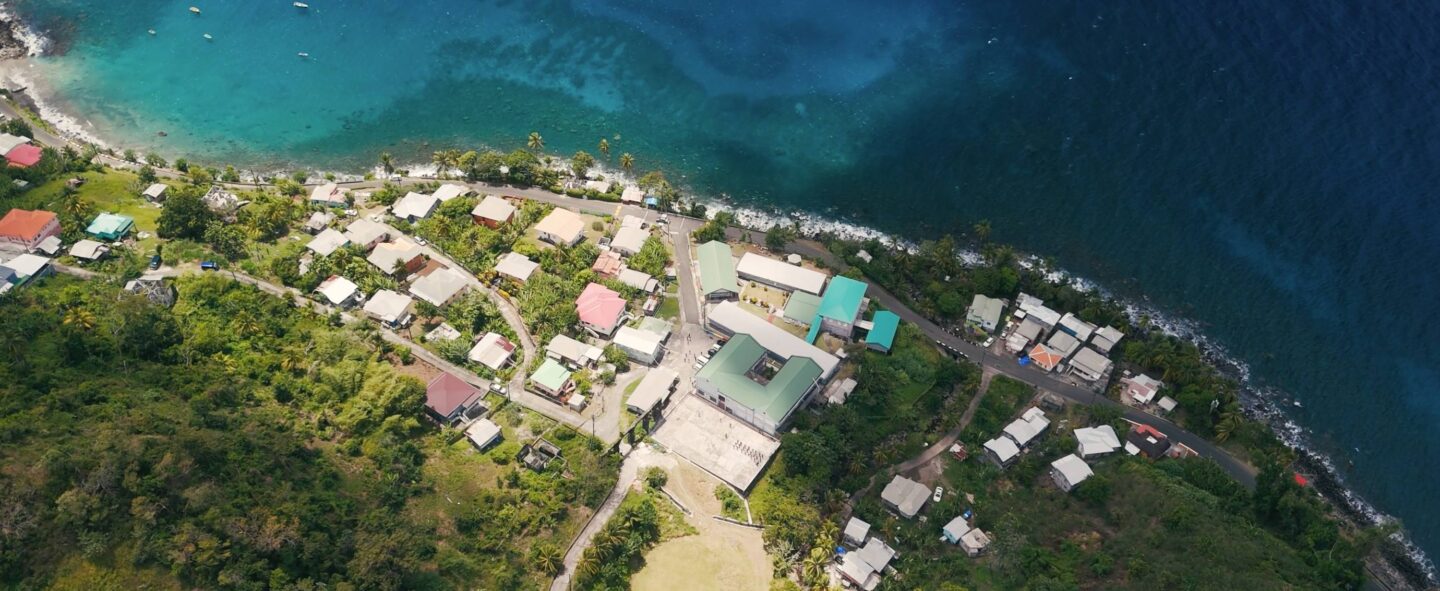
The short documentary traces an extraordinary historical thread: Waltham Estate was owned by Ninian Home, a Scottish merchant who built Paxton House in Berwickshire with wealth generated from enslaved labour in the Caribbean.
When Fedon’s Rebellion erupted in 1795, Home — by then Grenada’s governor — was captured and killed in a dramatic reversal of colonial power whose echoes are largely unknown in St Mark today.
“I would like people to know that Waltham was no ordinary place,” says Laslynn Andall, a Waltham resident featured in the film. “And I’m happy that I’m alive today to share this history with the kids.”
For Smith, whose Andall lineage hails from the parish of St Mark, the journey to this moment has been circuitous. Initially drawn to Waltham as a potential site for an ecovillage—a story documented in a Guardian article that generated global attention — she pivoted when the land purchase fell through.
“I’ve been a writer for many decades, but the feedback to my Guardian piece was overwhelming,” Smith explains. “Over 300 people reached out, some travelling to Grenada to explore firsthand. Although our original plan shifted, the conversation opened something equally meaningful: the chance to help St Mark tell its powerful yet hidden histories.”
The documentary, executive produced by Smith and directed by Meschida Phillip, was included within a transatlantic program spearheaded by Grenadian-born, multimedia artist and filmmaker Billy Gérard Frank.
Exhibited at Paxton House, Scotland, Palimpsest explored the deep, complex ties between Grenada, Scotland, and England through Frank’s acclaimed Venice Biennale project and new works developed in collaboration with Glasgow Print Studio.
The wider program included the Bridging Borders educational initiative, uniting school children from Grenada, Scotland, and England through panels, talks, and community-led creative works.
Building on the conversations sparked by the documentary and work with students at Bonaire Government School, Smith founded Island Echoes — as a broader initiative that combines digital heritage mapping and community-led tourism development to create sustainable economic futures from cultural heritage.
Additionally, the Grenada Office of Creative Affairs supported the creation of an interactive oral history and digital mapping project that is centred on Waltham Estate.
That digital platform — currently being developed — uses virtual reality and QR code technology to let visitors access oral histories, archival images, and environmental data at specific points around the estate.
“Our aim to involve local students in crafting this resource will make them active custodians of their history,” Smith notes.
Championing sustainable community tourism
One of the questions Smith grappled with was: how do you transform a historical site into something that generates not just cultural pride but actual economic opportunity for the descendants who still live on this land?
The Island Echoes symposium intends to explore answers. The April 2026 event will include a cultural reception in St Mark, archaeological workshops where professors from Edinburgh University will work alongside local students, Concordia University’s Tesfa Peterson is contributing to an oral history component, and guided hikes across Waltham Estate.
The vision extends well beyond 2026: the intention is to see the genesis of multi-day cultural experiences offering visitors a deeper connection with Grenada while benefiting St Mark residents directly.
Historian and archivist John Angus Martin sees the project’s significance extending beyond Grenada. “This initiative not only documents critical historical linkages but empowers young Grenadians to reclaim and articulate their narratives in a modern, accessible format. It’s a model that could be replicated across the Caribbean.”
Exploring Trans-Atlantic connections
Smith, however, acknowledges the uncertainty. “It’s early days still, but we’ve already seen interest from local organisations such as the St Mark Organisation for Development and the Institute for People’s Enlightenment. Internationally we’re in conversations with professors at universities in Europe and North America, and attracting scholars from the African continent would be a dream.”
The timing feels particularly resonant. Across the Caribbean, communities are grappling with how to tell honest stories about plantation slavery while building tourism that benefits locals rather than extracting from them. As travellers increasingly seek meaningful cultural experiences, places like Waltham have something valuable to offer: authenticity, complexity, and genuine connection to the descendants who’ve kept these stories alive.
The documentary’s selection for the 1261 Film Festival — returning to the very communities whose stories it tells—feels like validation that this approach resonates. After earlier screenings at CARIFESTA’s film festival in Barbados, where Caribbean audiences responded with enthusiasm, the Grenada premiere allows the people of St Mark to see themselves reflected on screen, telling their own history in their own voices. “It’s about weaving together heritage, climate resilience, and community empowerment,” Smith reflects. “The film opens the conversation. The symposium builds the infrastructure. And then, hopefully, St Mark becomes a place where history doesn’t just get remembered — it generates opportunity for the people whose ancestors lived it.”
If this model works — if St Mark can transform Waltham from a place of historical trauma into a source of contemporary pride and income—it could light the way for dozens of other Caribbean communities sitting on similar untapped heritage resources.
Community members, potential partners, and anyone interested in contributing their stories or support are invited to learn more about the 2026 Symposium and Island Echoes’ broader work at www.islandechoes.org.
Island Echoes







20 years ago a children’s charity in London, named Descendants began the work with Paxton House in Scotland. to uncover the and the explore the links between Grenada and Paxton House. Following that 1st trip to Paxton house, the information held by Paxton House about the enslaved people in Grenada, in Waltham and Paraclete, which their ancestors Ninian Home, who was the Governor general of Grenada at that time. following that 1st project 20 year ago, the archival information the Family held were digitalised and handed over to be sent to Grenada. These documents were handed over Twice to the then High Commissioner, and on the second occasion in london at Kew archives to Angus Martin, of the Grenada Museum. These historic and important documents with so much information about Grenada’s history was supposed to be accessible to the Grenadian People. The work that Descendants has done over the past 20 years to uncover the truth about Grenada and the links to Paxton House should be acknowledged! where are the digitalised slave documents that were digitalised and handed over to the museum? we are happy to see that this information is now being used but it would be good to see some acknowledgements 20 years on of Descendants role in uncovering such important historical information.