





by Brian Samuel
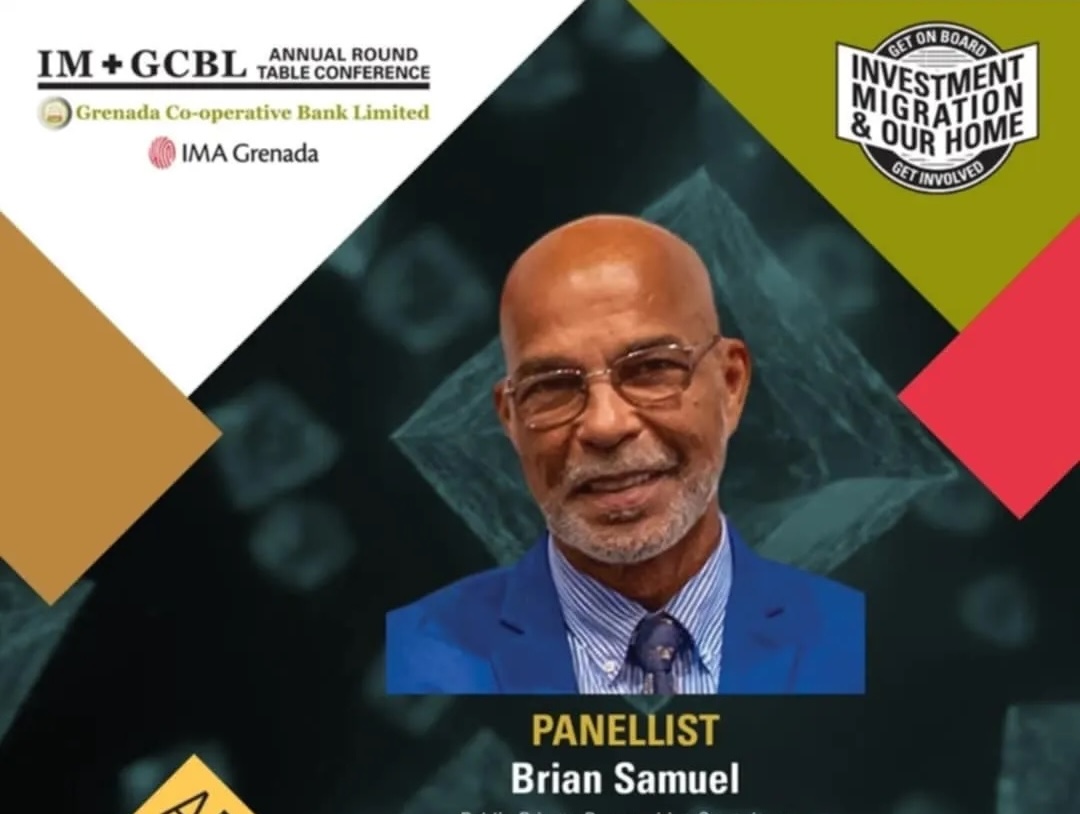
A few weeks ago, much to my surprise, I received an invitation from the Grenada Co-operative Bank to speak at their 2025 annual IMA Round Table Conference.
My first question was: Are you sure you’ve got the right Brian Samuel? Yes, they said, they knew all about me and my criticisms of CBI — that’s why they wanted me. I thought: now that’s gutsy, I’m in!
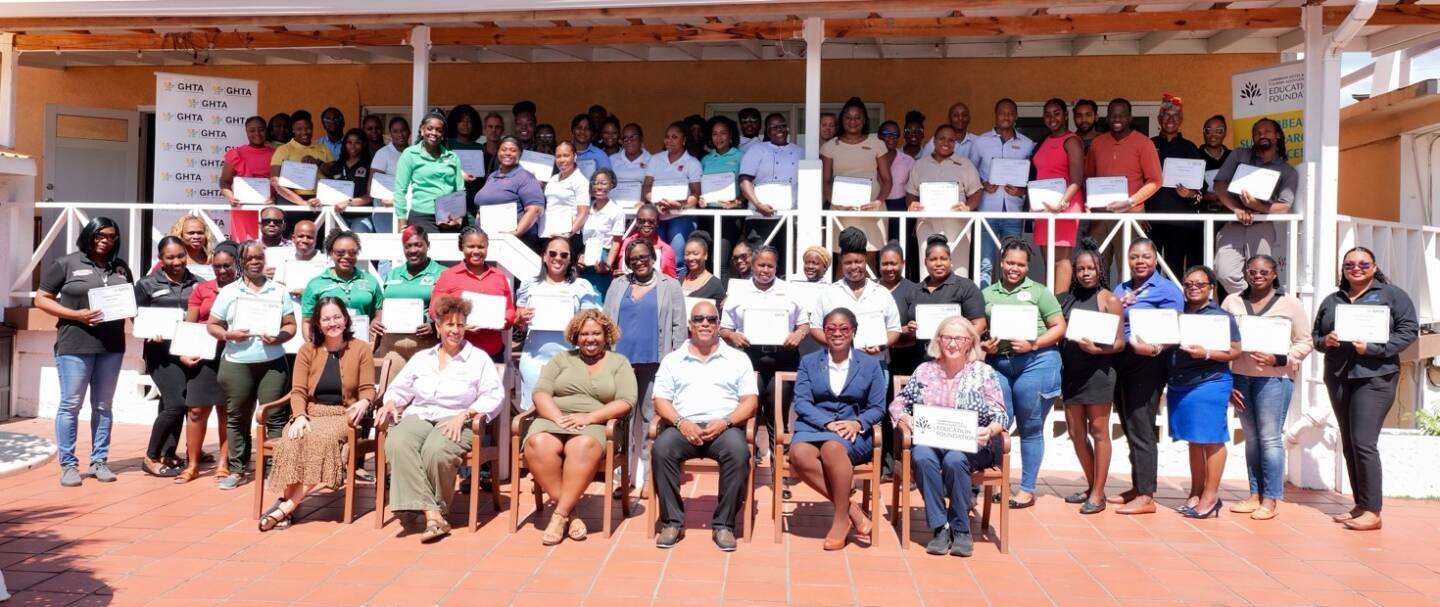
And what a conference it was, a gathering of the great and the good of Grenada’s burgeoning CBI industry: buyers, sellers, finders, fixers, pushers and promoters. My panel discussion, with the boring conference title of “Dependence vs Reliance: CBI as a Foreign Direct Investment Source of Revenue for Grenada” was the first event of the day, after the equally boring opening blah-blahs. I thought perfect: I get to drop my bombs early on! I shared the stage with 3 distinguished panellists:
- Richard W Duncan OBE (Moderator) Chairman, Grenada Citizenship by Investment Committee
- H E Calvin St Juste, Executive Chairman of the Board of Governors, CIU of St Kitts and Nevis
- Dr Kari Grenade, Macro-economic Advisor and Consultant
And me!
My opening statement:
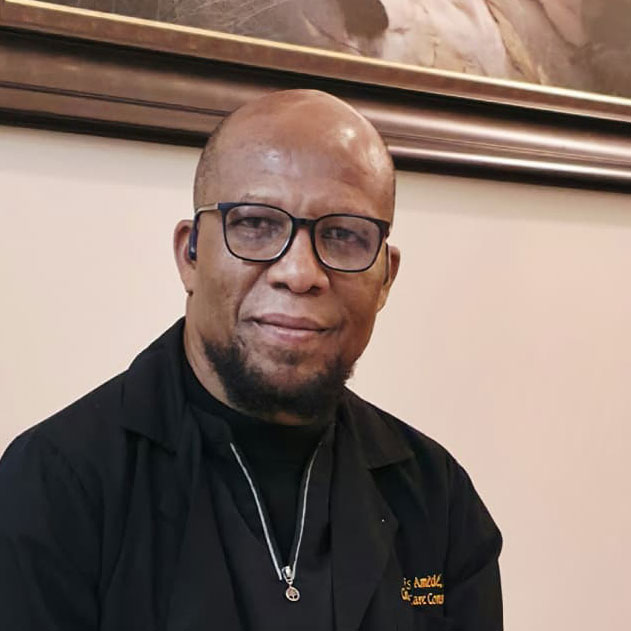
Firstly, I’d like to thank the organisers for inviting me to their Annual Round Table Conference. Given my well-known opposition to CBI, I salute your courage! By way of introduction: I’m Brian Samuel, Grenadian-born and global-bred. For 20 years, I worked with the World Bank, where I financed many tourism projects, my proudest of which was the original La Source in 1993.
Now, why should I, an economist who’s spent his whole career in project development, be so opposed to CBI?
Lots of grounds, but let’s start with the not-insignificant matter of national principle. Let’s be clear: when we sell passports and give that money to private developers, what we are doing is giving away our money and giving them free money. No principal repayment, no interest rate. Money that belongs to each and every Grenadian citizen, money that comes from our patrimony. But the vast majority of the money that comes from the sale of passports doesn’t go to the Grenadian people, aka the government; it goes to “private investors” plus agents, advisors, finders, fixers and assorted other CBI functionaries; everybody but the man/woman/child in the Grenadian street.
Due diligence. The core of every banker’s existence. Everyone hates banks, but banks play one very important role: they stop bad ideas from becoming a reality. When I financed La Source, we put that project under the microscope: market study, feasibility study, environmental impact study, you name it, we studied it. That’s because when the bank lends you $10 million, they want to make sure that you don’t lose it, because they’re lending you their money.
That level of scrutiny doesn’t apply to CBI projects, because the investors aren’t buying a share in a hotel; they’re buying a passport. Everything else is gravy. Yes, the IMA does seem to subject passport applicants to rigorous scrutiny, much improved of late, for which they are to be applauded; but project due diligence is sadly lacking. Due diligence would tell them that Levera is not the place to build a 1,000-room hotel. And due diligence would also tell us that the awful carbuncle that they are currently building up there is totally out of place in “Pure” Grenada. God, it’s hideous!
Due diligence would also tell you that, with Six Senses limping along at less than 40% occupancy in peak season, it would be prudent to hold off on building the Intercontinental right next door until such time as the location has been proven as a viable tourism destination. Stop press: In October 2025, the IMA approved the third CBI hotel for Range Developments at La Sagesse Beach. Here’s hoping Range doesn’t swallow up one of Grenada’s true gems: the La Sagesse Nature Reserve.
To date, we’ve issued 20,500 CBI passports in the last 9 years; 10,200 in the last 2 years alone. In an island with an “indigenous” population of 115,000, have we really thought through the medium- and long-term demographic implications of this trend? What happens when “they” outnumber “us”? Remember: we’re not just selling passports, we’re selling potential future residents. What happens when there’s a revolution in Nigeria, or another religious conflict in the Middle East — are we prepared for an influx of well-heeled CBI refugees, buying up land, driving up prices? Are we prepared for a “CBI political party” influencing local politics?
Let me pin my flag to the mast: I am opposed to CBI on principle, but I’m realistic enough to know that it will not stop: there’s too much money at stake. So, if it is to continue, let We, the People, get ALL the benefits from CBI, let ALL the money go to the People — through the Government.
For the avoidance of doubt, what I’m saying is simple: LET US SCRAP THE REAL ESTATE OPTION IN CBI!
Oh boy, you could have heard a pin drop after I tossed that dead cat onto the ballroom floor! Remember: every single person in that room, except me and Victor Clarke, the British High Commissioner, bless him, were ardent supporters of CBI, which may be related to the fact that they all made their livings out of CBI as well. And a very nice living too, for the CBI Chosen Few.
Let’s visualise for a minute, what could happen if such a dream could come true: if Grenada got ALL the money from CBI, not just about 30% as we currently do. If you ask the average Grenadian: what has CBI done for you? The answer would be “not a damn thing” at best, and unprintable at worst! That’s because, apart from the few hundred people who work in the approved projects, Grenadians feel no connection with CBI.
The Government is currently searching for money to build a desperately-needed new hospital: Project Polaris. And yet, while we are scrunting (love that word!) for this money, last year “We The People” literally gave away EC$562 million of CBI money into the escrow accounts of private developers of tourism projects, many of which are of dubious long-term benefit to Grenada. Imagine if that money had been used instead to build our new state-of-the-art hospital, with a big sign outside that reads: “Brought to you by Grenada’s CBI”. That would get a lot more goodwill than the same sign that currently adorns the decaying Kawana Bay building site, despoiling the end of Grenada’s premier beach!
The Conference:
Actually, it was a very informative, enjoyable day. I learned a lot — and (as ever) said a lot. The usual suspects were all in attendance, but for me, there were a few standouts that made me sit up and listen. Uwem Ukpong, a hugely successful Nigerian executive, shared his emotional connection with and support for Grenada, and Ali Obaid, who transitioned a CBI passport into a thriving Grenadian business. I also learned from Richard Nixon about his circuitous road to CBI financing, paving the way for more Grenadian CBI investors.
Another good thing I learned was that, in order to counter the perception (more reality than perception) that “CBI is only for foreign investors,” the Grenada Industrial Development Corporation (GIDC) has opened a new window — Enhancing Local Developers’ Participation (EDLP) — which provides concessionary terms and technical assistance to Grenadian entrepreneurs wishing to get on the CBI bandwagon. Who knows, with such sweet deals like that going a-begging, I might even jump aboard the CBI gravy-train myself!
After my panel, I was interviewed by GBN and appeared on that evening’s news. The following day my phone blew up, my message having hit a welcome nerve among Grenadians.
My closing statement (which I never got to give due to time overruns, dammit!):
Well, what a day this was: informative, interactive, one could even say inspirational! And a bit of controversy to spice things up a bit — my pleasure. I’ve made clear my main recommendation: scrap the real estate option. Let me close by raising some issues that need addressing, going forward.
- Fix the lack of transparency: “We the People” have no idea what’s going on inside these projects, there is zero data available on the IMA and Finance websites. Lack of knowledge breeds lack of trust. If our money is being given free of charge to private developers, then at the very least, “We the People” should be given information on where our money is going and what benefits we are receiving. There are enough questions that need answering. For starters, what on earth is happening at Mt Hartman?
- For God’s sake, hire an architect! CBI should conform to the (non-existent) “Pure Grenada official style guide” rather than being allowed to foist foreign-inspired design nightmares onto our pristine shores. Give CBI, or GTA, or whoever, a “bad-taste veto” over all new tourism projects!
- Be more selective. Don’t just blithely accept every CBI project that comes through the door. These assets will be with us for a very long time, long after their promoters have gone, so take time to know the projects, inside and out. Subject all CBI projects to proper due diligence, i.e. of the deepest kind — act as if the Government were a bank. The current institutional architecture promotes a go-go-go mentality. The primary aim of IMA is to sell passports; the success of the organisation — and its staff — is predicated on the number of passports it sells. So there’s an institutional bias to refrain from asking too many awkward questions about the projects being promoted. Let’s not get in the way of racking up another CBI success story!
- Why only hotels, hotels, hotels? Give certificates of investment — and appreciation — to applicants who acquire Grenadian passports via contributing to approved public sector investment projects: in healthcare, education, heritage, infrastructure, and other priority sectors. These certificates may even be tax-deductible in their home countries. Afterwards, keep them engaged with the “good-works” projects they’ve helped to finance: “It’s wonderful that you helped to finance this primary school (cue pictures of cute Caribbean kids), now, wouldn’t you like to help them become IT literate?” They’ll feel more connected with Grenada through an initiative like that, rather than some paper investment in a hotel room they know they’ll never make a penny from.
- Consider our demographic future. Grenada is among the 10 smallest countries in the world, we epitomise the phrase Small Island Developing State (SIDS). This fragility isn’t confined to external economic shocks and climate change; we must also consider the fragility of our population. We have small and finite land space, much of it mountainous and uninhabitable: our fragile island can only support so many people. For as long as I’ve known myself, Grenada has had a population of “a bit above 100,000” — growth has largely been kept in check by external migration. What would happen if this flow were reversed, if tens of thousands of nouveau-Grenadians decided to make Grenada their real home? Have we considered the demographic, economic, social and political impact of such a radical shift in migratory patterns?
- Ending on a personal note (only half-jokingly): I see there’s a new regional organisation in the making. The Eastern Caribbean Citizenship by Investment Regulatory Authority (ECCIRA) will be domiciled right here in Grenada, and they are searching for a Regional CBI Regulator. How convenient: that means I won’t have far to go — to toss my hat into the ring!




This program should have never been and it must be cancelled and citizenship granted revoked.
Current administration blatantly lies and ignored the danger.
It’s red flag when a sitting PM sells his country’s passport.
Sadly, deep-dive, and planing for the longterm are not in our DNA. I like the idea of more public sector projects. Finally, the job is yours!!!