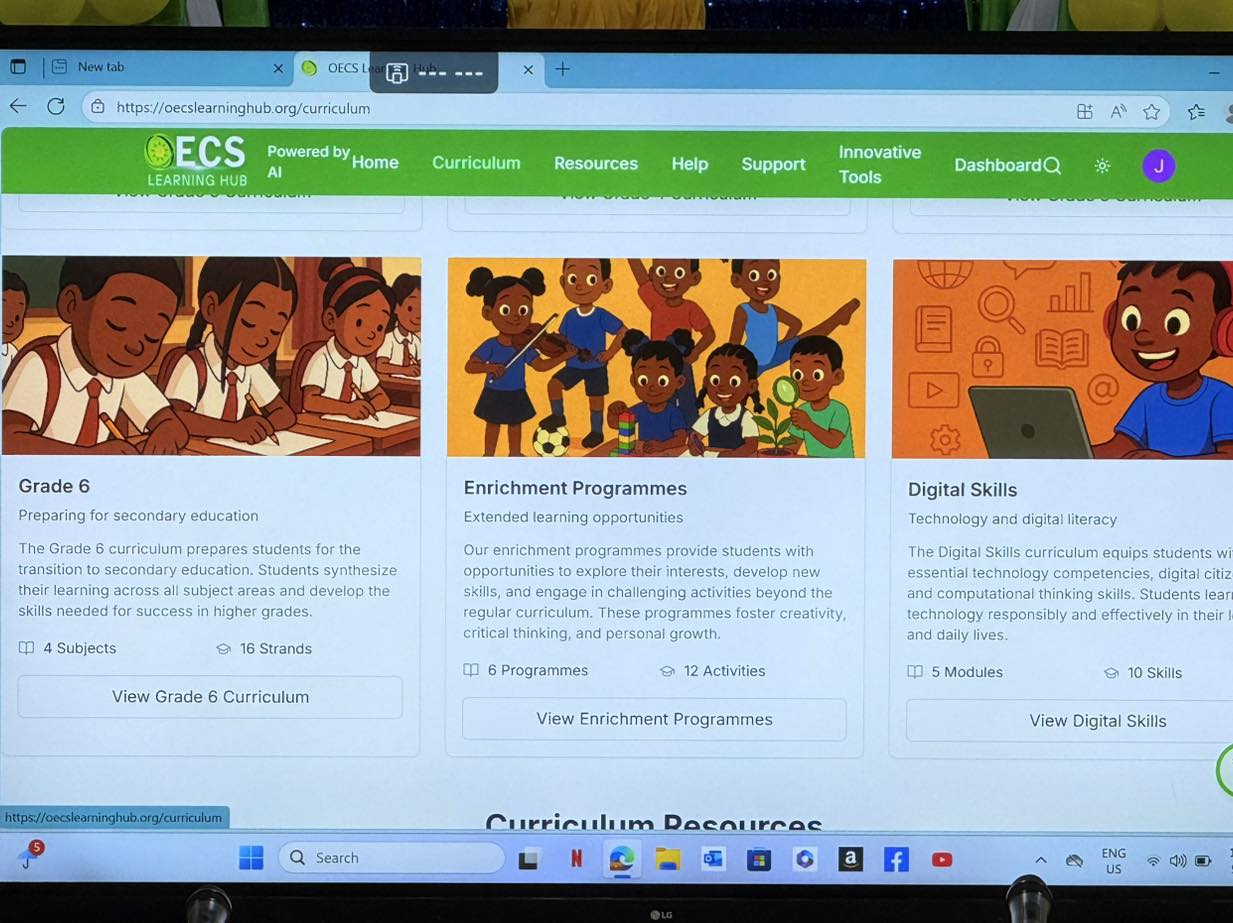








The Ministry of Education recently launched the Digital OECS Harmonised Primary Curriculum (D-OHPC), a transformative regional initiative, marking the start of the pilot phase of its implementation in primary schools in Grenada in September 2025.
The Digital OECS Harmonised Primary Curriculum has several objectives, including:
- A new educational ecosystem for primary schools in the Eastern Caribbean
- Use of technology to create an interactive and inclusive learning environment
- Inclusion of AI-powered planners, virtual classrooms, and digital resource repositories
- Standardisation of educational quality, promotion of regional integration, and preparation of students for a technologically driven world
- A student-centred approach, moving beyond traditional exam-based assessments
In an interview at the 9 September launch, OECS Curriculum Support Officer Johnell Mitchell summarised what the Digital OECS Harmonised Primary Curriculum is expected to achieve. He informed that the prior curriculum was implemented in 2005.
“Over the past year, we had a number of our schools, at least 12 of our schools, involved in a micro pilot and moving forward for this new school year, 2025 to 2026, we are now piloting that curriculum. It has undergone some revision through the MicroPilot, and now we are engaging our schools again, where we will get more feedback as teachers interact with the platform,” Mitchell said. “This curriculum we’re using is an advanced version of the previous one. Within it, we have all of the standards heavily embedded in it. We’ve provided teachers with a number of innovative tools — data analytics, curriculum, lesson planning, rubrics, lesson review, quizzes — a number of things that teachers can use to meaningfully engage students.”
Mitchell noted that support will be given to educators as they interact with the Digital OECS Harmonised Primary Curriculum platform. Additionally, he pointed out that parents can access the platform to see what their children should be learning at every grade level. Following the 9 September launch, 2 principals shared their views on the Digital OECS Harmonised Primary Curriculum platform.
Principal of Grand Roy Government School Jenner James said, “I think this is an excellent initiative, one that is well thought out, well put together, and certainly it can enhance education in Grenada, particularly along the path of teachers preparing lessons and preparing to teach and the overall delivery of education.”
Principal of Mt Pleasant Government School in Carriacou Kerwin Noel also shared positive expectations. He said, “We are a pilot school, and we’ve been interacting with the platform since last year and it is the answer to the call, because one of the challenges of teaching is the actual planning and coming up with the strategies, coming up with the activities and stuff. This platform would’ve given you that on a platter, so I think it’s the way to go.”
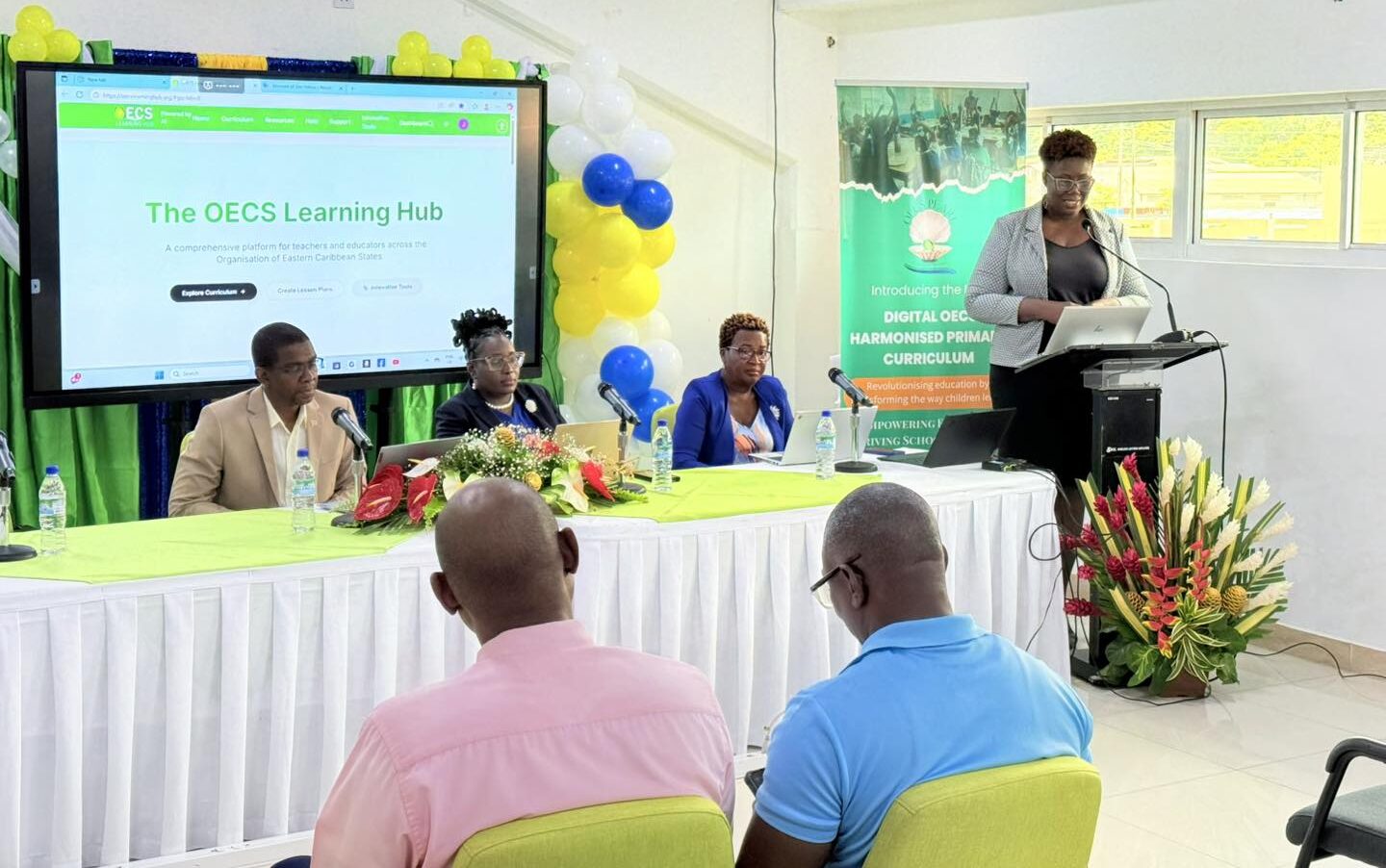
In his remarks at the launch, Minister for Education Sen. the Hon. David Andrew, emphasised the importance of digital infrastructure, praising the accessibility of the curriculum, which is online and offline. This school year, Grenada began incorporating e-books on a large scale. The education minister said, “Both the OECS PEARL and Grenada’s national education plans prioritise several key areas, demonstrating the strong alignment between Grenada’s education policies and plans and those of the OECS PEARL.” The OECS PEARL is the Programme for Educational Advancement and Relevant Learning.
Newly appointed Chief Education Officer Diane Abel-Jeffrey, PhD, said, “By leveraging technology, we are not only modernising the way learning is delivered but also expanding access and inclusion and these are 2 very important priorities for our ministry.”
Deputy Chief Education Officer for Curriculum (Ag.) Deanne Francis-Thomas highlighted the curriculum’s student-centred focus. She said, “It’s about reimagining how children learn and how teachers teach. It reflects the very heart of the OECS PEARL, which seeks to ensure that every learner across our region benefits from a harmonised, modern and future-ready education. The D-OHPC is about making teaching more effective, learning more engaging and preparing our students to thrive in the 21st Century.”
Permanent Secretary for Educational Administration Lorraine St Louis-Nedd thanked all partners involved. She said, “On behalf of the Ministry of Education, I extend our heartfelt thanks to the OECS Commission and the PEARL project management team for their leadership; to the Global Partnership for Education for its invaluable funding support and to the curriculum writers and developers, including our own Grenadian educators, who poured their expertise, creativity and passion into bringing this curriculum to life.”
Ministry of Education