











by Curlan Campbell
- PISLM’s headquarters in Grenada ensures its work can straddle Caricom and OECS
- Positions Grenada as focal point with respect to funding and technical support
- SOILCARE will remain flagship initiative for PISLM long after funding through GEF dries up
Officials from the Partnership Initiative for Sustainable Land Management (PISLM) have confirmed that Grenada will serve as the new headquarters for the organisation, strengthening its leadership role in sustainable land and soil management across the Caribbean.
Dr Ronen Francis, PISLM’s Executive Director, stated, “Having PISlM’s [headquarters] in Grenada ensures its work can straddle the 2 regional governmental agencies, Caricom and OECS. Grenada is an important member of both agencies and a strong advocate for environmental issues. Having the only land/soil agency for the Caribbean in Grenada positions Grenada as the focal point on the matter for both Caricom and OECS with respect to funding and technical support.”
Trevor Thompson, CSIDS-SOILCARE Project Manager, noted that PISLM was first based in Trinidad and later in Guyana, where it received technical support. He said Grenada’s new role as the sole headquarters of an indigenous intergovernmental organisation in the Caribbean will enhance the country’s prestige. According to Thompson, hosting PISLM means that many high-level meetings will now take place in Grenada, positioning the nation as a regional leader in sustainable land and soil management.
Looking ahead to the next stage of the SOILCARE Project, Dr Francis stated, “Phase II will prepare the region for executing Phase II of the LDN strategy, which is carrying out transformative projects. At the end of Phase II, participating countries will have updated soil maps, tier 2 soil labs, and will have tested the appropriate technologies for managing land and or soil degradation in selected intervention sites. It is the learning coming out of the various intervention sites that will be used to build the ‘Caribbean Transformative Project.’”
He continued, “The fundamental factor of success in Phase I was ensuring that Caribbean solutions were used to solve Caribbean problems by Caribbean experts at all material times. Phase II will build on that legacy. To treat with the challenges encountered, PISLM will strengthen its in-house research and capacity building capabilities through its Regional Advocacy and Capacity Building Facility for New Adaptation Technologies (RAC/NAT Facility).”
On the timeline, Thompson said, “Phase two is carded to be launched during the 1st quarter of 2026 and all 14 Caricom countries will be participating.”
Thompson stressed that community involvement is central to the project. He said farmers, agricultural officers, and local groups take part in consultations, workshops, field assessments, and national soil surveys, ensuring that their knowledge shapes project design and implementation. Their participation extends to activities such as agroforestry, climate-smart farming, and regenerative practices that improve soil health. Communities are also engaged in restoration work and biodiversity monitoring, which strengthens local capacity, fosters ownership, and supports the long-term sustainability of the project’s outcomes.
Dr Ronen Francis highlighted PISLM’s focus on long-term sustainability, noting that its Regional Research, Advisory and Capacity Building Facility for New Adaptation Technologies (RAC/NAT Facility) will play a central role. The facility will strengthen the region’s research capacity, support member countries in developing sustainable soil and land management practices, and promote homegrown Caribbean solutions. It will also provide training and technology transfer to agricultural officers, farmers, and community groups in areas such as agroforestry, regenerative agriculture, and climate-smart farming. Importantly, the initiative aims to engage stakeholders at every level through participatory learning, ensuring knowledge is widely shared and applied.
He added, “PISLM is also in the process of establishing and implementing a soil archive repository – the first in the region, which will support sustainable land management and long-term environmental planning across the region. In addition to the regional soil archive, laboratories in each participating country will be outfitted, and their staff will be trained to strengthen national capacity. This includes building technical skills around Standard Operating Procedures (SOPs) and the interpretation of soil data, both of which are fundamental for informed decision-making on sustainable soil management practices.”
Speaking on integration with other regional efforts, Dr Francis noted, “Phase II serves as the precursor for all these major initiatives. At the end of Phase II, the monitoring capabilities of participating countries would be significantly increased, thus enabling countries to track their own project during the execution of major Land/soil initiatives like these.” He further explained PISLM’s role: “PISLM is the only land/soil IGO in the Caribbean. As such, preparation for participation in the governing bodies of the UNCCD is coordinated through the PISLM. Further, what SOILCARE does is that it has created a framework in the Caribbean space that is unprecedented with respect to collaboration and partnership with other stakeholders.”
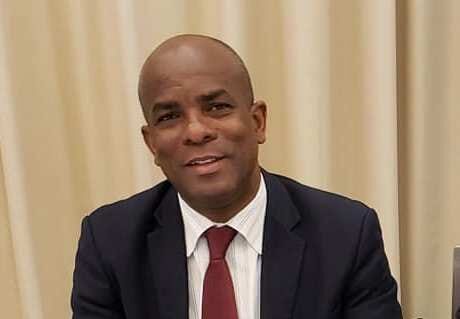
When discussing how success is measured, Trevor Thompson explained that the SOILCARE Project relies on a mix of international standards. He stated that the project utilises the 3 Land Degradation Neutrality (LDN) indicators from the UNCCD — land cover change, land productivity, and soil organic carbon (SOC) — to monitor changes in vegetation, ecosystem function, and soil health. These are complemented by 4 indicators from the FAO’s Voluntary Guidelines for Sustainable Soil Management (VGSSM), which assess soil erosion, nutrient balance, and pH levels. According to Thompson, this combined framework offers a comprehensive approach to monitoring land management practices and measuring progress toward restoration and resilience goals.
Looking to the future, Thompson said, “SOILCARE will remain the flagship initiative for PISLM long after funding through GEF dries up. SOILCARE will become the monitoring and evaluation mechanism for assessing the region’s compliance with its obligations under UNCCD and BPOA. It has brought the issue of soil health, fertility, and management to the fore and has sensitised the Ministry of Agriculture policy and technical officials on the importance of soil data in decision making.”
Thompson shared examples of early progress. “Deforestation in Grenada has brought fruit in increasing awareness of the negative role invasive species play in reducing water availability. Scaling up nursery capabilities in the countries has helped with increasing tree planting, improving labs’ ability to conduct soil analysis, and has impacted fertiliser application and crop productivity. Training of Offices in all countries has increased access and use of soil data.”
On scaling solutions further, Thompson concluded, “Already we see the other Caribbean countries requesting National Soil Surveys and we are looking to support the Pacific SIDs to take similar actions to support their SSL, SLM, LDN actions.”