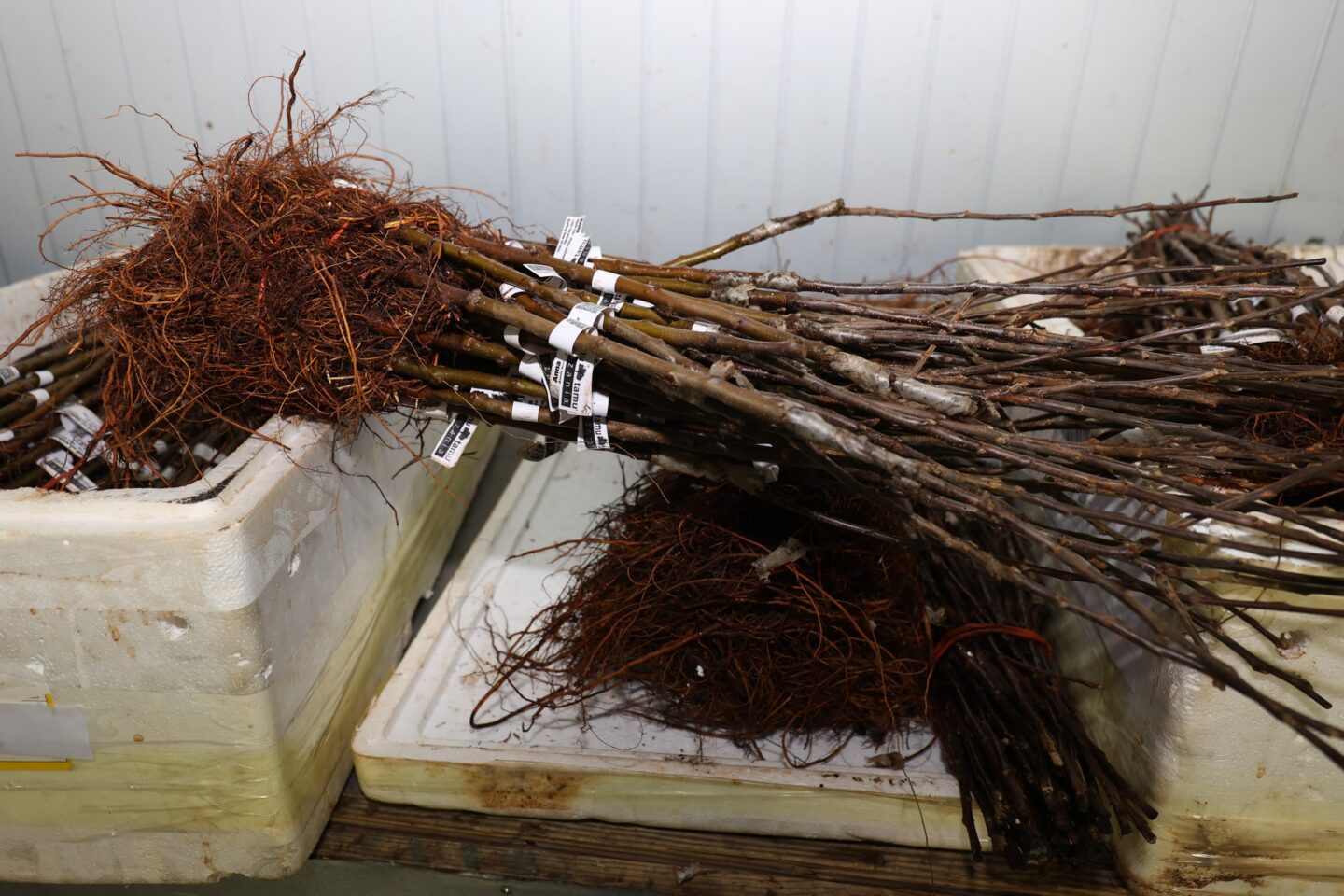











Big Mac Enterprise, operators of LaBay Market in New York, has expanded its agricultural development prospects with the importation of 1,000 apple plantlets from the African nation of Tanzania.
Based on extensive research, the imported apple plantlets are conducive to tropical climatic conditions.
Clive Lewis, local representative of Big Mac, on Monday, 18 August, handed over 100 of several tropical varieties of the apple plantlets to Minister for Agriculture, Lands and Forestry Hon. Lennox J Andrews, and to Dr Gem Thomas-Barry of the Caribbean Agricultural Research and Development Institute (CARDI).
Minister Andrews, in accepting the plantlets, described the project as a new beginning for the agriculture sector, noting efforts invested in research by the Agronomy Division in expanding locally grown crops. “The Ministry of Agriculture is currently experimenting with white potatoes and garlic, and I am happy that we are now working with the private sector and CARDI to drive the diversification experiment further to include goods that we can produce here successfully,” Minister Andrews said. “I am very happy that what we are doing today is giving new life to those who went before us by experimenting with apples and other crops, geared at self-sufficiency and consequently reducing Grenada’s Food Import Bill,’’ he said, while pledging the ministry’s fullest support in meeting the domestic demand for apples.
Big Mac Enterprise, operator of LaBay Market, is one of the most popular outlets in Brooklyn for fruits, vegetables and other items from Grenada and other Caribbean countries.
Lewis disclosed that the company, which is already piloting a huge apple plot in St John, saw it fitting to partner with the Ministry of Agriculture to research tropical apple plantlet varieties. “What I can surely say is that these varieties can thrive in Grenada,’’ he said. “We have planted them before, and they are doing fairly ok at this point in time. We are looking forward to the Ministry and CARDI to provide support in boosting production.’’
Nine varieties of the tropical plantlets were imported from Tanzania.
Chief Agronomist in the Ministry of Agriculture, Lands and Forestry Allison Haynes gave assurance that the varieties can do well in Grenada. “I was happy to see that these tropical varieties are successfully planted in Africa in different zones, with different levels of success, based on management practices,’’ she said.
The Big Mac Enterprise project is significant, given the volume of apples that Grenadians consume locally, said Haynes, who also indicated that she is looking forward to the success stories of this pilot project.
CARDI’s Dr Barry labelled the handing over of the plantlets as a great contribution to Grenada’s food and nutrition security, given the high level of importation of food, with apples making up a large portion of imports. Dr Barry said CARDI is eager to work with the Ministry of Agriculture and anticipates a productive and good outcome from the project. CARDI is expected to play a pivotal role in the areas of the morphological and phenological aspects of the project; in documentation of tech pacts; nutritional programme; as well as in pest and disease management of the newly introduced apple plantlet varieties.
Ministry of Agriculture: Ensuring food and nutrition security for all









The question remains: Why is the government of Grenada investing resources in a gimmick when our soil is not being exploited to its full potential? They have all these meetings and photo ops, yet we are still waiting for tangible results.
Potatoes take 105 days to harvest on average. What have they been experimenting on for two-plus years? Also, I had no idea that the inclusion of apples in our diet was a priority.
Oh, my dear Grenada! We have not even figured out how to grow enough potatoes to feed ourselves, but we are busy wasting resources on another exotic, far-flung idea. We deserve better!
Go back and read the article again.
I guess you didn’t understand it.