












by Grenada Food and Nutrition Council
Sweating is one of the many physiological processes of the human body. This means that it occurs automatically without us having to do anything.
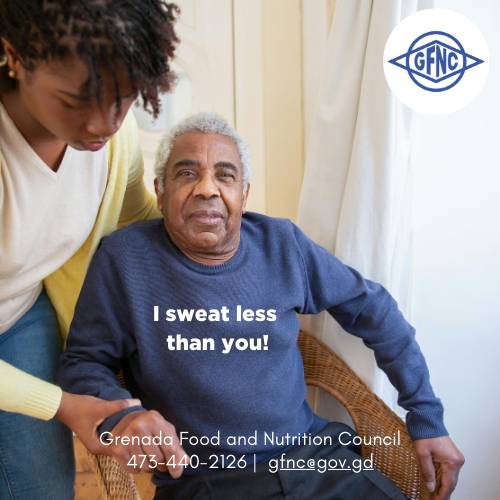
As ageing occurs, the thermoregulation process starts to slow down. When that occurs in seniors, their bodies do not cool down by sweating when they are hot. Because the elderly sweat less, we must be alert about their hydration levels.
Not only do they not sweat as much, but they may also not be inclined to drink water because they do not feel particularly thirsty. The lack of those 2 acts puts seniors, persons 60 years and older, at risk of dehydration, overheating, or even heat-related cardiovascular stress. A quick way to determine their temperature is to feel their skin. If it is a hot day, and they are not sweating and their skin is warm to the touch, encourage them to have a cool drink such as coconut water, no-added sugar juice, or water.
According to the National Health Service (NHS), besides their skin being warm to the touch, other signs include but are not limited to strong-smelling pee, urinating less frequently, light-headedness, dry mouth, sunken eyes, or feeling tired. They also recommend that adults have 6 to 8 cups or glasses of fluid a day.
Remember, they do not realise they are dehydrated, so keep an eye on them for these symptoms, and please encourage them to sip water throughout the day.
GFNC