







by Linda Straker
- PM Mitchell addressed Protocolary Session of OAS Permanent Council on 25 September
- Climate change financial resources promised to SIDS must be tailored to meet unique needs of small islands
- Challenges across the Caribbean require fundamental shift in climate finance structure
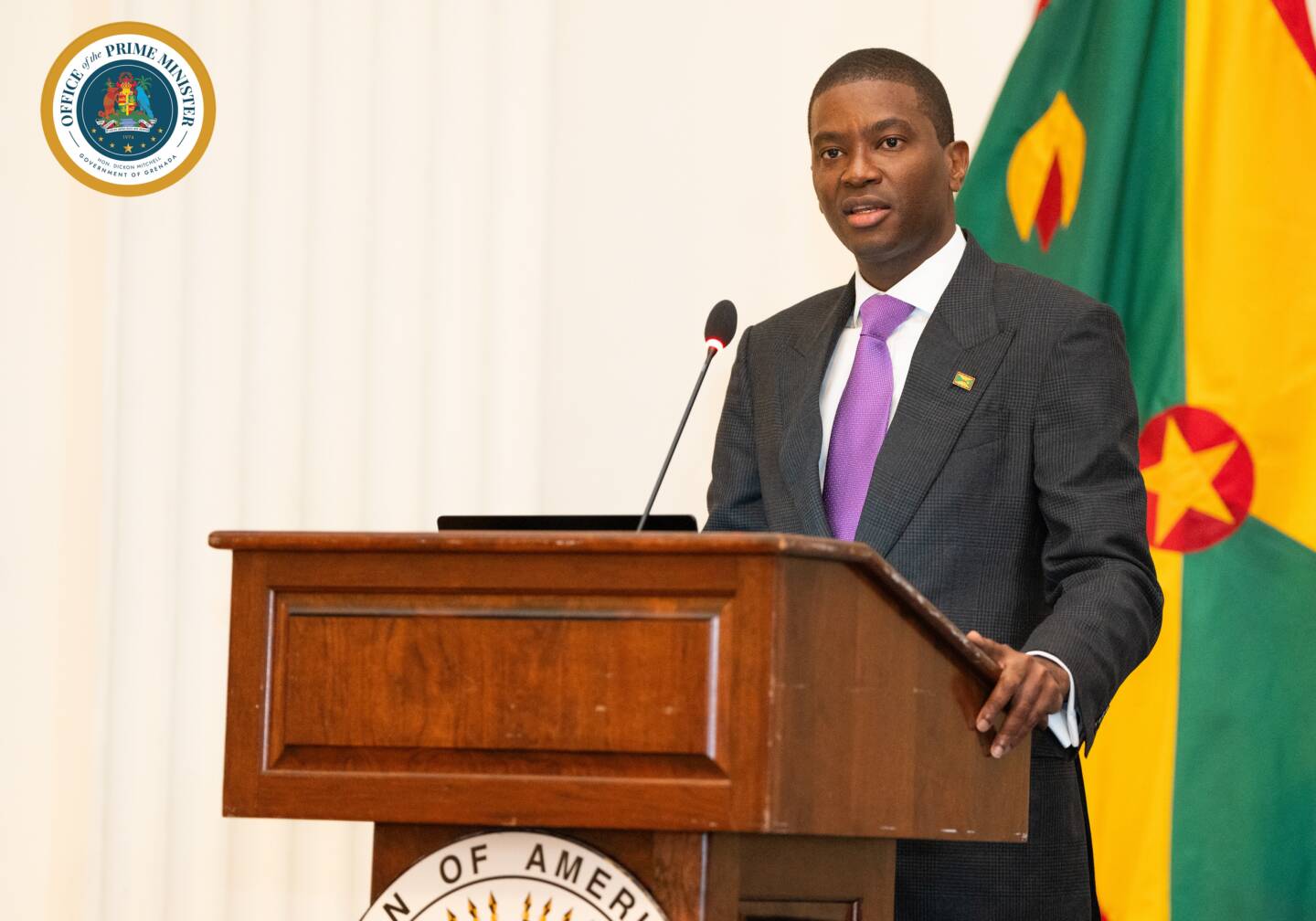
Prime Minister Dickon Mitchell wants the Organisation of American States (OAS) to establish a permanent mechanism for resource mobilisation and allocation in the Americas as part of the case for climate justice.
“We must make the case for climate justice. We must make every effort to establish in and through the Inter-American Committee on Natural Disaster Reduction, a permanent mechanism for resource mobilisation and allocation in the Americas,” he said while addressing the Protocolary Session of the Permanent Council of the OAS on 25 September.
“We look to this body, to our multilateral institutions, and to the global community, not only for solidarity but for action — decisive, tangible action that recognises the disproportionate impact that climate change is having on our nations,” he said, as providing the session with an update on the status of Grenada following the devastation on 1 July by Hurricane Beryl.
The Prime Minister, who is the current Chair of Caricom, opined that financial resources promised to SIDS, to victims of the adverse impact of climate change, must materialise, and they must be tailored to meet the unique needs of small islands.
“Our people cannot wait, and the time for bold, transformative solutions is now. This is certainly not too much to ask. As a nation, we have done little to contribute to the causes of climate change, yet we find ourselves disproportionately affected by its consequences,” he said as he made a call for climate justice and reform in climate finance. “This is the very essence of the call for climate justice. We are here, calling on the developed nations and financial institutions that control the levers of global capital to understand that the challenges we face in Grenada, and across the Caribbean, require a fundamental shift in the way climate finance is structured.”
“We have heard the promises of climate funding, but the reality is that these funds remain largely inaccessible for small nations like ours. We need a system that delivers; one that is agile, responsive, and reflects the urgency of the moment,” Mitchell recommended. “The mechanisms that deliver climate finance must be reformed to ensure that resources flow directly to where they are needed most. We are not asking for handouts; we are demanding the right to safeguard the future of our people and our nations.”
Referring to Grenada as an example, he said that the island’s agricultural sector which is a lifeline for thousands was severely impacted by Hurricane Beryl and rebuilding this sector requires more than just aid, as necessary as that is. “It requires investment in climate-smart agriculture, in sustainable practices, and in the foundational assets upon which the resilience of our people can see the light of day,” he said.
Explaining that the role of multilateral institutions and international partnerships such as the World Bank, the Inter-American Development Bank, and the OAS, have a crucial role to play in supporting small islands resilience efforts, he suggested that there is need for more than just financial resources. “We need innovation, technology, and the sharing of expertise to build our capacities, strengthen our productivity, and engender growth sustainability.”