




by Asher Mains, Grenada Arts Council
On 7 September 2004, Hurricane Ivan, a category 3 storm with winds up to 135 mph passed directly over Grenada, making permanent marks on the landscape, infrastructure, and memory of the island.
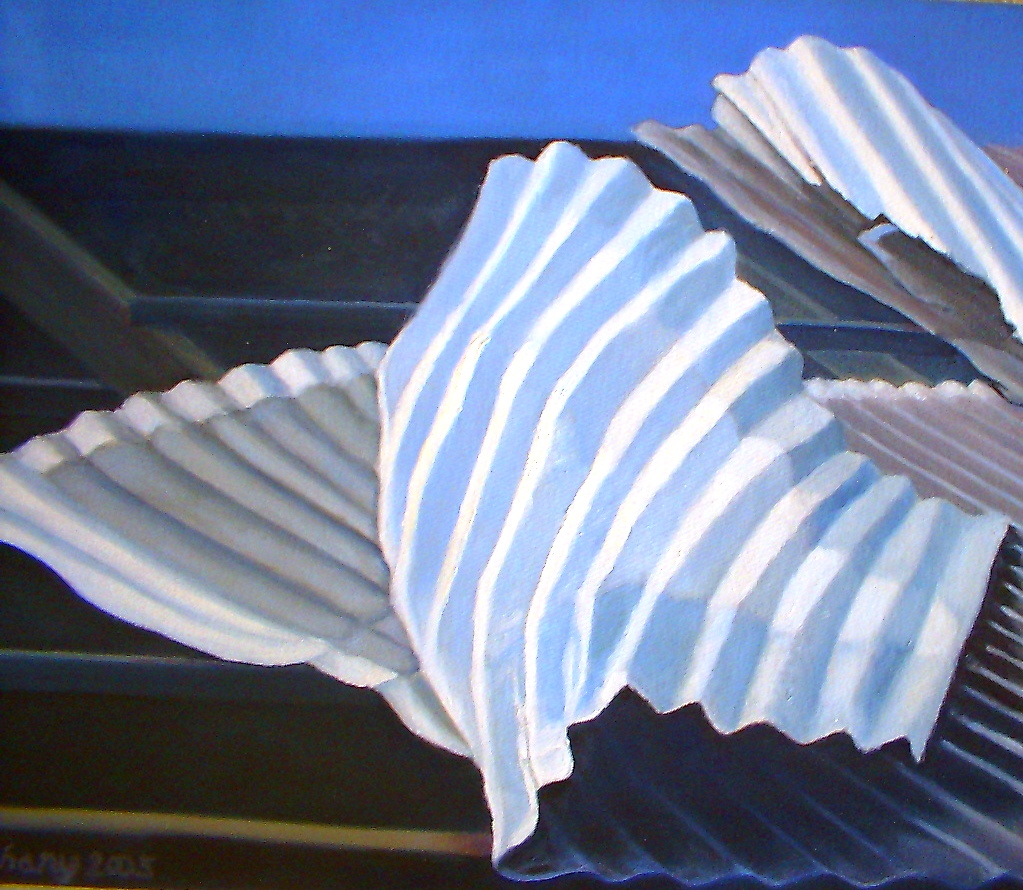
Remembering the historic trauma of Ivan 20 years later, art — particularly an exhibit put on by Grenada Arts Council post-Ivan — demonstrates the important role that a visual record plays in our society. I believe that art should reflect the time and place that it is created in and this exhibit exemplifies a rare moment where there is something being recorded that represents a collective experience.
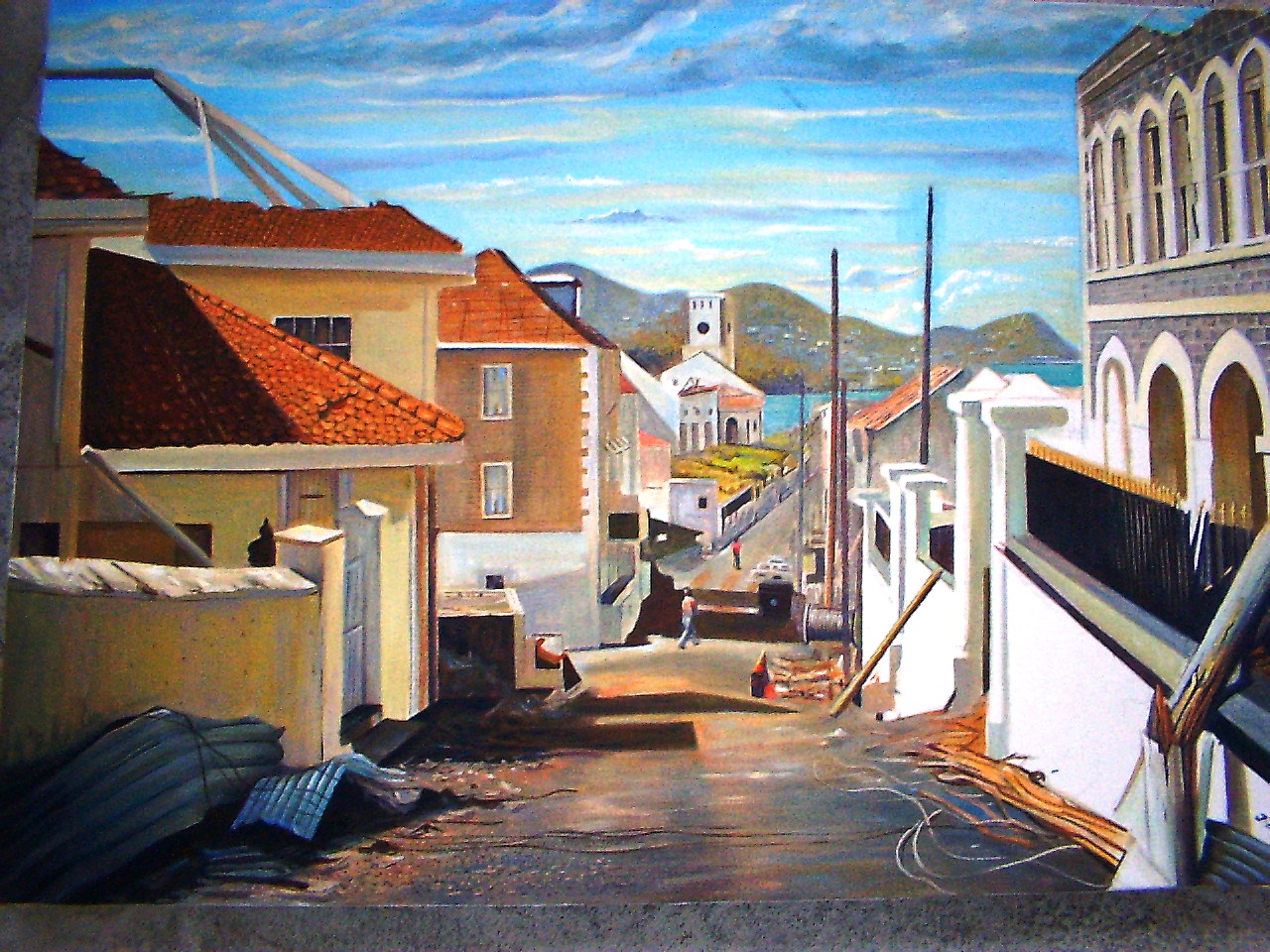
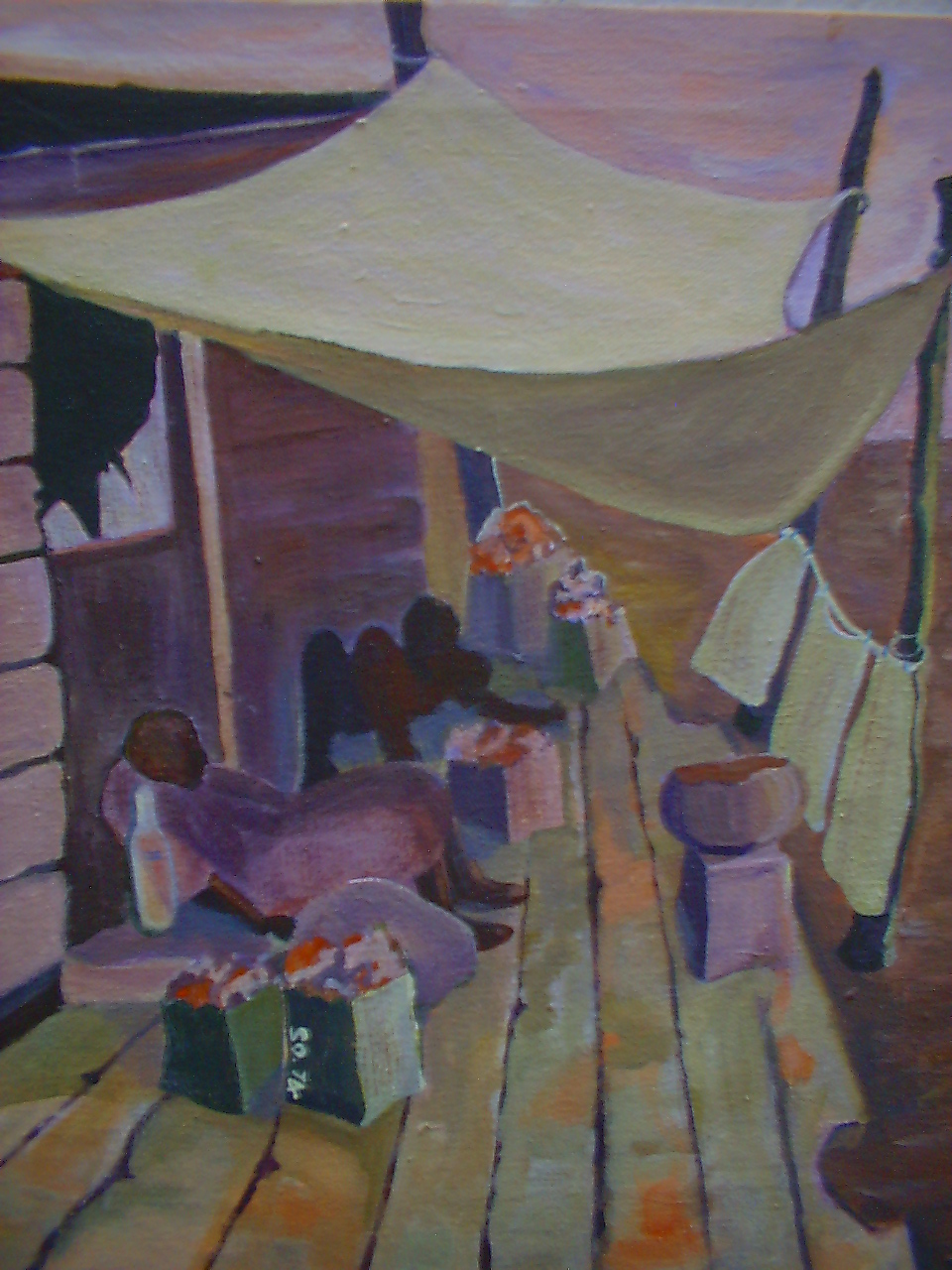
Paintings of twisted metal and roofless churches remind and inform the next generation and also manifests the resilience of the artists who created the artwork. Artwork depicting typical Grenadian scenes and beautiful motifs during this time all of a sudden represent something less typical. Are these scenes and subjects now just memories? Are they an escape into a Grenada that never experienced disaster? In any case, the resilience of the artists through the artwork is apparent. The artwork prevails and so does the artist.
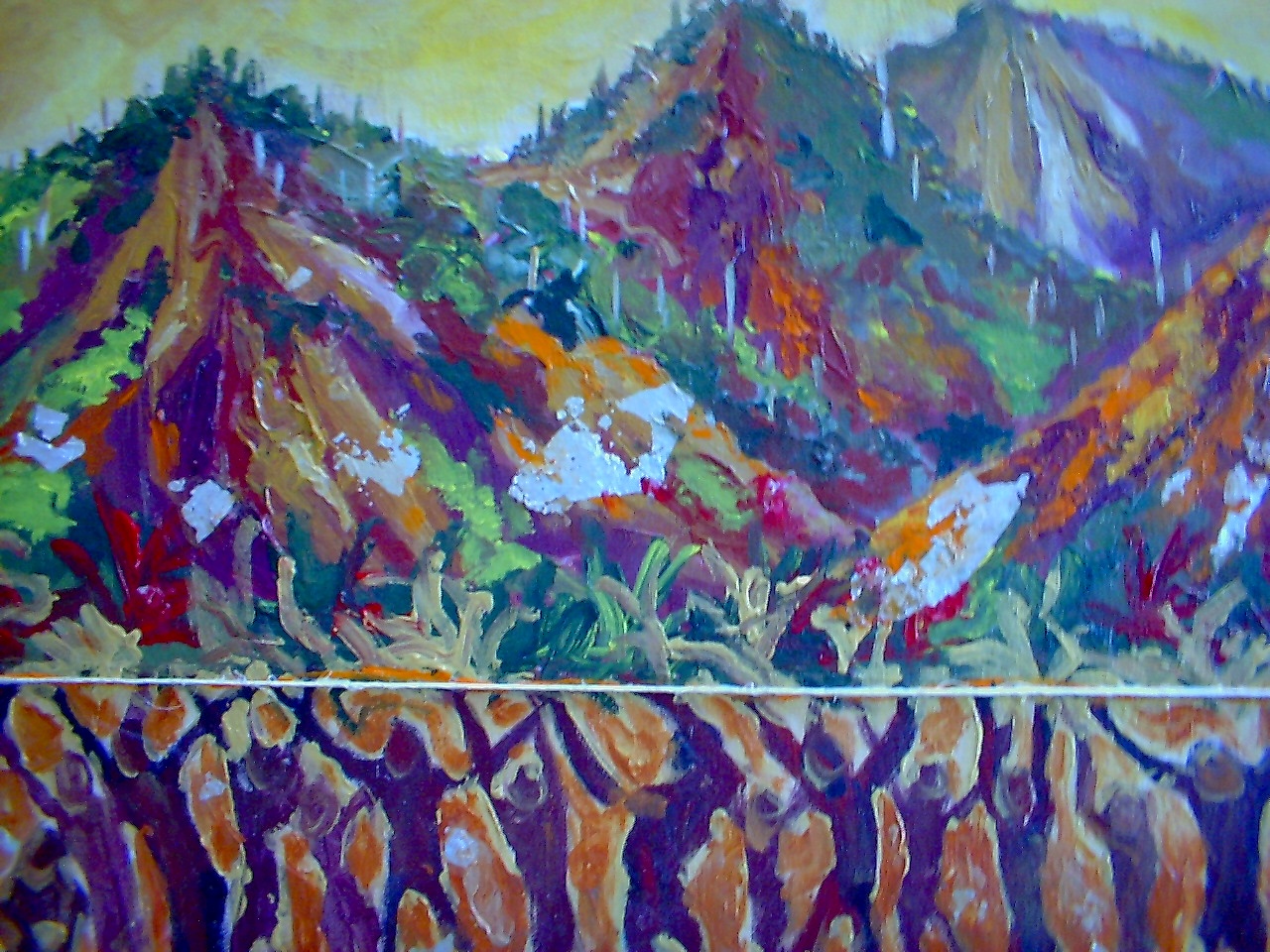
Historically, these images contribute to Grenada’s art history as artwork produced during a time of duress. They reflect not only the visual profile of the time but also the artist’s ability to pour themselves into acts of creation in the face of profound acts of natural destruction.
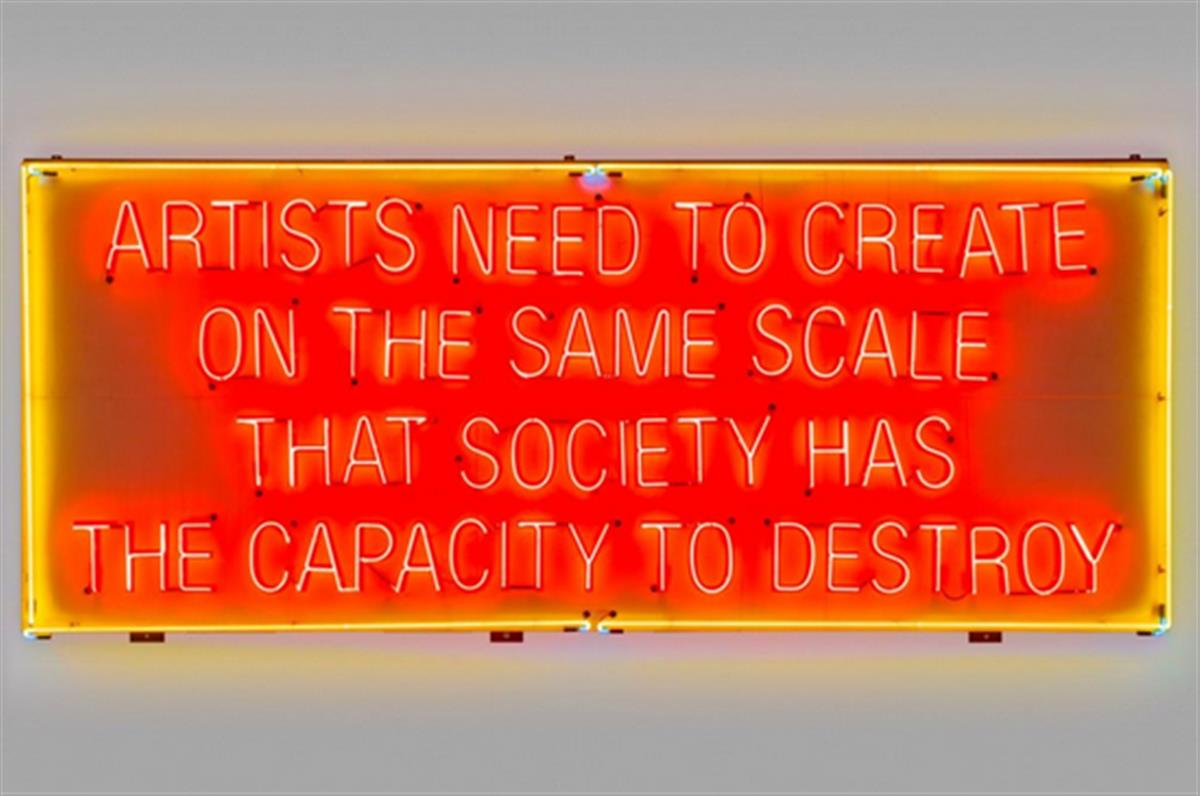
This makes me think about the 1984 quote by Sherrie Rabinowitz, 20 years before Ivan, through the work of Lauren Bom, “Artists need to create on the same scale that society has the capacity to destroy” — a reminder of the power of artists to document, transform, and otherwise be a force of positive renewal.
As artists working in a part of the world particularly prone to destructive forces, we need to be aware and vigilant about responding to the world around us with heightened awareness and creative production; Hurricane Beryl in 2024 was a poignant reminder.
GAC