








by Yadirys Echenique Paz, Ambassador of Cuba to Grenada
The United States’ policy toward Cuba under Donald Trump’s second term cannot be described as a set of isolated actions.
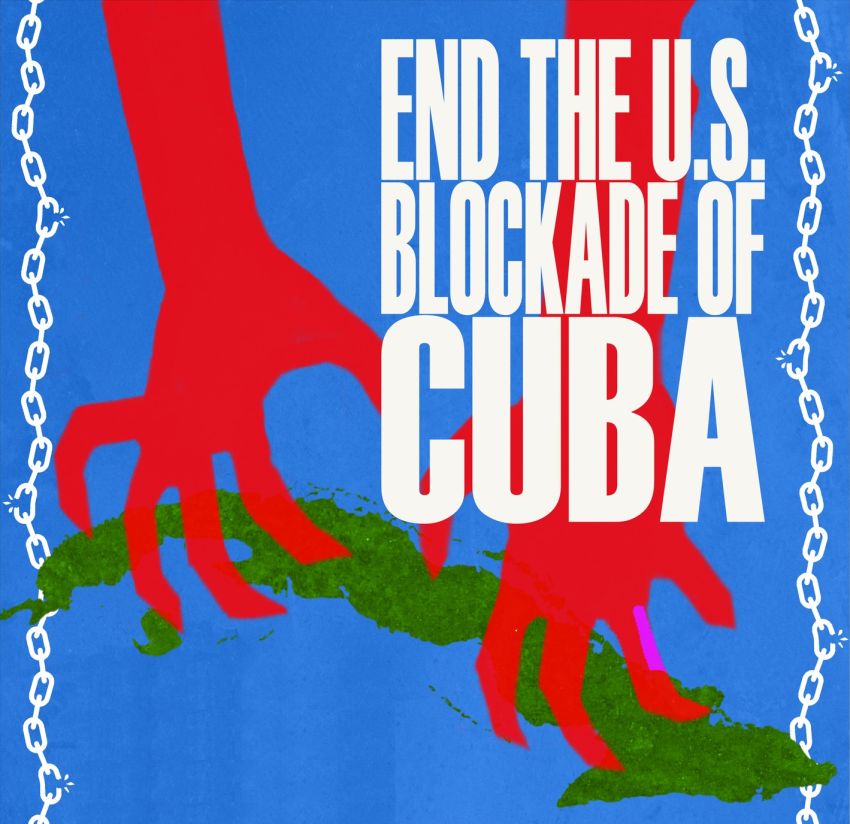
It is an integral and systematic siege, designed to punish the Cuban people, paralyse its economy, and pursue third countries that maintain legitimate ties with the Island.
The numbers speak for themselves: 36 coercive measures in barely a year and a half, spanning the financial, cultural, migratory, diplomatic, and international cooperation spheres. Each one is a link in the chain of pressure intended to strangle Cuba.
- In the financial sphere, the reincorporation of Cuba into the spurious and unilateral List of State Sponsors of Terrorism (20 January 2025) raised the Country Risk and discouraged European and Asian tourism. Added to this was the reactivation of Title III of the Helms-Burton Act (31 January 2025), which opens the door to lawsuits against foreign investors. Likewise, the inclusion of the Cuban remittance company Orbit S A in the restricted entities list led Western Union to suspend its operations with Cuba (6 February 2025)
- In the migratory and cultural sphere, humanitarian parole programs and visas for academic, sports, and scientific exchanges were suspended (January–February 2025), as well as migration talks scheduled for April 2025. Cuban sports teams were even denied entry, such as the women’s volleyball team (26 June 2025) and the children’s baseball team from Pinar del Río (13 July 2025)
- In international cooperation, visas were restricted for officials from African and Central American countries linked to Cuban medical programs (August 2025). This was a direct attack on the solidarity Cuba offers the world
- In the energy sector, additional tariffs were authorised on countries supplying oil directly or indirectly to Cuba (29 January 2026), and the Island was excluded from licenses related to Russian crude oil trade (19 March 2026)
- In the diplomatic sphere, restrictions were imposed on Cuba’s own Embassy in Washington (18 April 2025), and Cuban delegations were denied participation in international organisations such as the Pan American Health Organisation (29 September 2025)
The pattern is clear: maximum pressure, extraterritoriality, and collective punishment. This is not about political differences, but about a strategy of strangulation aimed at breaking the resistance of an entire people.
The inclusion of Cuba alongside Venezuela, Iran, North Korea, Russia, and China in the list of “foreign adversaries” (21 February 2026) confirms the intention to isolate the island in every sphere. Who in their right mind can believe that Cuba is a real threat to the national security of the United States?
In conclusion, these measures are not mere sanctions: they amount to a total blockade, an act of economic warfare that violates fundamental principles of international law and human rights. The international community must recognise that behind every restriction, every denied visa, and every imposed tariff, there is a people who suffer — but also resist.