




by Victor Clark, Resident British Commissioner to Grenada
It is always busy in the weeks running up to Independence Day celebrations in Grenada, and this year my focus was on trade and business.
First, the Head of UK Trade Policy in the Caribbean Lorcan O’Brien visited Grenada, swiftly followed by a delegation from Cambridge University and the Commonwealth Secretariat, who were joined by the UK Envoy for the Commonwealth and working through the Commonwealth Investment Network they are providing hands on support to three Grenadian businesses doing amazing things in sargassum use, renewable energy, sustainable feeds and agro-tourism.
Through all those conversations was the reminder that international trade is navigating a challenging period. Geopolitical tensions, slower global growth, tightening regulations, rising protectionism, and increased tariffs, alongside growing non‑tariff barriers, are reshaping the global trading landscape. These forces fragment supply chains, drive up costs, and create uncertainty for businesses everywhere. No country is insulated from these pressures, and households around the world feel their effects through a higher cost of living.
Yet amid these global headwinds, the United Kingdom has not wavered in its commitment to open, rules‑based international trade. Lorcan reminded Grenadian stakeholders and businesses that under the UK-Caribbean Economic Partnership Agreement (EPA) all Grenadian goods (except arms and ammunition) are entitled to enter the UK tariff-free with no quotas or limits. This provides a significant competitive advantage over countries with no trade agreement with the UK, or one less generous. Exporters can access a step-by step guide on how to export to UK, and more detailed information can be found here. There are also sector-specific resources on the UK governmental portal, e.g. exporting fish to the UK. The EPA is the UK’s most comprehensive and generous agreement of its kind also provides extensive liberalisation of services sectors.
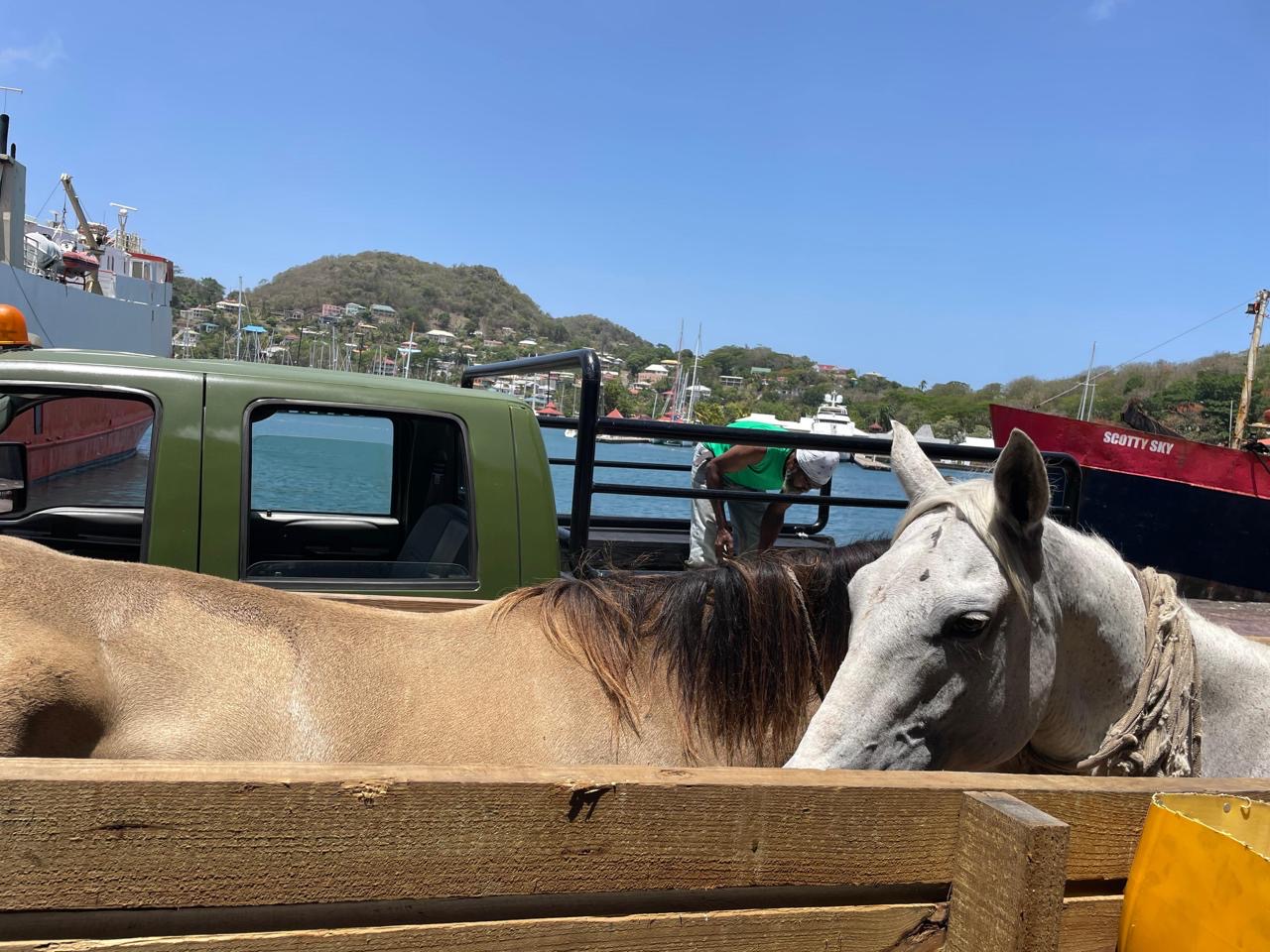
Another challenge can be logistics. Grenadian exporters benefit from existing, reliable logistics links: multiple weekly flights with British Airways and Virgin Atlantic, as well as direct weekly shipping routes via Geest, all with available capacity.
For Grenada’s economy to realise its full potential, greater support is essential for small and medium‑sized enterprises (SMEs), which remain the backbone of the country’s private sector. One of the most significant barriers they face is access to finance. Recognising this, the UK funded the creation of the Commonwealth Investment Network at the last Commonwealth Heads of Government Meeting. As, I mentioned at the beginning a delegation just visited Grenada, providing hands-on support to 3 local SMEs, who will go on to pitch to potential private investors in UK later this year.
This adds to years of UK partnership through initiatives such as Compete Caribbean, which has strengthened the competitiveness of Grenadian firms across various sectors, including key industries like fisheries, floriculture and tourism. As I write, further support through Compete Caribbean has just been announced for Simply Pure Agro-processing cluster in Grenada. The UK is also supporting opportunities for women-led businesses through the SheTrades Caribbean Hub, helping entrepreneurs expand into regional and international markets.
We also recognise that SMEs in Grenada face another major challenge: vulnerability to climate change and hurricanes. To help build resilience, the UK has invested in supporting climate‑smart infrastructure in Grenada that will improve SME and public access to healthcare (medical facility retrofits), water (UKCIF water project) and renewable energy (geothermal exploration and battery energy storage); the building blocks for Grenada’s communities and business.
We have supported agriculture and blue economy initiatives, including partnering in the development of parametric insurance products. These products, whose premiums the UK helps underwrite, contributed towards payouts to SMEs, farmers and fisherfolk following Hurricane Beryl, as well as supporting the recovery of broader state infrastructure. They continue to provide resilience against the future.
Private‑sector enterprise drives Grenada’s economic strength, and open, trusted partnerships drive progress in the wider world. At a time when many nations are turning inward, the UK continues to look outward, committed to collaboration, opportunity, and shared prosperity. With the right tools, the right support, and the right partners, Grenadian businesses can thrive far beyond their shores. Our commitment is simple: the UK remains open — open to trade, open to partnership, and open to a future where both our countries grow stronger together.