

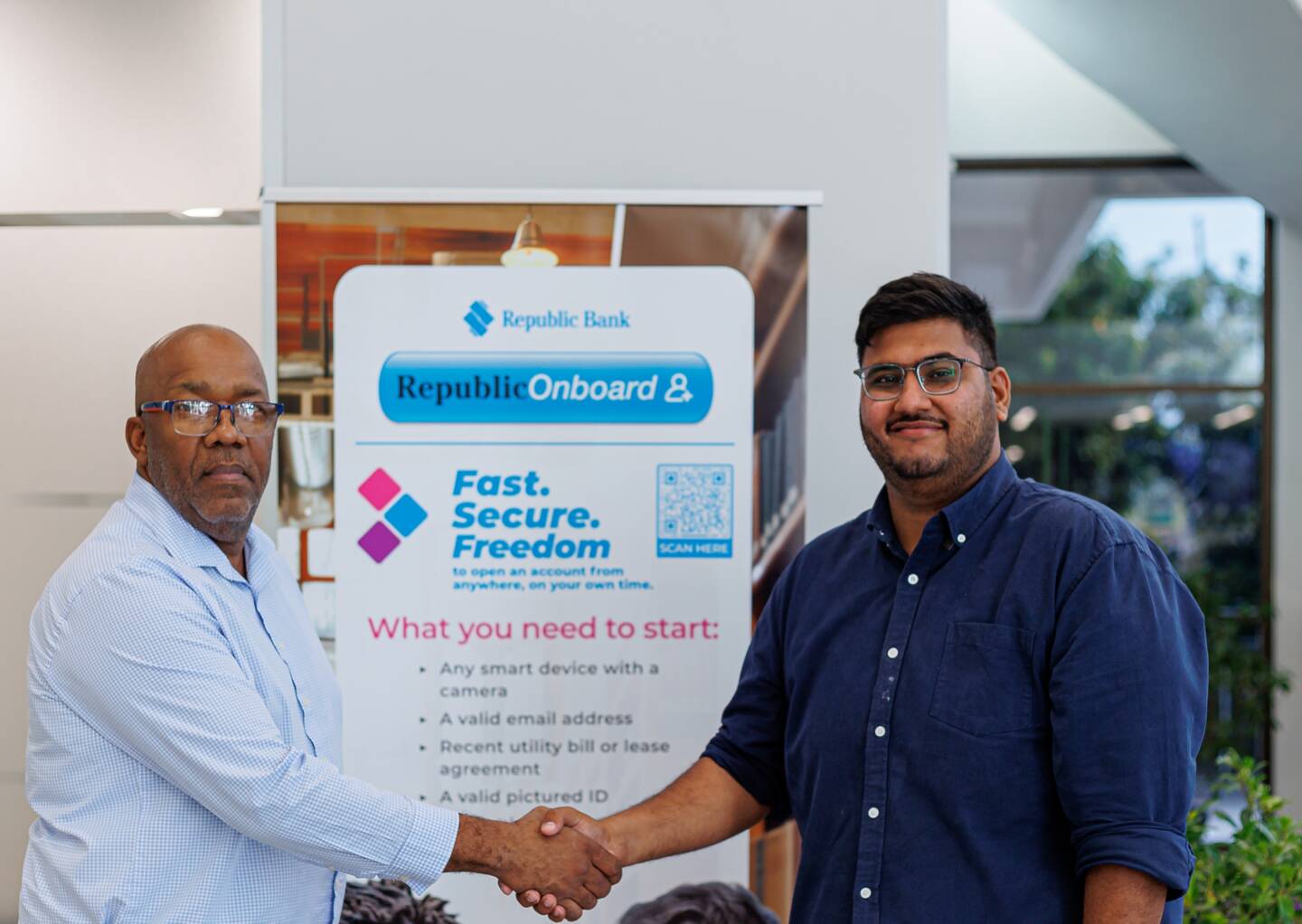









The Caricom Private Sector Organisation (CPSO) represented by CEO and Technical Director Dr Patrick Antoine participated on Monday, 24 March, in Day 1 of the United States Trade Representative (USTR) Public Hearing on Proposed Actions in Section 301 Investigation of China’s Targeting of the Maritime, Logistics and Shipbuilding Sectors for Dominance, held in Washington, DC.
Dr Antoine delivered oral testimony on the implications of the proposed measures for Caricom and the unintended consequences for Caricom economies, private sector business, and consumers, as maritime transport accounts for more than 90% of Caricom’s trade in goods.
Statement delivered by Dr Patrick Antoine
We welcome the opportunity to provide testimony at this import phase of the USTR process.
I make these comments on behalf of the Caribbean Community (Caricom) Private Sector Organisation (CPSO), a regional private sector organisation representing over 5,500 private sector firms across the 15 Member States of the Caribbean Community. We represent a significant component of Caricom economies.
The CPSO understands that the examination of China’s policies and practices for dominance of maritime, logistics and shipbuilding sectors are in keeping with the policy objectives of the US.
As proposed, however, the USTR measures will result in unintended consequences for Caricom economies, private sector business, and consumers, as maritime transport accounts for more than 90% of Caricom’s trade in goods.
We therefore wish to suggest 2 possible options for consideration.
Option One — In the interest of sustaining the shipping and logistics requirements of US-Caricom trade, the Caricom private sector, requests the USTR to seek alternatives to the measures proposed in response to the Section 301 investigation, until such time as the shipbuilding and associated industries in the US are developed to fill the gap that will emerge from the proposed remedies.
Should the USTR decide to proceed with the application of the proposed remedies, the CPSO, on behalf of the regional private sector, requests that considerations be given to exploring an exemption for Caricom/Caribbean States (as a ‘second-best’ option) — Option 2.
Such an exemption (preferably legislated) could be based on:
- Maintaining and expanding Caricom–US trade and commerce — the US has maintained a trade surplus with Caricom/Caribbean for more than 3 decades
- Grandfathering of existing vessels — ensuring that smaller vessels currently operating between the US and the Small States of the Caribbean (many of which are China-built), critical to supporting the ‘short-sea’ shipping requirements of US-Caricom trade, are not subject to new penalties
- Exemption for our relatively small Caribbean transshipment hubs- recognising the strategic role of our small Caribbean ports in global supply chains and ensuring that US-Caribbean trade remains uninterrupted
- Flexible policy implementation — allowing regional (Caribbean) operators time to adjust and explore alternative vessel sourcing options rather than enforcing sudden financial penalties
- Stronger US–Caribbean maritime partnerships — encouraging collaborative solutions rather than restrictive policies that could weaken regional trade stability
- Mutual benefits of exemption to US and Caricom businesses as contemplated under the Caribbean Basin Economic Recovery Act (CBERA) and Caribbean Basin Trade Preferences Act (CBPTA)
The justifications for our 2 proposals are as follows:
US: Caricom’s major trading partner with sustained trade surpluses:
The US is Caricom’s largest trading partner, accounting for 43.7% of total Caricom imports of goods and approximately 19.7% of Caricom’s exports in 2023. While the US recorded trade deficits with Latin America and the Caribbean (LAC) as a whole, trade surpluses with Caricom have existed since the 1990s.
The US also maintains recurring annual trade surpluses with Caricom for services trade.
We should continue to support the growth of US–Caricom trade and commerce, but at the very least to do nothing that disrupts these trade gains.
Limited shipping options for several Caricom States requiring ‘short sea’ shipping:
As proposed, when the USTR trade remedies are applied to the smaller ships used in the Caribbean the additional cost per container is estimated to be between US$2,000 and US$4,000. Further, we note that supply vessels are in short supply, will take years to build, and the US shipbuilding capacity is unable to meet this demand in the near term.
The proposed USTR measures are particularly detrimental to the ‘short sea’ shipping between the USA and the Caribbean. The use of smaller purpose-built ships making more frequent calls disproportionately increases the cost of the proposed measures to both Caricom and the US trade.
Several Caricom States are supported by 2 or 3 shipping lines, which are vital for agriculture, manufacturing and critical supplies; absolutely critical, for Antigua and Barbuda, St Kitts and Nevis, Grenada, St Lucia, and Dominica, to name a few.
Market Erosion for US and Caricom farmers, manufacturers, exporters, distributors, among others:
The US is Caricom’s most significant supplier of agriculture and energy products.
As proposed, the USTR measures will lead to the loss of competitiveness of US and Caricom farmers, ranchers, processed food manufacturers, etc. and to the re-orientation of supply chains and value chains to other countries and regions. The US is the dominant supplier of bulk commodities, corn, wheat, soybeans, and other grains, around which major industries undertaking processing and transforming have developed, such as flour, feed, finished goods, etc., which could be impacted. In its present form, the USTR proposal could result in the re-orientation of supply chains.
Caricom’s far smaller level exports to the US, for agriculture and manufactured products, that currently compete with small margins, will also be significantly reduced.
US investments in Caricom agriculture and manufacturing entities will be negatively impacted in sectors such as milling, and processed products, etc.
Many Caricom value chains will be impacted by the USTR ‘fees’ multiple times, as imported intermediate inputs are often re-exported to the US in other forms (intra-industry trade).
Tourism:
The sector has evolved an integrated supply and logistics network, which includes procurement, provision and servicing, with participation from key sectors, vis., agriculture, manufacturers and industrial products among our highly integrated Caricom and US economies.
- Impact on Existing Plant and Assets — US–Caricom highly integrated in cruise tourism, therefore, could suffer significant cost and Inflationary effects
- Impact on cruise line provisioning — as proposed USTR proposal could result in ‘fees’ being applicable multiple times for cruise line provisioning, where products cross US ports more than once (first as US exports, then as US imports through final products)
- Impact on New Builds — tremendous uncertainty — fear of cost escalations for hotel and tourism projects already approved and or projects currently in the midst of constructions
Energy security:
Caricom energy sectors (Guyana, Trinidad and Tobago, Suriname) is a major US supplier of oil, gas, methanol, ammonia, urea, ammonium, and nitrate (UAN). Caricom Members are major importers of petroleum products from the US.
Since nearly all energy companies fall within the scope of the measures proposed by the USTR, there will be a loss of competitiveness for both Caricom and the US energy sectors — [an] unintended consequence.
As proposed, the USTR proposal will undermine both the US and Caricom’s shared commitment to energy security.
Conclusion:
These comments stand alongside the more detailed comments previously submitted to the process.
CPSO