










by Rochelle
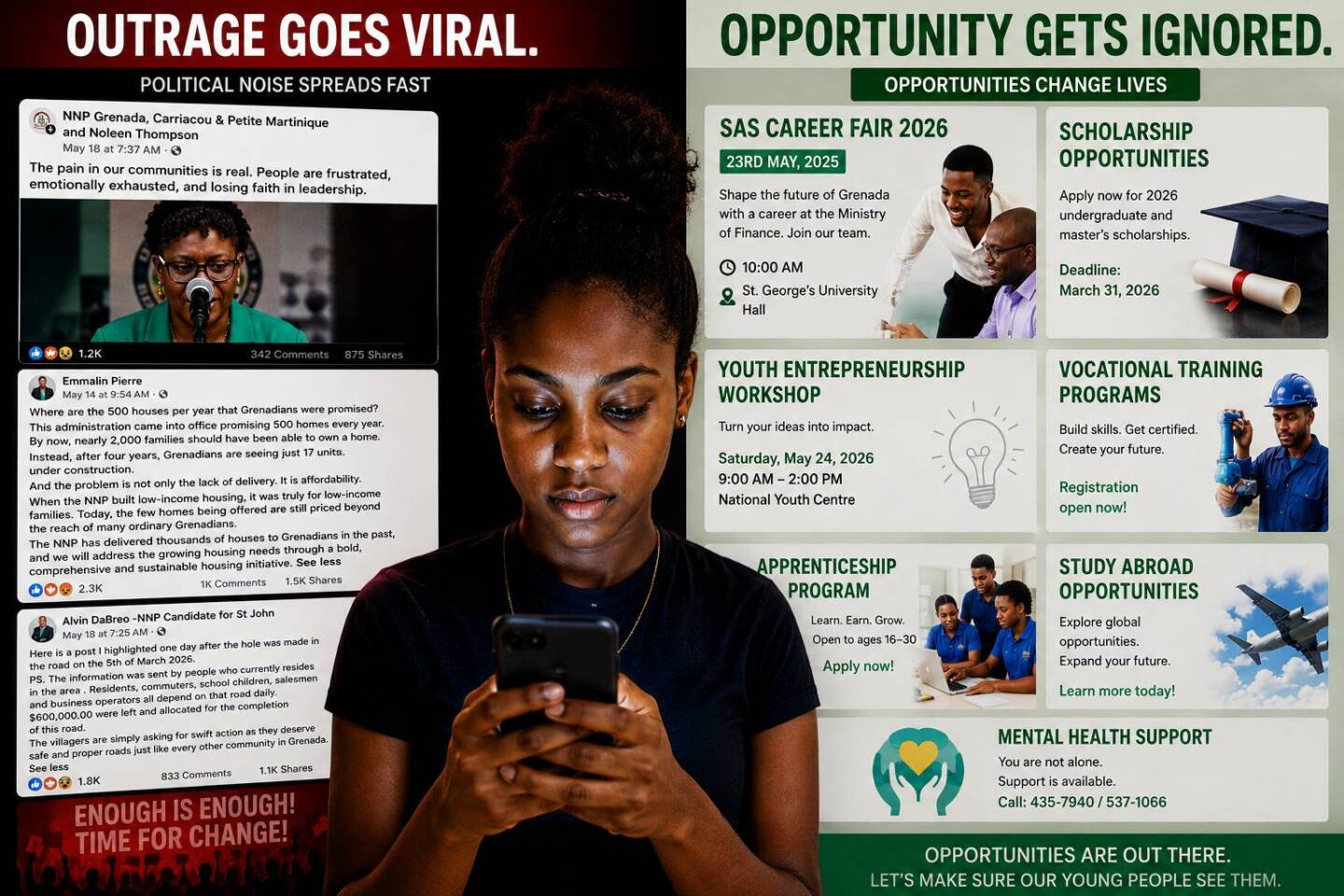
Many of Grenada’s political conversations today are centred around a few growing concerns: youth hopelessness and the survival of our productive sectors.
Recently, opposition figures, including St David’s candidate Noleen Thompson and Opposition Leader Hon. Emmalin Pierre, have spoken passionately about the emotional and social breakdown affecting young people and the “painful exercise in survival” facing our farmers and families.
Their concerns are not unfounded. Across the Caribbean, people are struggling with economic pressure and a sense of instability. But if this crisis is truly as dire as the platform speeches suggest, we must ask an uncomfortable question:
What responsibility do political organisations and influential leaders have in actively connecting our citizens to opportunity?
As a researcher, I spend a significant amount of time tracking our legislative changes and administrative notices. One thing is pretty clear: the “opportunities” are not imaginary. While political rhetoric focuses on a “disconnected” budget and a failing economy, my recent audit of regional and national agencies has revealed a steady stream of legitimate pathways for training, education and advancement currently available in 2026.
Consider a few resources currently sitting on government and regional notice boards that rarely make it to your newsfeeds:
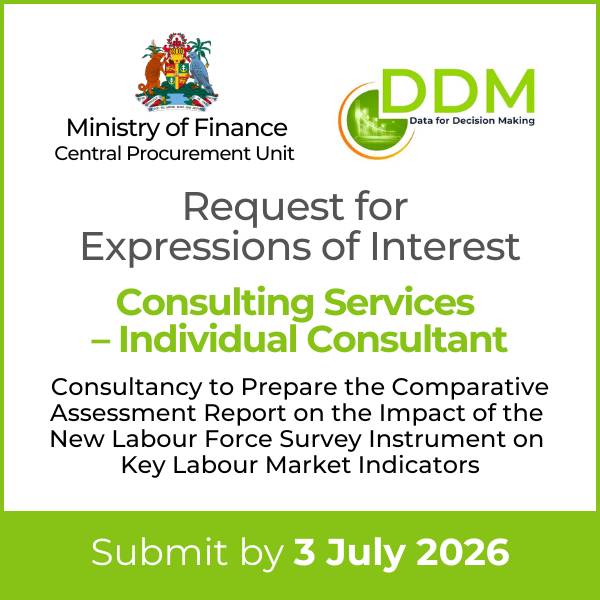
For the Youth: The Grenada National Training Agency (GNTA) is currently coordinating vocational training for over 160 unemployed youth, while the Ministry of Education has active calls for international scholarships in China and beyond.
For the Farmers: Just this week, the Ministry of Agriculture opened applications for Agriculture and Fisheries extension assistants — jobs specifically designed to bring technical guidance and climate-resilient support directly to rural communities. The ministry also allocated $500,000 under the 2nd phase of the National Spice Replanting Programme so farmers will gain some financial assistance and technical support for their farms between 10–20 acres.
For the Small Business Owners: The OECS Commission is launching the next phase of the Regional MSME Matching Grants Programme, offering collaborative grants between US$100,000 and US$150,000 for local fisheries and marine tourism operators. Simultaneously, the Grenada Development Bank’s Small Business Development Fund stands ready with microloans of up to EC$40,000 to help young entrepreneurs purchase equipment and stock.
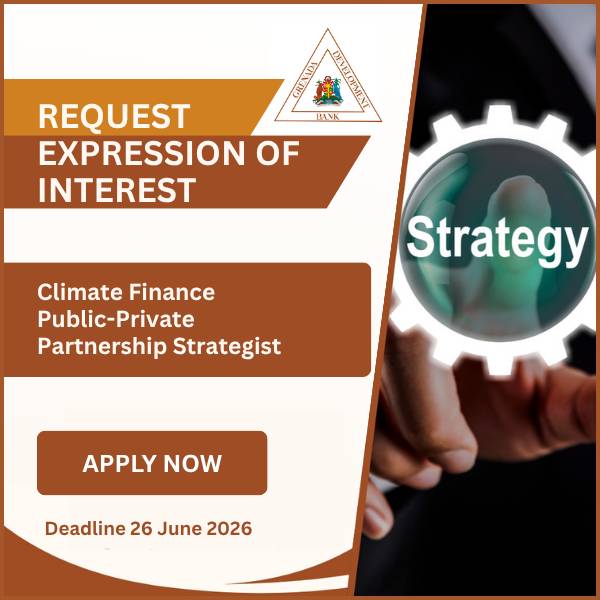
For the Climate-Conscious: The G-CREWS project and SAEP continue to offer specialised training and grants for climate-smart agriculture and rainwater harvesting.
The opportunities do exist. Yet, far too many young people and struggling farmers either never hear about them or hear about them too late.
The Information Gap
In recent years, political communication in Grenada has become heavily centred around outrage. We see rapid-fire reposts of budget criticisms and stories of farmers struggling to make ends meet. These are serious issues, but practical opportunity-sharing has increasingly become secondary.
Political parties today are not just campaign organisations; they are major information hubs with thousands of followers. If political leaders genuinely believe that our farmers are at a breaking point and our youth are losing hope, then opportunity-sharing should become part of political culture, not an afterthought.
Hopelessness is not only emotional. Sometimes it is informational.
A farmer who only hears speeches about how “unbearable” the cost of living is, but never sees the link for agricultural grants or technical support, may slowly begin feeling like there is no way forward. When leaders politicise a story of despair without offering a link to the support that might alleviate it, we must ask: Are we documenting the struggle, or are we facilitating the solution?
This is not a criticism unique to one party. Across the landscape, there is far more effort devoted to amplifying despair than systematically connecting citizens to advancement. While sharing a link to a training workshop won’t solve unemployment overnight, it is a practical and immediate way leaders can contribute to national development. Leadership is not only about identifying problems; it is about helping people navigate pathways forward.
In a country where many young people feel uncertain, the information leaders choose to amplify matters deeply. If we can use our reach to mobilise dissatisfaction, surely, we can use it to mobilise access. Because while a political critique might win a news cycle, a shared opportunity might actually win a future.








Commendation and Critique of Rochelle’s Piece
Rochelle’s article is a refreshing and much-needed intervention in Grenada’s often toxic political discourse. In a landscape dominated by outrage, blame, and partisan grandstanding, she courageously shifts the focus from mere criticism to practical solutions. Her central argument — that hopelessness is sometimes informational rather than purely economic — is insightful and mature. By cataloging real, currently available opportunities through GNTA, the Ministry of Agriculture, the Grenada Development Bank, and regional programs like OECS MSME grants, she performs a valuable public service. Too often, citizens (especially youth and farmers) remain unaware of existing support systems, not because they don’t exist, but because political actors prioritize emotional mobilization over empowerment.
The writer rightly challenges both political parties to evolve beyond “documenting the struggle” to actively facilitating solutions. Her point that political organizations function as major information hubs carries weight. If leaders can rapidly spread criticism, they should equally invest energy in sharing actionable links, application deadlines, and success stories. This call for constructive leadership is timely and morally sound.
However, the piece has limitations. While Rochelle acknowledges that economic pressures are real, she risks understating their severity. Listing programs is helpful, but it does not address deeper structural issues such as inflation, brain drain, limited private sector growth, and the effectiveness (or lack thereof) of these initiatives. Many government programs in the Caribbean suffer from poor execution, bureaucratic delays, favoritism, or insufficient scale. Mentioning a $500,000 allocation for spice replanting sounds promising, but without data on actual uptake, success rates, or long-term impact, it can come across as slightly defensive of the status quo.
Additionally, the article leans toward placing responsibility primarily on opposition figures. A more balanced critique would have equally challenged the ruling administration on communication failures and implementation gaps.
Overall, Rochelle deserves strong commendation. Her piece is solution-focused, well-researched, and written with intellectual honesty. In 2026 Grenada, where cynicism runs high, voices urging citizens and leaders to bridge the information gap are essential. She reminds us that effective governance and opposition both require more than speeches — they demand practical hope. If more commentators adopted this tone, Grenada’s political conversation would be significantly healthier.