












by Nisha Paul
- 9 drones purchased for EC$200,000
- FAO unmanned aircraft systems initiative implemented with agriculture ministry in 2023
- Technology can help tackle praedial larceny
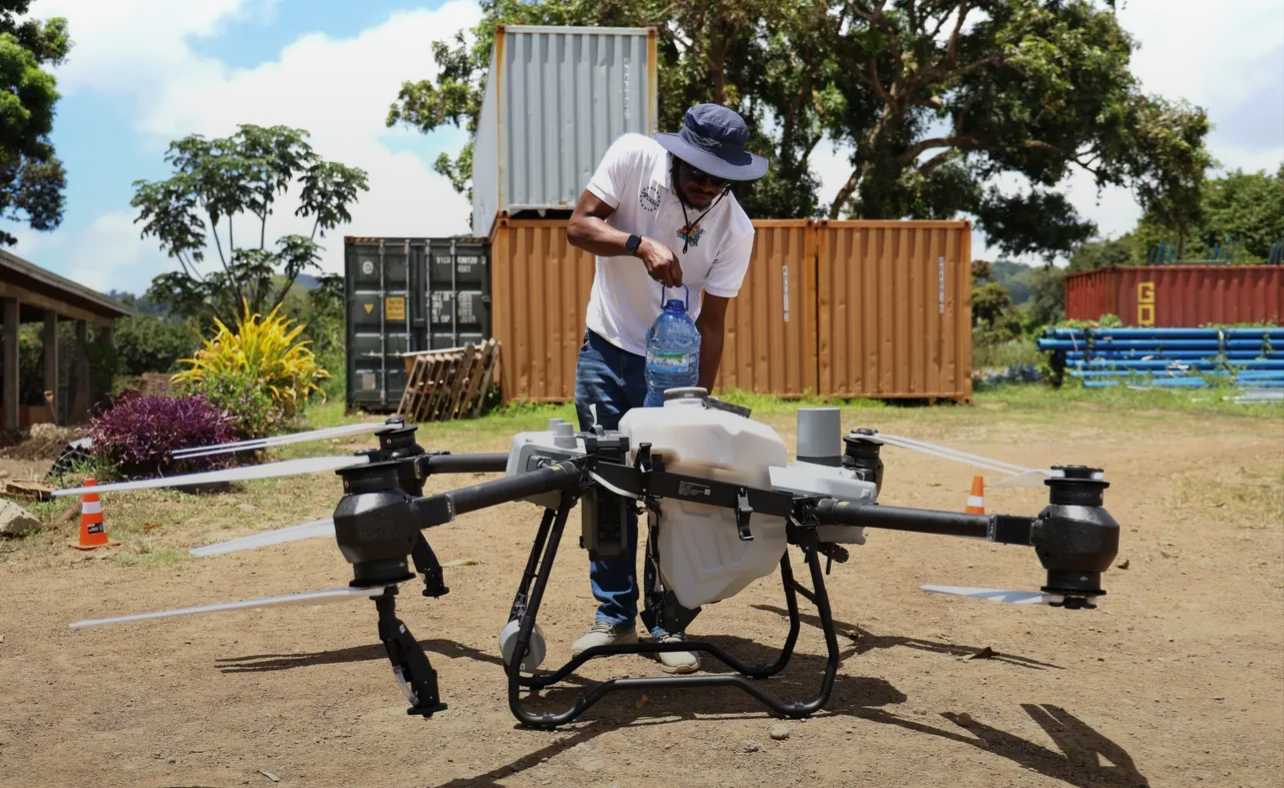
The sound of drones buzzing over fields at the Mirabeau Agricultural Station this week signalled more than just a training exercise.
For 10 officers within the Ministry of Agriculture, Lands and Forestry, it marked the beginning of a major shift in how farming, land management and even livestock protection could soon be handled across Grenada.
After spending the past week learning the theory behind Unmanned Aircraft Systems (UAVs), facilitated by the local company Aerial Vision, officers officially moved into the practical phase of training on Wednesday, with their first hands-on drone-testing exercise.
The initiative forms part of the government’s wider push to modernise the agricultural sector through technology, with officials hoping drones can help farmers work smarter, respond faster and better protect crops and livestock. Government recently invested more than EC$200,000 in the purchase of 9 drones, bringing the total number of unmanned aerial systems managed by the Ministry of Agriculture to 12.
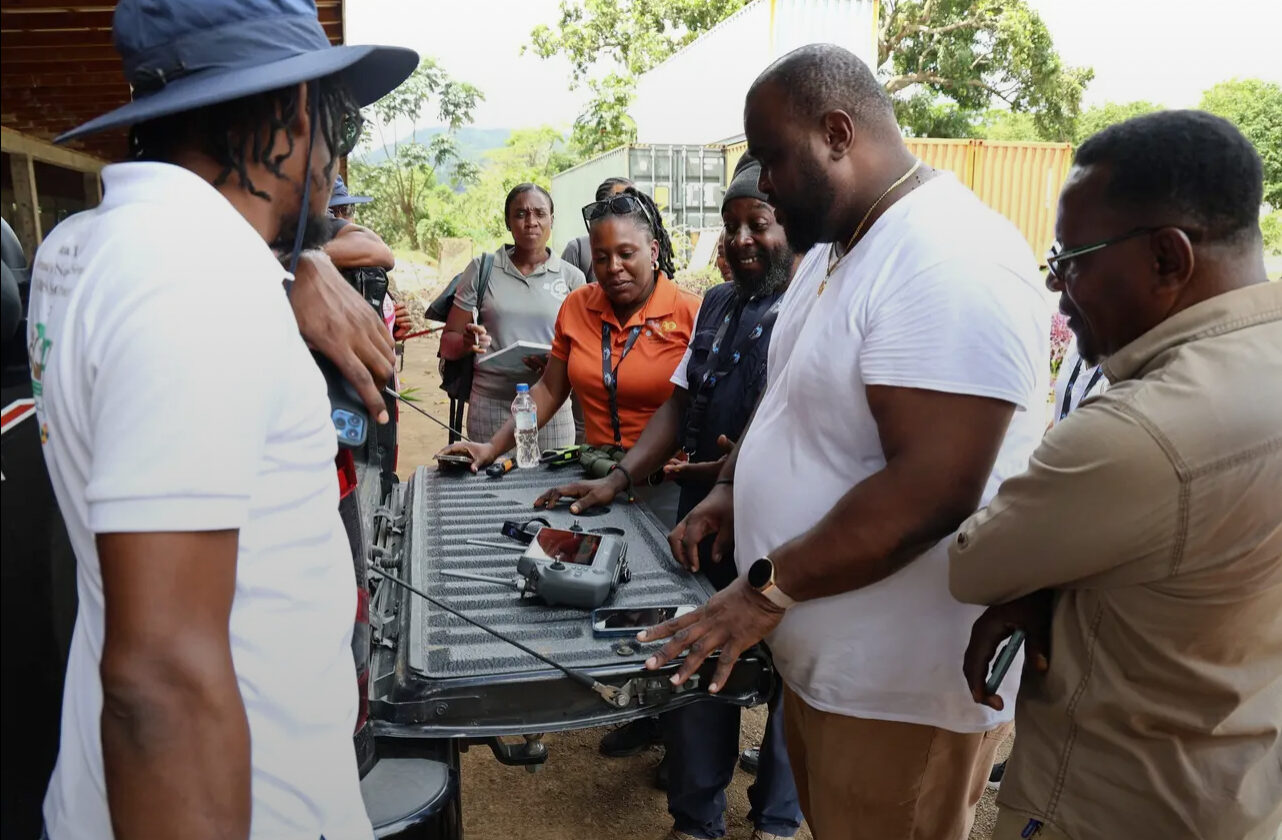
According to UAV Officer within the Ministry of Agriculture, Lands and Forestry, Leon Williams, the training goes beyond simply operating drones, noting that officers are also being introduced to emerging technologies aimed at improving agricultural management and data collection.
The UAV pilot programme builds on the Food and Agriculture Organisation (FAO) unmanned aircraft systems initiative implemented with the ministry in 2023. That programme was designed to support the integration of drone technology into agriculture while encouraging the use of big data analytics, machine learning and artificial intelligence tools tailored for agriculture and other sectors. But beyond agricultural production, officials are also looking at how technology can help tackle one of the sector’s longest-standing challenges — praedial larceny.
The programme will also introduce Radio Frequency Identification (RFID) tagging technology for livestock, a system that uses electronically coded tags to help farmers and officers identify and track animals. Officials believe the technology could become an important tool in addressing predial larceny, a long-standing concern for many farmers who often lose valuable livestock to theft.
“There is another component of this training where we will be training officers to use RFID tags to aid the Praedial Larceny Unit, as well as our farmers, in identifying and locating their animals in cases of theft and other predial larceny issues,” Williams explained.
For many farmers, losing animals can mean losing months of income and hard work. Officials believe the combination of tracking systems and drone technology could provide stronger support for farmers while improving response and monitoring capabilities in rural communities.
The drones are also expected to assist with monitoring forested areas for illegal activities, tracking tree health and conducting aerial assessments in difficult terrain that officers would otherwise take hours or even days to access manually.
Demonstrations involving farmers and extension officers are expected to continue in the weeks ahead as the ministry expands the programme and introduces more technology-driven approaches to agriculture.
Officials believe the initiative is positioning Grenada’s agricultural sector for a future where technology, data and traditional farming practices work together to improve food security, efficiency and resilience.