













• Latest
A proactive and urgent regional strategy to address the threat of El Niño

A proactive and urgent regional strategy to address the threat of El Niño

4 weeks ago
Traffic notice: Settlement Road, Frequente

Temporary road closure: Ravine Public Road, St George

12 hours ago

REOI: OECS Data for Decision Making Project – Consulting Services, Individual Consultant

13 hours ago
People empowerment through construction 

People empowerment through construction 

13 hours ago
OECS Heads of Government focus on trade, connectivity and economic resilience

OECS Heads of Government focus on trade, connectivity and economic resilience

13 hours ago
Vacancy: Chief Executive Officer

GTA vacancy: Human Resource Manager

19 hours ago
Grenada’s alcohol use reality

Grenada’s alcohol use reality

20 hours ago
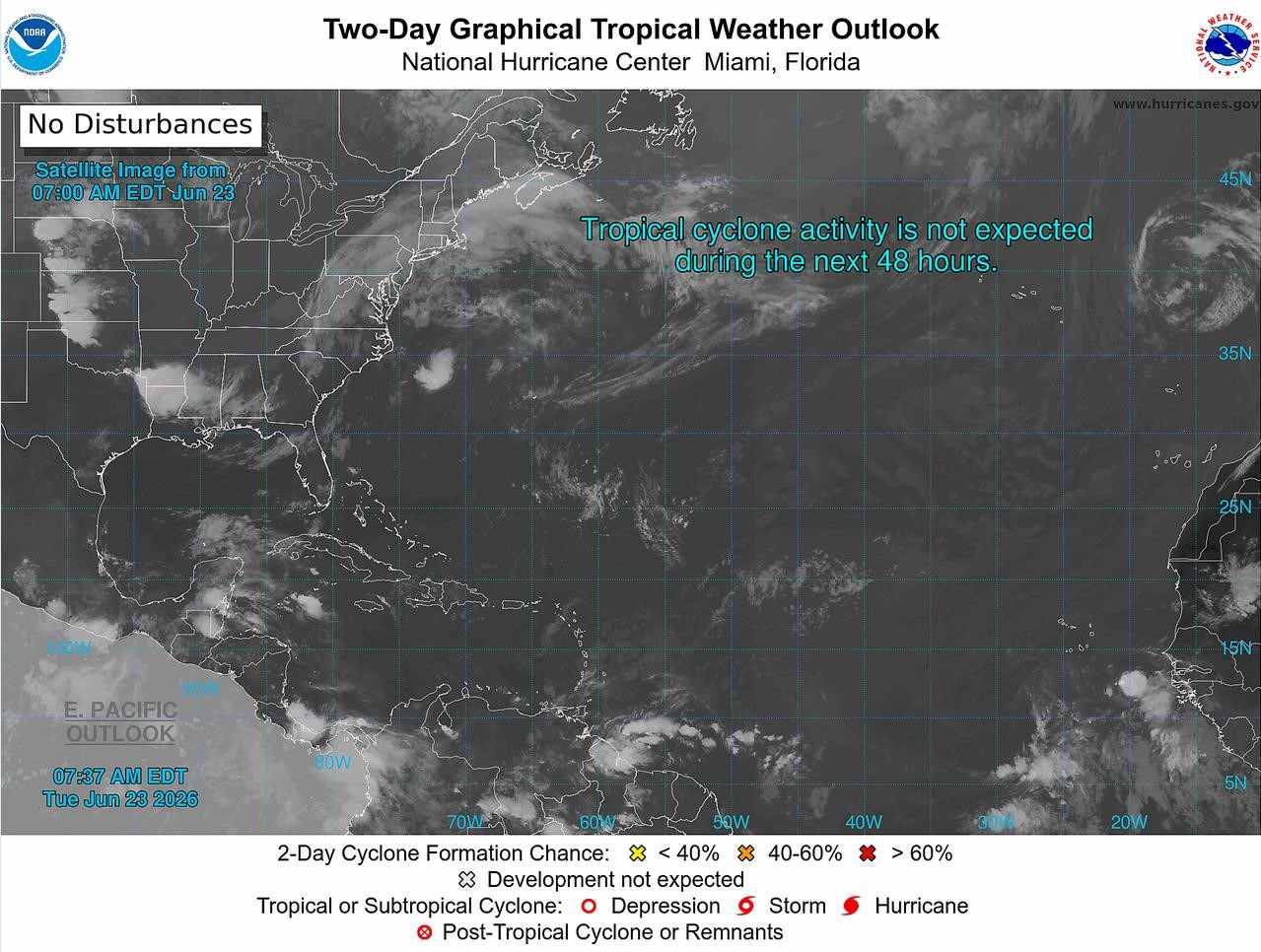
Tropical Weather Outlook:  Tuesday, 23 June 2026 (8 am)

Tropical Weather Outlook: Tuesday, 23 June 2026 (8 am)

20 hours ago
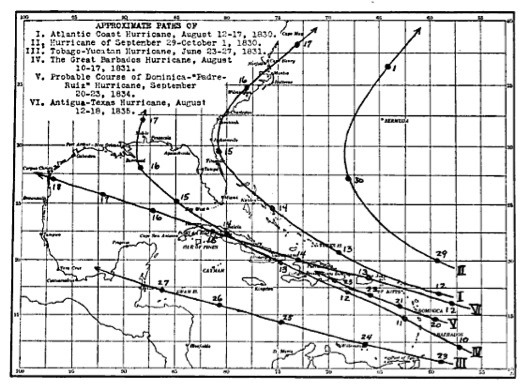
This Day in History

This Day in History: 23 June 1831

22 hours ago

Grenada’s new Atlantic bridge to Nigeria could be a diplomatic turning point

2 days ago
Republic Bank commends MWAG on successful media development programme

Republic Bank commends MWAG on successful media development programme

2 days ago
Prime Minister Mitchell to attend oil and gas summit in Suriname

Prime Minister Mitchell to attend oil and gas summit in Suriname

2 days ago
Enough is enough: The blood of our daughters cries out

Why time is life’s most precious commodity Part 1

2 days ago
NOW Grenada
  • Front Page
  • Categories
    • General News
      • All
      • Agriculture & Fisheries
      • Arts & Culture
      • Business
      • Education
      • Environment
      • Health
      • History
      • Lifestyle
      • Law
      • Politics
      • Technology
      • Travel & Tourism
      • Weather
      • Youth
    • Sports
      • All
      • Athletics
      • Cricket
      • Football
      • Watersports
    • Community
      • All
      • Tribute
    • Crime
    • Features
      • All
      • Today in History
    • Opinion/Commentary
    • Press Releases
      • All
      • Advertisements
      • Notices
  • Video
  • Notices & Vacancies
  • Advertise
  • Contact Us
No Result
View All Result
  • Front Page
  • Categories
    • General News
      • All
      • Agriculture & Fisheries
      • Arts & Culture
      • Business
      • Education
      • Environment
      • Health
      • History
      • Lifestyle
      • Law
      • Politics
      • Technology
      • Travel & Tourism
      • Weather
      • Youth
    • Sports
      • All
      • Athletics
      • Cricket
      • Football
      • Watersports
    • Community
      • All
      • Tribute
    • Crime
    • Features
      • All
      • Today in History
    • Opinion/Commentary
    • Press Releases
      • All
      • Advertisements
      • Notices
  • Video
  • Notices & Vacancies
  • Advertise
  • Contact Us
No Result
View All Result
NOW Grenada
No Result
View All Result

A proactive and urgent regional strategy to address the threat of El Niño

27 May 2026
in Agriculture/Fisheries, OPINION/COMMENTARY
3 min. read
Muhammad Ibrahim. Photo: IICA
0
VIEWS
Share

by Muhammad Ibrahim, Director General, IICA

The extreme variant of the El Niño phenomenon predicted by international weather forecasts, combined with the global fertiliser crisis, poses a dual threat to rural economies, social stability, and agricultural production in Latin America and the Caribbean — a region critical to global food security.

Even separately, both factors pose enormous challenges for regional agriculture. Combined, they could become a perfect storm for millions of producers, affecting food security in quite a few nations.

Forecasts indicate a high probability of El Niño developing this year, with potentially uneven effects: heavy rains and flooding in some regions; prolonged droughts and water stress in others. The common concern is the uncertainty regarding the phenomenon’s potentially greater intensity.

In the Southern Cone, particularly in Argentina and Brazil, some regions could benefit from increased rainfall and a recovery in crop yields. In Central America, the

Caribbean, and northern South America, the outlook is less favourable.

There, the risk of lower yields and crop losses, decreased livestock productivity, disruptions in agricultural markets, and sharp increases in food prices is significant, which can lead to a deterioration in food security and force producers and consumers to face costs running into the millions. These are not potential dangers; recent history bears them out.

These impacts, particularly in rural areas, are often followed by debt, migration, and nutritional decline.

For agricultural producers, especially small and medium-sized ones, climate uncertainty makes it difficult to decide what to plant, how much to invest, or what level of fertilisation to apply. And when fertilisers become more expensive or scarce, many choose to reduce application rates, decrease the area planted, or switch to less demanding crops, with immediate and negative effects on yields and production.

Unlike in the past, it is now possible to anticipate the occurrence, impacts, and consequences of climate phenomena such as El Niño or its counterpart, La Niña.

Today, it is unjustifiable to act only on the consequences and limit ourselves to reacting when drought is advanced, floods occur, crops are lost, or prices rise. We must act sooner to minimise negative impacts.

For all these reasons, the time has come to move toward a proactive regional strategy. It is imperative to promote a broad hemispheric dialogue on agri-food resilience that brings together governments, international organisations, producers, the financial sector, academia, and the private sector around a common agenda: developing anticipation capabilities to protect both agricultural production and life in rural areas.

In this context, international technical cooperation, with its capacity for political and technical coordination and its relationships with governments, producers, companies, and international financial institutions, is uniquely positioned to promote regional cooperation agreements and proactive responses, as well as, if necessary, to coordinate aid and solidarity efforts to address emergencies.

Among the public-private collaboration mechanisms that can be promoted are regional platforms for climate and agricultural coordination; agreements with fertiliser and logistics companies to ensure supply in vulnerable areas; innovative financial instruments in partnership with public and private banks; the expansion of climate insurance; and joint technological adaptation programs for small and medium-sised producers.

Private sector participation is crucial for these strategies to be viable and scalable, given that chemical companies, agribusiness, banks, technology firms, and export chains play a fundamental role in the shared development of agricultural resilience.

Strengthening early warning systems and transforming climate information into concrete decision-making tools must become a regional priority. Latin America and the Caribbean produce meteorological and agricultural data of immense value, but often that information does not reach producers in a timely manner.

The widespread adoption of drought-resistant seeds and tools for efficient water management, combined with an agronomic management strategy that incorporates advanced technologies (such as GPS, drones, and sensors), should be among the other objectives of this coordination.

The dual challenge posed by El Niño and the fertiliser crisis can also become an opportunity: that of building a new agri-food governance system based on regional cooperation, innovation, and foresight.

Latin America and the Caribbean produce food for billions of people, both within and beyond their borders. Protecting this productive capacity is not merely an economic challenge. It is a strategic issue for development, rural stability, and global food security.

IICA

NOW Grenada is not responsible for the opinions, statements or media content presented by contributors. In case of abuse, click here to report.
Tags: el ninofood securitymuhammad ibrahim

Comment on post Cancel reply

Please enter your valid email address.
Your email address will not be published. Required fields are marked *

This site uses Akismet to reduce spam. Learn how your comment data is processed.

© NOW Grenada Ltd. All Rights Reserved. Terms of Use | Privacy Policy

No Result
View All Result
  • Front Page
  • Categories
    • General News
      • All
      • Agriculture & Fisheries
      • Arts & Culture
      • Business
      • Education
      • Environment
      • Health
      • History
      • Lifestyle
      • Law
      • Politics
      • Technology
      • Travel & Tourism
      • Weather
      • Youth
    • Sports
      • All
      • Athletics
      • Cricket
      • Football
      • Watersports
    • Community
      • All
      • Tribute
    • Crime
    • Features
      • All
      • Today in History
    • Opinion/Commentary
    • Press Releases
      • All
      • Advertisements
      • Notices
  • Video
  • Notices & Vacancies
  • Advertise
  • Contact Us

Copyright NOW Grenada

We are using cookies to give you the best experience on our website.

You can find out more about which cookies we are using or switch them off in . Visit our Privacy Policy | Terms of Use.

No Result
View All Result
  • Front Page
  • Categories
    • General News
      • All
      • Agriculture & Fisheries
      • Arts & Culture
      • Business
      • Education
      • Environment
      • Health
      • History
      • Lifestyle
      • Law
      • Politics
      • Technology
      • Travel & Tourism
      • Weather
      • Youth
    • Sports
      • All
      • Athletics
      • Cricket
      • Football
      • Watersports
    • Community
      • All
      • Tribute
    • Crime
    • Features
      • All
      • Today in History
    • Opinion/Commentary
    • Press Releases
      • All
      • Advertisements
      • Notices
  • Video
  • Notices & Vacancies
  • Advertise
  • Contact Us

Copyright NOW Grenada

Powered by  GDPR Cookie Compliance
Privacy Overview

This website uses cookies so that we can provide you with the best user experience possible. Cookie information is stored in your browser and performs functions such as recognising you when you return to our website and helping our team to understand which sections of the website you find most interesting and useful. Visit our Privacy Policy | Terms of Use.

Strictly Necessary Cookies

Strictly Necessary Cookie should be enabled at all times so that we can save your preferences for cookie settings.