










Caribbean HR leaders, regulators and telecommunications executives are calling for a new approach to global competitiveness, one driven not only by technology and infrastructure, but by people systems, governance and leadership culture.
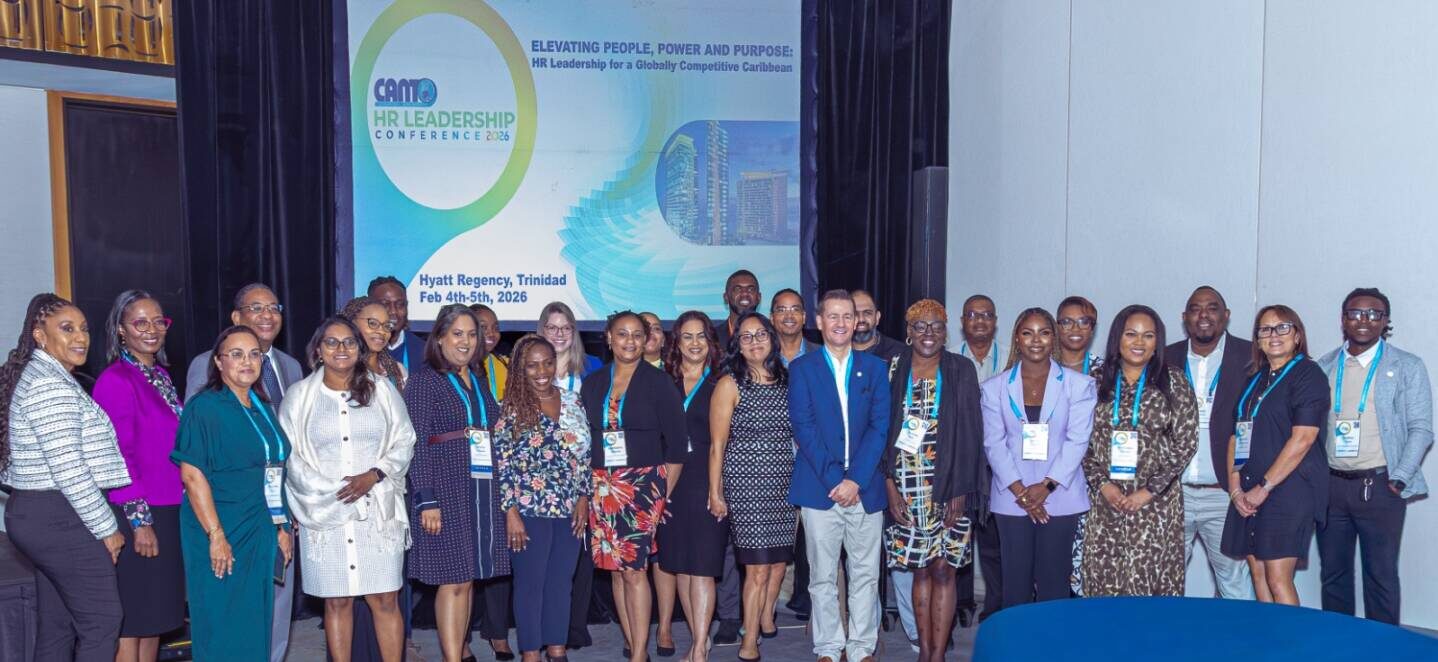
That message emerged during the inaugural CANTO HR Leadership Conference, held on 4 and 5 February 2026 at the Hyatt Regency in Port of Spain. The conference, titled Elevating People, Power and Purpose — HR Leadership for a Globally Competitive Caribbean, was a new addition to the annual CANTO Connect.
The 2-day event, held at the tail end of CANTO Connect, brought together HR leaders and practitioners, CEOs, regulators and regional stakeholders from leading technology and telecommunications companies across the Caribbean and Latin America to examine how leadership, talent development and organisational culture must evolve to support digital transformation and long-term economic resilience across the Caribbean.
HR Leadership and Digital Competitiveness
Delivering the keynote address, Cavelle Joseph-St Omer, President of the Human Resource Management Association of Trinidad and Tobago (HRMATT), positioned HR leadership as central to the region’s digital and economic future.
“Digital transformation has advanced across the Caribbean, with adoption rising significantly in recent years,” Joseph–St Omer said. “Yet nearly 60% of regional companies still struggle to implement new technologies because they lack the skilled people to support them.”
She noted that while technology and investment are increasingly available, talent pipelines and governance structures are not keeping pace. “The technology is here. The investment is here. But the talent pipeline — and the governance structures around it — are not keeping pace,” she highlighted.
Joseph-St Omer outlined the areas where HR leadership must drive change, including AI-augmented workforces, data-literate decision-making, cyber-resilient cultures, project governance aligned to digital delivery, and fluency in cloud and automation technologies. “This is how we build Caribbean competitiveness from the inside out,” she said.
She was direct about the link between governance and competitiveness. “Let me be clear: the Caribbean cannot achieve regional competitiveness without strong governance. Competitiveness is built on trust — and trust is built on people and systems.”
People-first Leadership in the region
Touching on this theme, Liberty Caribbean’s Dominic Boon, VP, People, Liberty Caribbean, delivered a feature presentation that focused on the human aspects of technological transformation. He noted that 85% of the company’s leadership team is Caribbean talent, and half are women, which speaks to our commitment to equity and inclusive leadership.’ “Diverse perspectives strengthen decision-making and help us build organisations that better reflect and serve our communities. A people-first strategy is what turns infrastructure into long-term competitive strength,” Boon highlighted.
Liberty’s team also presented a powerful panel moderated by Reneasha Simmons, People Business Partner, who opened the discussion with how the regional telecom is redefining people practices in the Caribbean through trust-based flexibility, inclusive benefits, and agile, people-first leadership. She reinforced the notion that ‘wellness is not an option, it’s a strategy’ as well-rested and supported employees simply perform better.
Ellen Seed‑Gray, Senior Manager B2C Sales, Liberty Caribbean added, “You have got to put your people first. Our job is to remove barriers, support them, and help them find their direction.” Liberty has refocused on Agile Performance Development (APD) and constant engagement with employees and away from annual and strictly quantitative performance reviews across the region, which, according to Laura Maharaj‑Ramlal, Manager Financial Reporting, has changed the tone of conversation and management in the company. She elaborated, “Our agile performance conversations are no longer about defending a score — they’re about growth, flexibility and what our people need to succeed.”
Adding to this, Valerie Brunken, People Experience Director, encouraged Caribbean firms to explore flex PTO as a policy. “It’s one of the policies that can bring engagement, trust, collaboration to an organisation,” she suggested, if managed well. It’s a flagship policy for Liberty Caribbean and is especially impactful for men who utilise it to contribute shared caregiving in their homes.
Managing a multi-generational workforce
The theme of leadership and inclusion continued in a featured session on Generational Team Building — Bridging Generational Gaps to Foster Collaboration Across Age-Diverse Teams, delivered by Debra Thomas, Chief Human Resources Officer at TSTT and co-host of the conference.
Thomas said the future of work will not be won through policies alone, but through listening and understanding across generations, identities and lived experiences. “This leadership conference is about moving from vision to value creation,” she said. “It’s about being comfortable with bold ideas, but more importantly, when you walk out of this room, you must walk with purposeful action.”
She noted that HR leaders across the region are being asked to move beyond workforce management and into future design. “We are no longer being asked to simply manage the workforce of today. We are being asked to help our organisations design and recreate a future that many of us are still trying to come to terms with.”
Thomas highlighted the unprecedented generational mix now present in Caribbean workplaces. “We now have 4 generations in the workplace, some say even 5. And that reality exists not just at work, but at home as well,” she said.
She challenged leaders to confront the realities of generational difference. “How do we bridge the gap between a 21-year-old and a 55-year-old? Both have earned their place, but they come with very different wants, needs, communication styles and aspirations.”
Thomas cautioned against misreading employee feedback. “What we are hearing is not resistance. What we are hearing is concern. We are hearing hurt. And we are hearing a desire for respect, relevance and belonging.”
She added that many organisational frameworks are outdated. “Many of our policies, procedures, KPIs, career paths and perspectives were designed for a world that no longer exists.”
Talent, Culture and Customer Trust
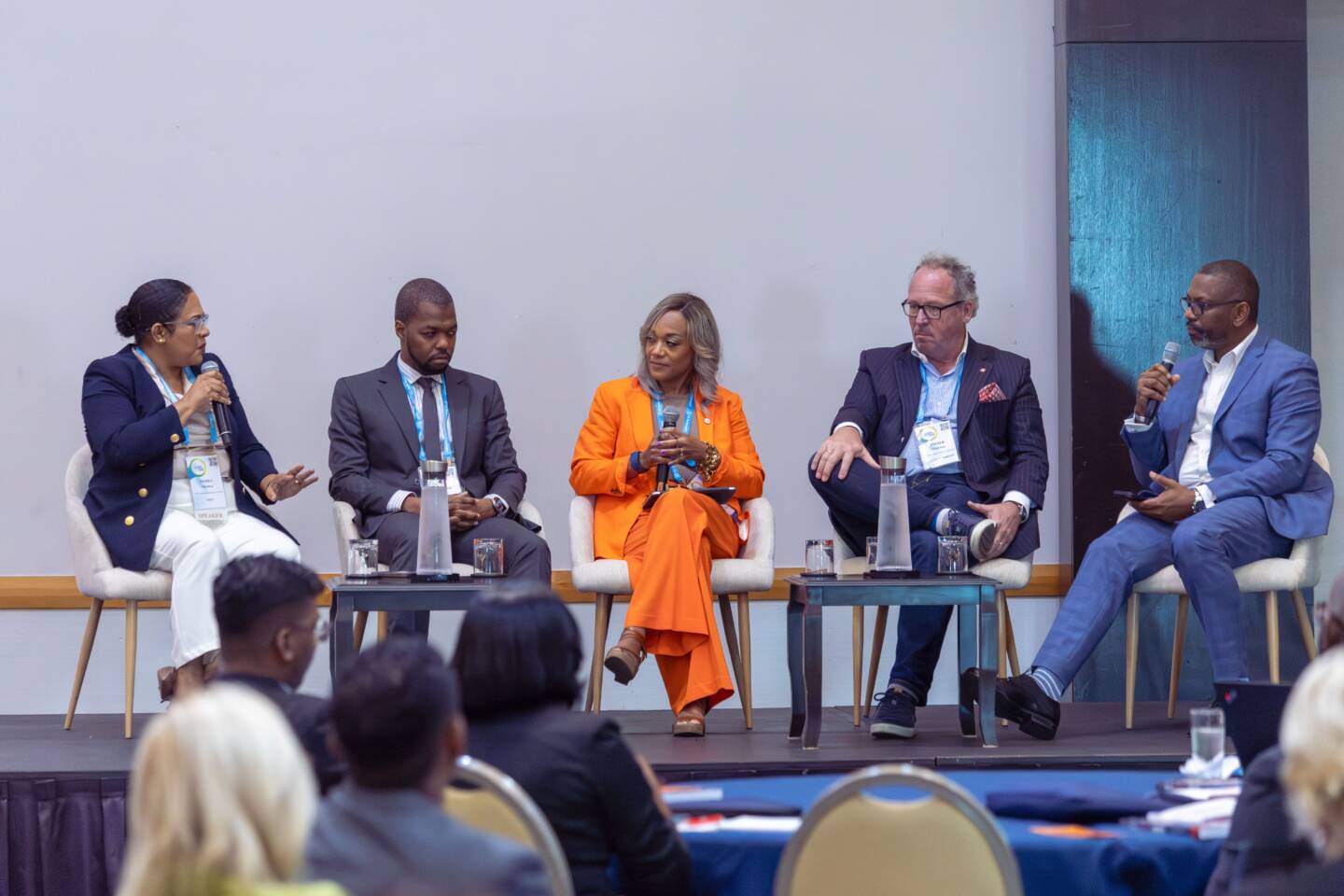
A highlight of the conference was a panel discussion titled Leading the Future Workforce: How Telecom CEOs are Redefining Talent, Culture and Creativity, moderated by Richard Solomon, Managing Director of the Development Consulting Centre Ltd.
The panel featured Simone Martin-Sulgan, Vice President and General Manager at FLOW; Kurleigh Prescod, Chief Executive Officer of the Telecommunications Authority of Trinidad and Tobago (TATT); and Pieter Verkade, Chief Executive Officer of Digicel Trinidad and Tobago.
Panellists explored how telecommunications leaders are shifting from infrastructure-centric narratives to people-centred outcomes.
“We’re moving away from talking about tech and infrastructure, and becoming truly customer-obsessed,” Martin-Sulgan said. “Our message isn’t ‘bigger, better, faster’ anymore — it’s about the real benefits in people’s lives. That’s how we change the narrative and build the trust we need for customers to let us play a meaningful role in their digital journey,” she added.
Thomas also shared a candid reflection on culture change within TSTT. “Three years ago, our people told us we had to do better. We confronted it,” she said. “We ran a programme that challenged our mindset and focus, and we put our leaders through a kind of boot camp. It didn’t change overnight, but the very next year our engagement scores jumped ten points.”
She said the experience demonstrated the value of confronting uncomfortable truths. “It proved that if you confront the hard truths, you can genuinely reshape culture.”
HR Strategy as a regional imperative
Charles Douglas, Vice Chairman of CANTO, reminded attendees that HR strategy is now inseparable from the region’s ability to compete. “As an industry, we are investing heavily in networks, digital platforms and emerging technologies such as AI,” Douglas said. “But none of this delivers value without a workforce that is skilled, adaptable and engaged.”
He noted that talent challenges are amplified in small, open Caribbean economies. “In small, open Caribbean markets, where talent mobility is high and competition is global, HR strategy is directly linked to our ability to compete and to serve our societies. This forum reflects CANTO’s role as a convenor, bringing the region together to share practical experience, align thinking and learn from one another. The challenges we face are not unique to any single operator or country,” he reminded attendees.
He encouraged participants to engage openly and apply what they had learned. “Today is about honest conversation and practical exchange. I encourage you to challenge assumptions and make full use of the expertise in the room.”
People at the centre of competitiveness
Across 2 days of high-level discussion across regional telecoms, the inaugural CANTO HR Leadership Conference delivered a clear conclusion: technology alone will not secure the Caribbean’s future.
That future depends on people-centred governance, resilient leadership cultures and HR strategies aligned to digital delivery. As organisations across the region invest in AI, automation and next-generation networks, participants agreed that HR leadership must evolve in parallel to build trust, sustain talent and translate innovation into lasting economic and social impact.
The conference marked a significant expansion of CANTO Connect’s agenda, placing human capital firmly at the centre of the Caribbean’s competitiveness conversation in the technology and telecommunications sectors.
CANTO Connect