






by Donna Chanderpaul-Singh, Librarian II, TAMCC
This is the second of 4 articles in the series “Why do libraries still matter today?” The series started with a historical sketch of libraries and their roles. Part II examines how libraries support information literacy and continuous learning in society today.
What really is information literacy? First of all, information literacy is a complex concept. Information literacy refers to the ability to “recognise when information is needed and have the ability to locate, evaluate, and use effectively the needed information” (American Library Association). Everyone needs information, both in personal and professional spheres. The library as an institution recognises the importance of information- how it empowers the individual and ultimately, the society. Hence, one of its core values is freedom of access to information. Naturally, there are policies governing the library’s collection and meeting patrons’ needs. The nature of the library—academic, public, national, or special — would influence its policies. Always aware of misinformation and disinformation, a library makes a great effort to provide authentic information.
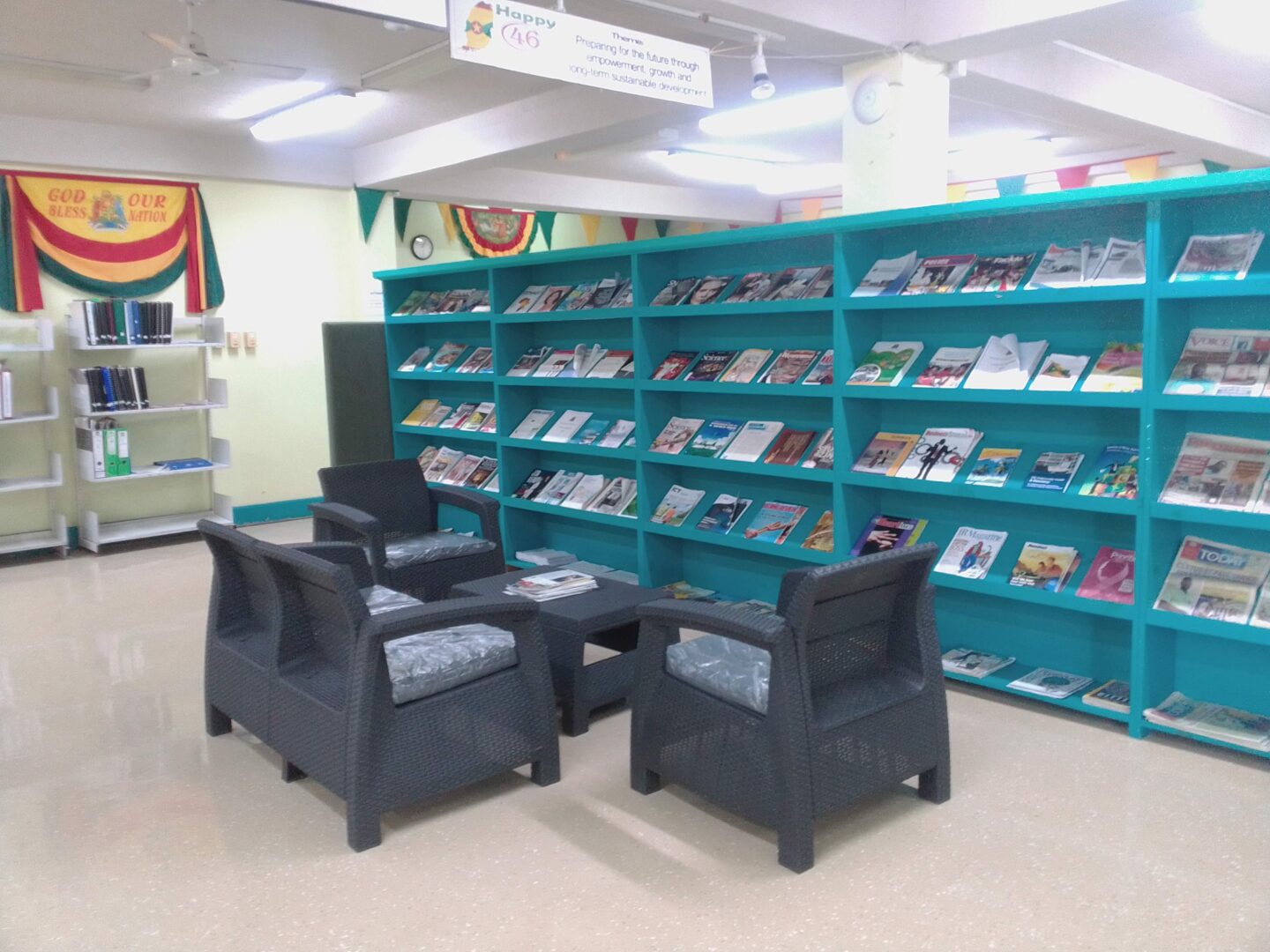
The T A Marryshow Community College Library (TAMCCL) is an academic library. Therefore, it seeks to support the college’s curriculum; its patrons are primarily TAMCC students, staff, and faculty. Though there may be resource limitations, TAMCCL curates information from both electronic and non-electronic sources. Its patrons can access this information. At the request of faculty, the library staff facilitates research skills sessions in the classroom. This type of teaching enhances students’ information literacy levels. For example, the library staff demonstrates to students how to use filters, such as “peer review,” in research databases to find scholarly information. Additionally, during the academic year, TAMCCL hosts information sessions on various subject areas, including recycling, healthy food choices, and the United Nations Sustainable Development Goals (UN SDGs). For the given examples, the library collaborated with local leading authorities — Grenada Solid Waste Management Authority (GSWMA), Grenada Food and Nutrition Council (GFNC) and the UN personnel in Grenada, respectively. These were all intentional selections to ensure quality information. Moreover, the information was disseminated in creative ways (using multi-media and sensory experiences) to attract the students. In celebration of World Food Day in October 2025, GNFC did a short, engaging presentation and then offered healthy food samples to students and staff in the library’s lobby.
In our rapidly changing society, information is constantly needed to keep up. Thus, continuous learning is the answer. There is no such thing as “Now that I finish school, no more books for me.” First, information is no longer contained primarily in hard-copy books, as many of us knew in our school days. Secondly, many workplaces encourage their employees to stay relevant with today’s technology and other skill sets. Public libraries often design programmes for patrons of all age groups. School of Continuing Education — TAMCC, Marryshow House (Home of The UWI Global Campus, Grenada), and St George’s University (SGU) offer courses that benefit many mature learners who are upskilling and or reskilling to function more effectively in the workplace. The academic libraries in these institutions provide support services. Thirdly, technology has changed our entire way of life, not just how we work. Many technological skills are needed in everyday life, inside and outside the home. But many people are not adequately tech-savvy and may feel marginalised. At no cost, a library can teach some of these skills, and those with no other access need only to walk through the doors with a willingness to learn. Age is no barrier to learning, and a library does not discriminate.
In short, there is no doubt that a library still holds the keys to information literacy and continuous learning, especially in developing small island states like Grenada, where resources are limited and where outdated notions of learning can be a handicap.








I totally agree with this article. As an advocate for physical libraries, I vouch and say that libraries are windows to the world.