












Homeowners and business owners are encouraged to lend their voice towards building a resilient and sustainable water sector in Grenada through the development of the country’s first Rainwater Harvesting regulations.
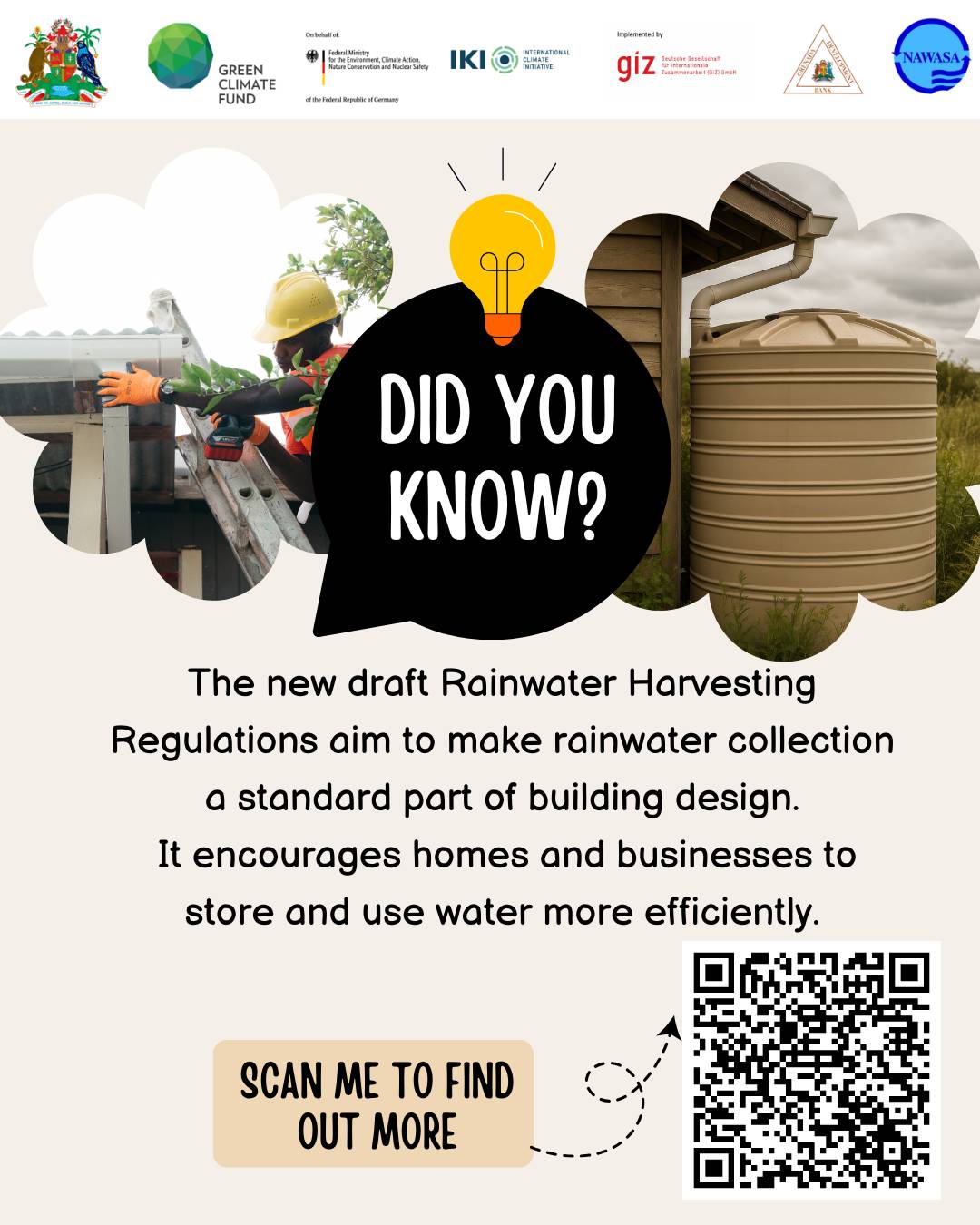
The proposed regulations aim to strengthen Grenada’s water security and climate resilience by requiring new buildings and existing buildings above a certain size to install rainwater harvesting systems where feasible.
This important initiative represents a collaborative effort between the Physical Planning and Development Authority (PDA), the Ministry of Implementation and Infrastructure Development (MOIID), and the National Water and Sewerage Authority (Nawasa) under the Climate-Resilient Water Sector in Grenada (G-CREWS) Project. The project is jointly financed by the Green Climate Fund (GCF), the German Federal Ministry for the Environment, Climate Action, Nature Conservation and Nuclear Safety (BMUKN) under its International Climate Initiative (IKI), and the Government of Grenada.
The process began with the signing of a Memorandum of Understanding (MOU) between PDA, MOIID and the German Development Cooperation (GIZ) through the G-CREWS project, signalling a commitment to ensure that the legislation is fair, clear and implementable. Since then, extensive technical consultations have been conducted to shape the draft regulations.

A Technical Working Group, including representatives from Nawasa, the Ministry of Health, the Ministry of Legal Affairs and the Grenada Bureau of Standards, over the past months have been working to ensure that the regulations uphold strong technical, legal, and health standards.
Due to increasing water demand and mounting climate-related pressures, strategic investment in rainwater capture and storage is critical to strengthening Grenada’s water security. To ensure that the transition toward greater water resilience is fair and financially manageable, the proposed regulation introduces a grace period for property owners to install approved rainwater harvesting systems. It further establishes clear standards for safe collection and storage, including approved roofing materials, water quality parameters, and sanitation measures to protect public health.
With the technical groundwork now completed, the final round of public stakeholder consultations will take place from 19 to 25 February 2026. Public comments are welcome until 23 January 2026 via the RWH Google Form.
The regulations can be viewed on the Climate Resilience Web Portal, Rainwater Harvesting Regulation 2025 (Final Draft). All feedback will be considered as the State of Grenada works toward a regulation that supports a safe, sustainable, and climate-resilient water sector for the future.
For updates on the upcoming consultations and details on the Rainwater Harvesting legislation, please contact [email protected].
GIZ