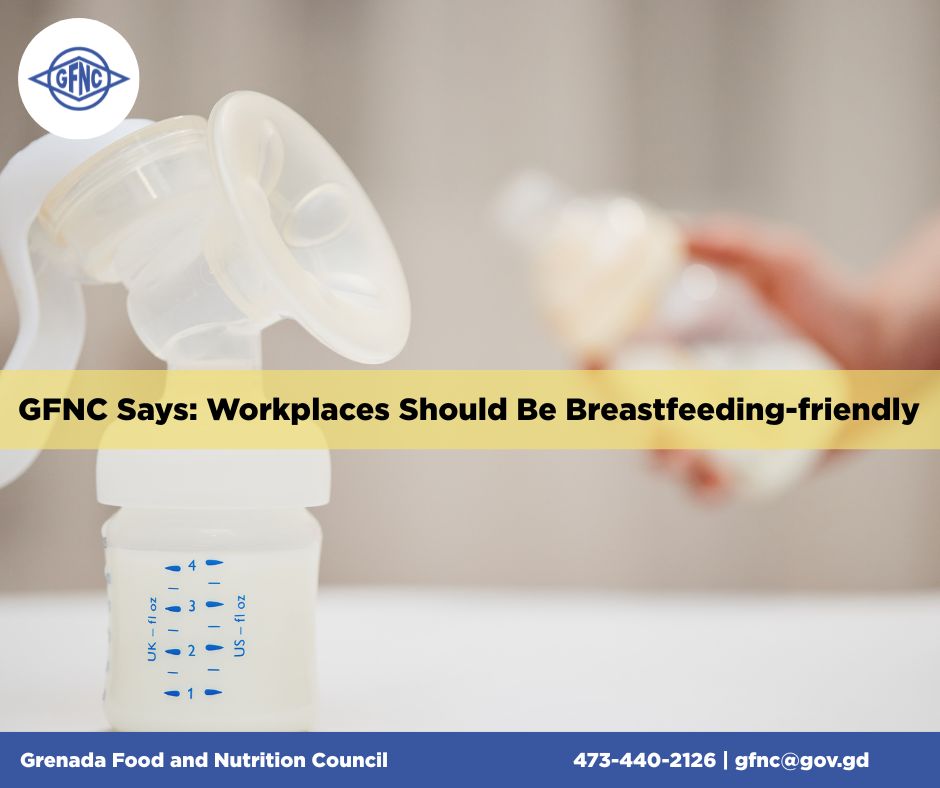














Evidence shows that babies who are exclusively breastfed enjoy numerous health benefits, yet when a mother returns to work after maternity leave provided under the Employment Act (Sections 60 and 61), she often faces significant challenges in continuing to breastfeed.
While the current law clearly defines maternity leave entitlements, it makes no provision for breastfeeding breaks, facilities, or other workplace accommodations to support nursing mothers once they resume work. For this reason, the Grenada Food and Nutrition Council (GFNC) is advocating for such considerations to be formally adopted in the near future.
A report by the National Institute for Health and Care Excellence, along with a study entitled “Breastfeeding at the Workplace: A Systematic Review of Interventions to Improve Workplace Environments to Facilitate Breastfeeding Among Working Women” published in the International Journal for Equity in Health, both recommend that workplaces provide flexibility and clean, private rooms for mothers to pump or express milk. The International Labour Organisation (ILO) further suggests granting mothers a 30-minute paid break every 3 hours, as well as access to appropriate storage facilities. With The General Hospital being Baby-Friendly certified, GFNC believes that workplaces should also become breastfeeding-friendly. Such measures could also help normalise breastfeeding from an early age by educating adolescents on its role as a natural part of life.
GFNC’s final argument draws on the recommendations of the World Health Organisation (WHO), the Centres for Disease Control and Prevention (CDC), and its draft Infant and Young Child Feeding Policy, which all advise exclusive breastfeeding for the first 6 months of a child’s life. Given that the law currently grants 3 months of maternity leave, GFNC proposes that, at a minimum, mothers should be supported with an additional 3 months of workplace provisions, such as breaks and facilities to enable them to continue providing optimal nutrition for their babies while at work.
Below is a list of benefits for breastfeeding covering the environment, the baby and the mother’s health and the environment:
- Optimal nutrition: Perfect balance of nutrients that adapts as the baby grows
- Immune support: Passes antibodies to protect against infections
- Lower risk of illness: Reduces chances of obesity, diabetes, sudden infant death syndrome (SIDS), and other conditions
- Brain development: Supports learning and cognitive growth
- Bonding: Strengthens emotional connection with the mother
- Lower cancer risk: Reduces risk of breast and ovarian cancers
- Better metabolic health: Lowers risk of type 2 diabetes and aids weight loss
- Heart health: Reduces risk of heart disease and stroke
- Emotional well-being: Promotes relaxation and lowers risk of postpartum depression
Climate & Breastfeeding
- Conserves natural resources like water and energy
- Supports climate-resilient food security by providing a sustainable, locally available food source
The mission of the GFNC is to promote the health and well-being of the Grenadian population, encouraging them to make informed food choices and practice healthy lifestyles. To learn about GFNC visit https://gfnc.gov.gd/about-us/
GFNC