











by Curlan Campbell
- Series of “Did you know?” bite-sized facts will deepen public understanding of slavery’s legacy
- Dumfries Estate in Carriacou had over 400 enslaved individuals
- On Emancipation Day eve, communities encouraged to participate in National African Wear Day
- Celebrations on 1 August, start with traditional Grenadian breakfast at Grenville Car Park
As Grenada’s new legislation officially designates 1 August as Emancipation Day, the Grenada Cultural Foundation (GCF) is preparing for a historic and culturally rich celebration, one that organisers say will blend education, tradition, and community spirit.
The Bank Holidays (Amendment) Bill, 2025, passed by Parliament on 17 June and the Senate on 1 July, shifted the holiday from the first Monday of August to the historically accurate date of 1 August, marking the 1838 abolition of slavery in Grenada and the wider British Empire.
During the media launch of National Emancipation Celebrations on Monday, Dr John Angus Martin, historian and archivist, said this legislative milestone is only the beginning of a larger effort to inform and engage the public. “One of the things that we’re looking at doing is having a social media blitz, putting information out on emancipation and the lead-up to emancipation,” he said.
The campaign will feature a series of “Did you know?” facts designed to deepen public understanding of slavery’s legacy in Grenada. These bite-sized insights will highlight key historical details, for instance, that there were 24,600 enslaved people in Grenada on the eve of emancipation, and that all children under 7 were freed even before full emancipation. The campaign will also reveal that the British government paid £616,000 to enslavers as compensation for their so-called losses. Another fact points to the Dumfries Estate in Carriacou, which was among the largest, with over 400 enslaved individuals.
Dr Martin added, “We should probably create something where people can ask questions as well, so we have more of an interactive exchange… so people can gain some knowledge on emancipation, what surrounded it, and the different aspects of it.”
Livingston Nelson, CEO of the GCF, emphasised the role of community in shaping the upcoming celebrations and the historical importance of Grenville in hosting the main national events. “Probably for the last 30 or so years, people like Glen Noel and the Institute for Enlightenment lobbied and initiated the celebration of emancipation on the first Monday,” Nelson explained. “After the death of horse racing in that area, it then moved to the recognition of emancipation. So they were charged with maintaining that history. That’s why we moved to Grenville.”
The newly formed Emancipation Committee, made up of the Grenada Cultural Foundation, Grenada National Reparations Commission, Dr Martin, the National Celebrations Committee, and other stakeholders, has crafted a vibrant 2-day programme focused on education and cultural expression.
“We decided to do 2 things significantly,” Nelson said. “One is to have what we call a Watch Night, to go back into the minds of the enslaved, what it would be like knowing that the next day, on the first, would be your day of freedom.”
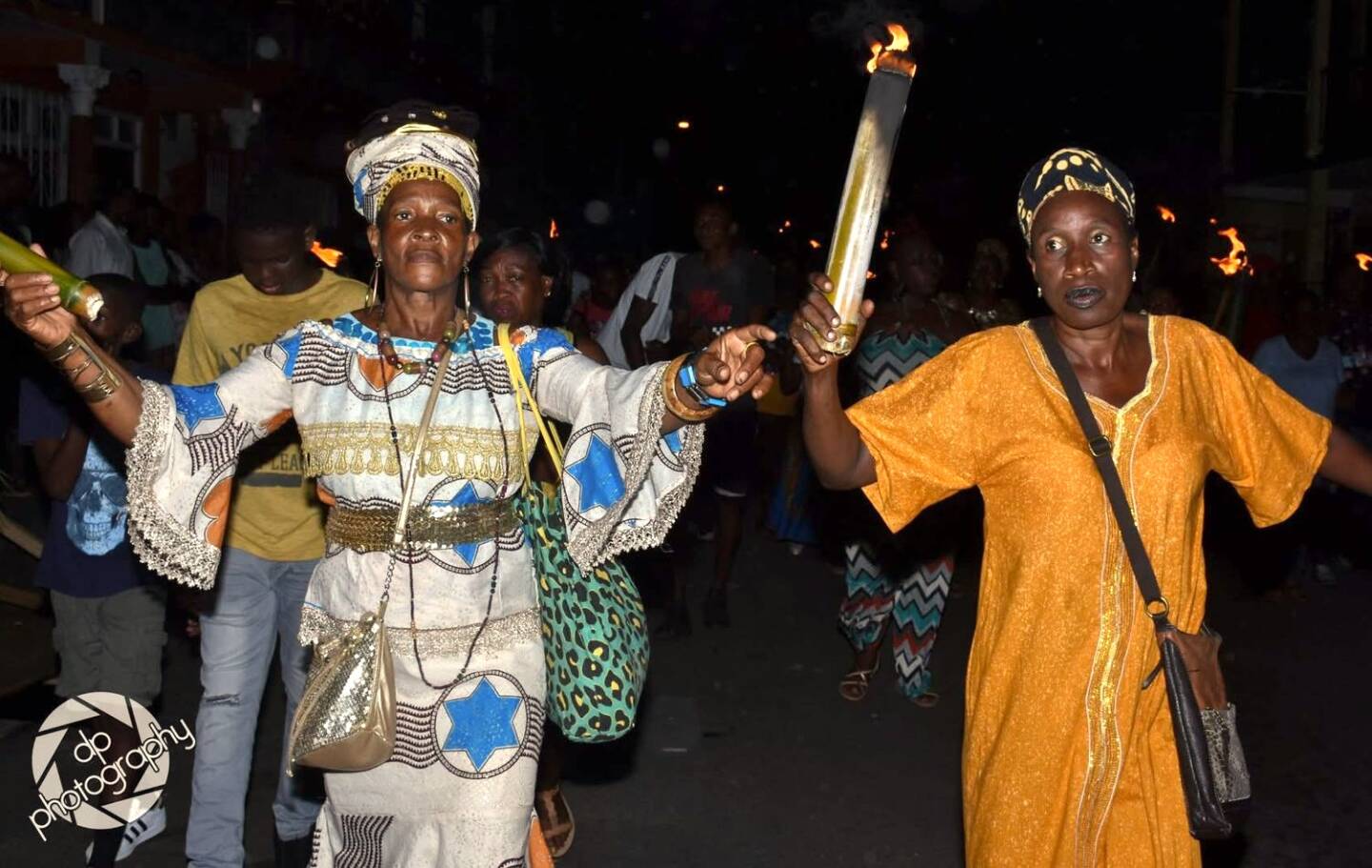
On Thursday, 31 July, the eve of Emancipation Day, communities are encouraged to participate in the National African Wear Day, proudly donning African attire to work and school. The evening’s Watch Night Ceremony will bring together spiritual and religious groups from across Grenada — Adventists, Catholics, Baptists, Rastafarians, IFA practitioners — and feature choirs, drumming, dance, and a sacred drum circle to symbolically usher in the day of freedom.
“The whole idea is to ensure that the place is blessed,” Nelson said. “We’re going to invite our drummers, dancers, and singers to have an informal meet and celebrate that this next day would be Emancipation Day.”
Celebrations continue on Friday, 1 August, starting with a traditional Grenadian breakfast at the Grenville Car Park at 6 am, followed by lunch and culturally appropriate music throughout the day. Traditional masquerade bands such as the Shortknee, Vieux Corps, Moko Jumbie, and Apaches will parade through the streets, alongside drum corps starting from various points, including Paradise and Progress Park, all converging in Grenville by evening.
According to Nelson, as evening sets in, the Flambeau marchers will become part of the celebration, which will conclude with a major cultural showcase at the Grenville Bus Terminus. The lineup will also feature stage performances by Privilege the Band, Culture Train, and artists such as Turkey, Wizard, Scholar, and Kurt Allen, along with vibrant displays from cultural groups like the Tivoli Drummers, Lion Pride, and Spiceland Dancers.
Throughout the programme, organisers have prioritised not only entertainment but education. “There would always be some aspect of education and awareness,” Nelson affirmed. “We let people know the significance of the day and some of the historical facts that were actually anointed by Dr Angus.”








Which are the different locations each masquerade band are going to start? Is there a schedule of their starting point and time? I am particularly interested in Moco Jumbie group.