











by Curlan Campbell
- Roberts noted region’s struggle to make international impact in sports is due to talent managment and scarcity of resources
- Harvey argued football clubs need own organisational structures that cater to their specific needs
- Antoine underscored inclusive and transparent leadership within clubs to enhance community engagement
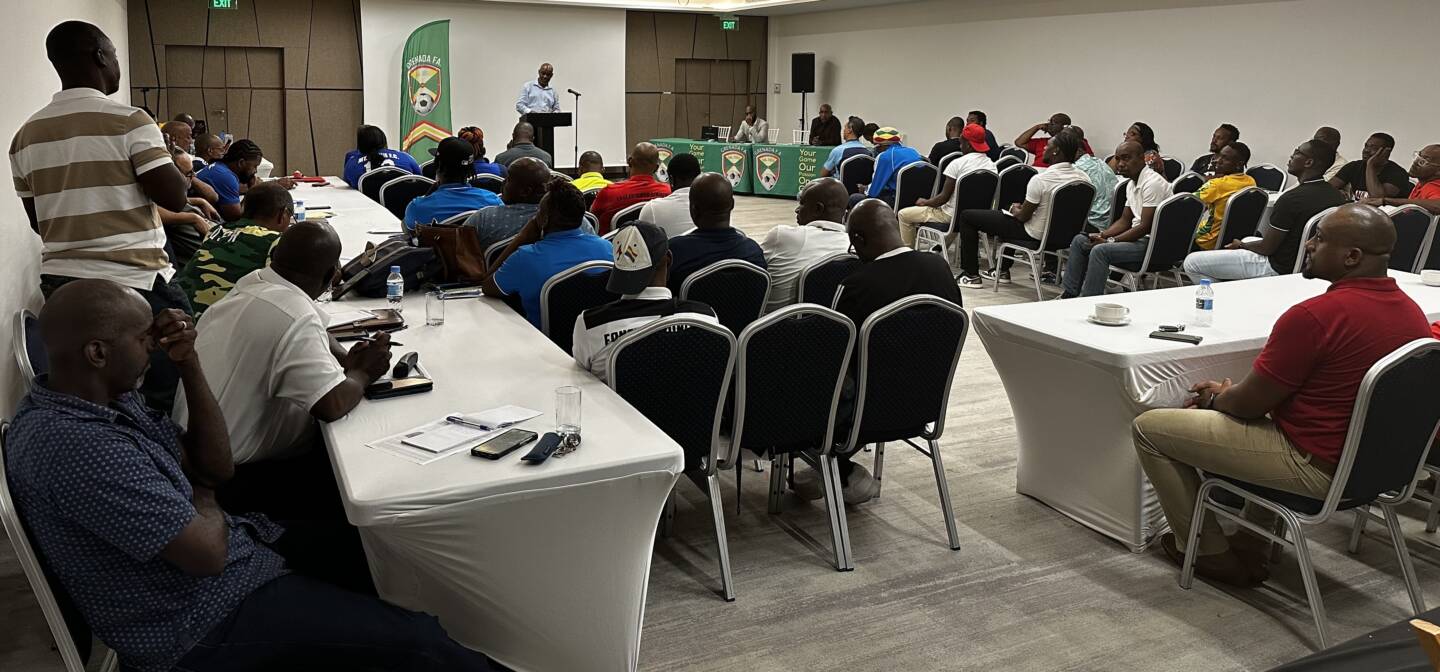
The Grenada Football Association (GFA) brought together affiliated clubs to discuss the strategic development of football as part of its plans to enhance the organisational structure of these clubs and achieve important strategic goals.
A significant symposium for the presidents and captains of its affiliated clubs, titled the “Presidents and Captains of Clubs Forum” took place on Saturday, 2 November at the Royalton Grenada Conference Room. The one-day session focused on strategic goals, challenges, and potential solutions for advancing football within their respective parish clubs. International speakers with extensive experience in sports and business were invited to provide insights on tackling various issues facing the clubs.
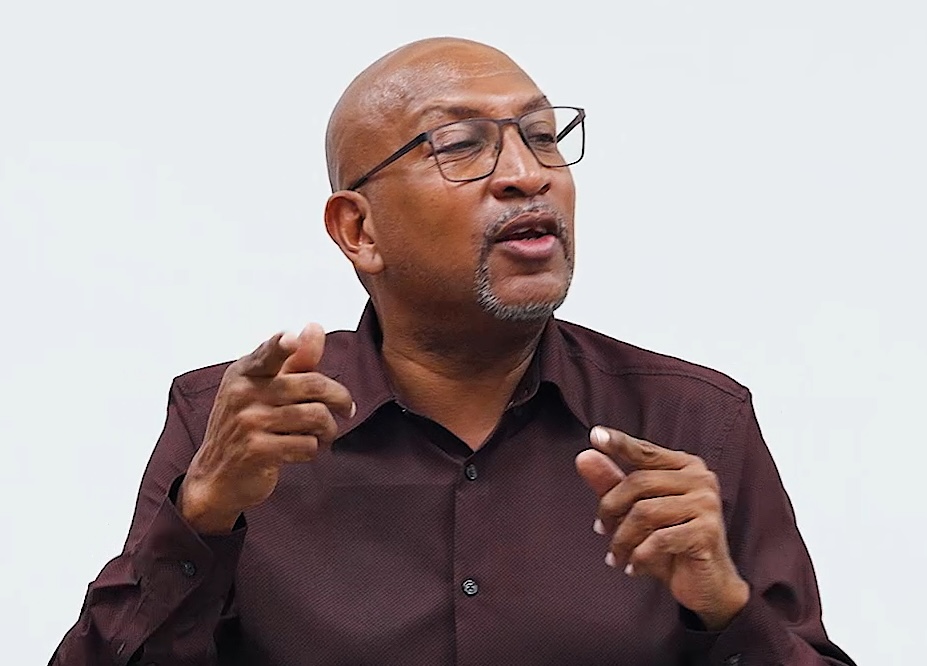
Anil Roberts, former Minister of Sports for Trinidad and Tobago and current Opposition Senator, noted that the region’s struggle to make an international impact in sports is not due to a lack of talent, but rather how that talent is managed and the scarcity of resources available to local players, which ultimately affects their preparation for international competitions.
Roberts, a well-known swimming coach who transitioned to sports minister during the previous United National Congress (UNC) government, directly engaged with the presidents and captains of various football clubs at the GFA forum. The objective was to enhance football governance across the island and prioritise strategic planning for its growth. He shared his experience of competing against international players from the University of Virginia (UVA), many of whom later joined the United States national team for the 1990 World Cup. He stressed that the limited international exposure for players in the region continues to pose a significant obstacle to their development.
“This is where we are now,” Roberts stated. “We must gather more information. We need to understand the sort of fitness, speed, and strength required. They have systems in place. They have physiotherapists, gyms, and trainers. They prepare off the ball before they come to the ball. If they are stronger and faster than we are, we can’t beat them, regardless of how skilled we are.”
Referring to the strategy employed by Coach Phil Jackson while leading the 1995 Chicago Bulls, Roberts reminded local club coaches that bringing together unconventional thinkers is essential, and fostering cohesion among diverse team members requires a skilled and unique coach. “You have to figure out how to outsmart these geniuses,” Roberts explained. “To bring them into the vision you’ve created — one that others may accept easily because they share that mindset — you need to find a way to motivate each individual. For instance, you need to encourage “Black Bull” to come to training while finding a way to get “Egg Sandwich Man” to participate. You can’t adopt a straightforward approach, as it may cause them to quit. You have to outsmart them, but how you do it is up to you, as each individual’s motivation is different.”
Business strategist Martin Harvey, an expert in sports marketing, highlighted that FIFA’s regulations do not adequately address the unique challenges faced by small island developing states in football development. He argued that football clubs need to create their organisational structures, including customised constitutions and bylaws that cater to their specific needs. FIFA — Fédération Internationale de Football Association — is the self-regulatory governing body of football.
Harvey, who has been a prominent figure in Canadian soccer for over 35 years, offered concrete solutions including a suggestion to establish a committee consisting of at least 10 to 20 active members, which should include 5 national players. “Do not view the players on your team as the foundation of your membership, as this could lead to problems. Players move from team to team, and when they leave, you lose a member. Considering a team of 5 officers or board members, is that reasonable? I understand there is very little interest in becoming members of organisations, but we must find solutions. Is 5 too many? Do you think having 5 officers is acceptable? It’s possible to have 10 if you prefer, but 3 might be too few. Five seems reasonable. Additionally, can we ensure that at least one member is female?” The business strategist stressed the necessity for this committee to hold monthly meetings, maintain accurate minutes, and keep transparent financial records.
Economist and sports policy expert Dr Patrick Antoine underscored the significance of inclusive and transparent leadership within clubs. This approach enables clubs to enhance community engagement. He also discussed the concept of social impact metrics, which involves using data-driven insights to assess an organisation’s effectiveness and impact on the community.