












by Curlan Campbell
- ECG volunteers situated in Grenada, Caribbean region, North America, and Europe
- Absence of classroom environment that fosters critical thinking and questioning contributes to disinterest in school
- District 3 teachers introduced to new techniques to reduce attrition rates in secondary schools
Some educators in Grenada have noted a high level of student apathy towards school and education, a finding consistent with research conducted by local experts in the field of academic research.
Leon Abel, a Science and Math teacher at Grenville Secondary School, shared the hurdles he faces in the classroom, and attributes students’ lack of a sense of self as a contributing factor. “They (students) tend to not have a true sense of the importance of why they are in school and they are only there because they have been told to come to school, so they just arrive and then they allow themselves to be distracted by a lot of other things. They have the resources and technology available to them in the form of tablets and so on, but they don’t know how to use them in the most effective way. And that, as a result, causes them to not perform as effectively as well as I know that most of them can perform.”
Kerona Morin, an Information Technology and Electronic Document Preparation and Management (EDPM) teacher at St Joseph’s Convent Grenville, finds teaching challenging due to a lack of resources and equipment in the classroom. “In the field of IT, we require a lot of resources and equipment to facilitate the teaching and learning process. There are days when we lack the necessary equipment or resources for a particular topic. This makes it difficult to effectively teach a large class, and as a result, not all the teaching objectives are accomplished by the end of the class.”
Dr Caroline Henry, founder of Education Collective Grenada (ECG), a volunteer educator network, suggests that educators may also contribute to children’s disinterest in school. “For several members of the collective, we’ve been on the ground doing the research. We have the findings, and they consistently show the same thing. It goes back to educators. You have to upskill them and give them what they need so that children do not abandon school. If they do not feel welcome, safe, seen, and supported, they will leave.”
Additionally, the education consultant alluded to the absence of a classroom environment that fosters critical thinking and questioning.
“If a child is afraid to ask a question in your class, it defeats the purpose. Let them bring all of their questions. Don’t call them stupid because every wonder that you have is a valid wonder; it shows that you are thinking, and that’s what we want from them. Let’s not respond by saying, “That’s a stupid question, don’t ask that again.” Instead, say, “Oh, I’ve never thought about that” or “Why are you thinking about that?” Wonder with them. You can again create the sense of inquiry. That critical thinking that we talk about all the time starts with those kinds of behaviours and responses from our educators,” Dr Henry said.
With a wealth of experience spanning over 10 years, Dr Henry has been actively involved in teaching and mentoring K-12 students and educators in both local and international charter, public, and private schools. In Grenada, she taught Caribbean History and English Language Arts. In Irving, Texas, she focused on teaching Language Arts and in Dallas, Texas, she taught World History and Language Arts.
She has dedicated her life’s work to improving learning systems through re-imagined curriculum and the empowerment of learners. Currently, Dr Henry is the Director of Master of Education, Assistant Professor, Faculty Development as well as Director of Leadership and Excellence in Academic Development (LEAD) at St George’s University (SGU).
As founder of ECG, she is working to tackle core problems that contribute to students’ lack of interest. The intention is to create a programme that could bridge the gap for secondary students who may not be ready for tertiary education.
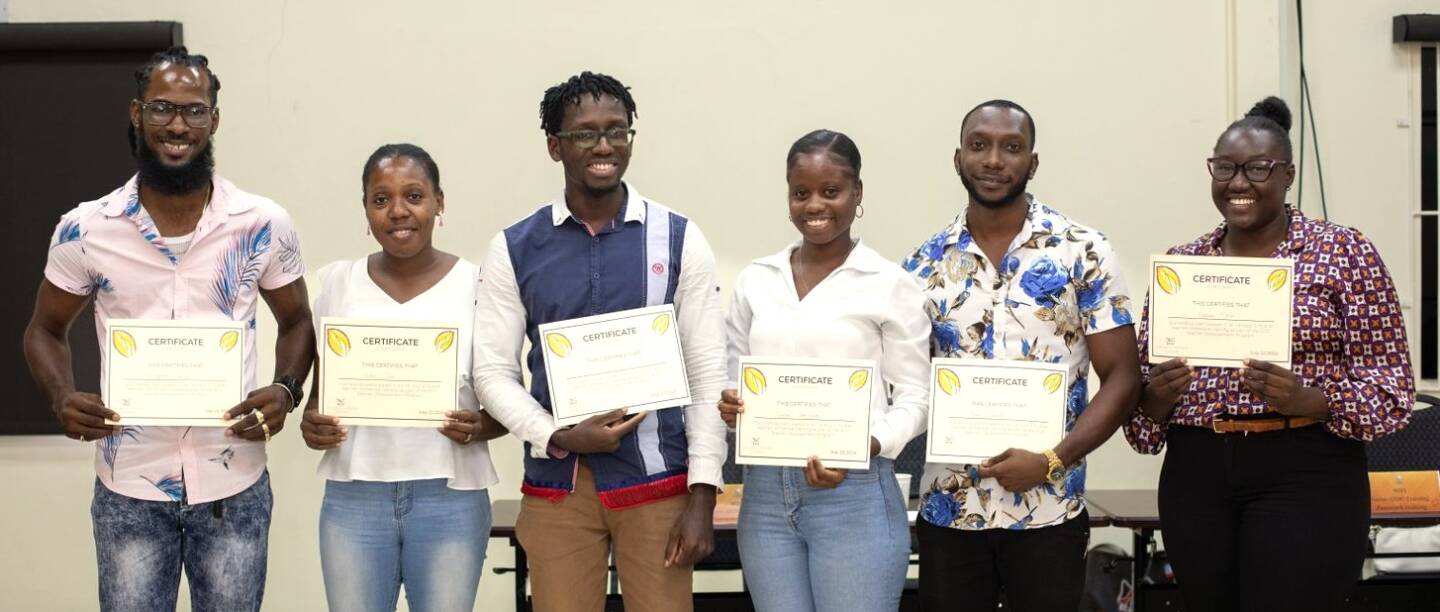
After completing a week-long intensive training in Science, Technology, Engineering, Arts and Mathematics (STEAM) in July, 6 teachers in District 3 were introduced to new techniques as part of an intervention programme geared towards positively impacting student retention and helping reduce attrition rates in secondary schools.
The programme comprised 3 components:
- An immersive virtual teacher-intensive learning period
- A year-long mentorship
- Teaching in the ECG STEAM Summer Academy programme for secondary students
Teachers Leon Abel and Kerona Morin stated that the programme has helped shape their understanding of connecting and interacting with their students to ensure that learning takes place.
“There are many ways in which we can help without exhausting ourselves. Creating a supportive environment is essential. Understanding that every behaviour is a form of communication is part of that process. By viewing behaviours as communication, we can better understand what the child is trying to express and effectively deal with any arising situations. This programme has given me hope that I can become a more effective teacher by helping students build themselves up and overcome their shortfalls,” Abel said.
“Learning is a student-centred approach, where you create an environment that enables students to thrive. It involves using different methods to engage students, encourage critical thinking, and provide opportunities for research and investigation. Instead of just giving students all the information they need all the time, the focus is on probing them, getting them to think analytically, and allowing them to seek the answers they need,” Morin said.
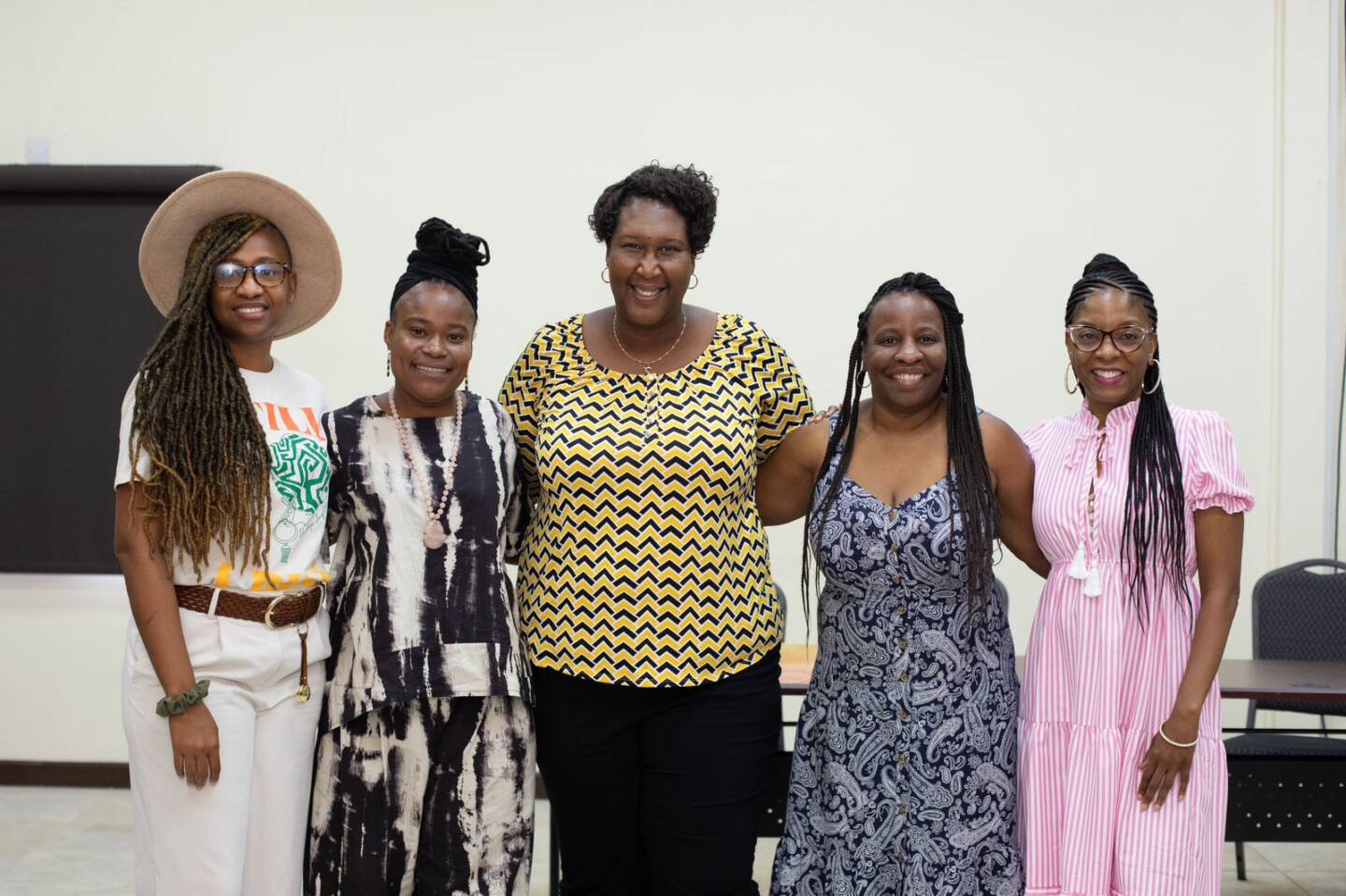
The programme’s organisers presented a Certificate of Participation to all teacher participants. Additionally, participants can look forward to a year-long one-on-one mentorship. ECG consists of co-facilitated members Dr Salisa Allard-Blaisdell, Dr Lisa Francis-Charles, Dr Nadia Lopez, Dr Patricia Thomas, Dido Balla, and Sheri-Don Noel.
The ECG network, launched in September 2022, is comprised of individuals from Grenada and friends of Grenada. They work together to develop and implement sustainable continuing education programmes for schools in Grenada. By collaborating with districts and schools, ECG experts create scalable models to enhance teaching and learning experiences for all students. ECG volunteers are situated in Grenada, the Caribbean region, North America, and Europe.









Congrats
Highly qualified teachers are skilled at engaging students. But when teachers are minimally qualified effectiveness is low. I taught for 43 years, I have a B.A., M.A., and a PhD. I was a mentor for beginning teachers and I always encouraged them to continue their education in order to become expert in their subject matter and teaching techniques.