



by Curlan Campbell
- COP Presidencies Troika launched “Roadmap to Mission 1.5°C”
- Forthcoming COPs will be in Baku, Azerbaijan, and Belém, Brazil
- Stiell believes COP 29 and 30 will determine whether we are shifting from words into action
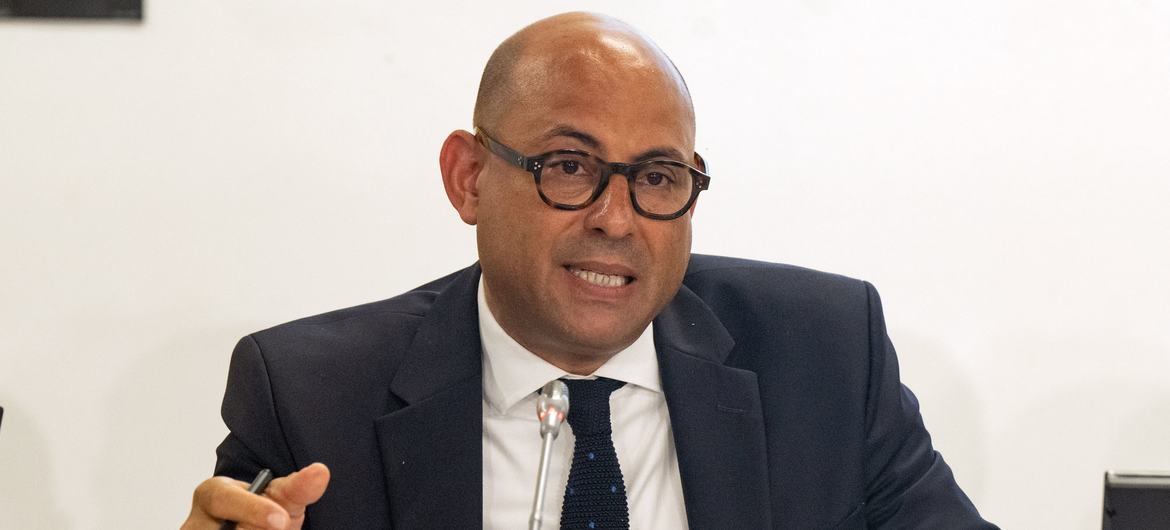
The 2024 UN Climate Change Conference (UNFCCC COP 29) will convene in November 2024 in Baku, Azerbaijan, and Executive Secretary of the United Nations Framework Convention on Climate Change (UNFCCC) Simon Stiell, hopes that this will be the moment when rhetoric moves to decisive action to support climate-vulnerable countries.
Stiell was speaking at an Interactive Dialogue on Making climate finance work for Small Island Developing States: building on the outcomes of COP28 on Wednesday during the 4th International Conference on SIDS (SIDS4), taking place this week on the twin islands of Antigua and Barbuda.
Stiell made particular mention of the Global Stocktake which forms part of the Paris Agreement agreed to at COP28 to take an inventory of climate action progress. Under the Paris Agreement, countries are required to regularly assess their progress in achieving the agreement’s goals. This assessment allows countries and other stakeholders to see where they are making progress and where they need to improve in order to meet the goals of the Paris Agreement. It involves examining all aspects of global climate action and support, identifying areas that need attention, and collaborating to find solutions to ensure a sustainable future.
Stiell emphasised that the forthcoming COPs in Baku, Azerbaijan, and Belém, Brazil, will serve as a genuine measure of our shift towards action. “COP29 and COP30 are so consequential in demonstrating that the Paris agreement is working and for us to actually achieve the course correction that is needed. Dubai signalled what that course correction should look like but it will be down to the process it’s made in Baku, next year in Belém at COP 30, that will determine whether we are shifting from words into action,” he said.
COP28, held in late 2023, yielded positive results, such as the establishment of the Loss and Damage Fund and the implementation of a truth-telling Global Stocktake. These outcomes emphasised the urgent need for a global shift away from fossil fuels.
Additionally, The Presidencies of the 2023, 2024, and 2025 UN Climate Change Conferences have formed the COP Presidencies Troika and launched the “Roadmap to Mission 1.5°C” to “significantly enhance international cooperation and the international enabling environment to stimulate ambition in the next round of nationally determined contributions, with a view to enhancing action and implementation over this critical decade and keeping 1.5°C within reach.”
However, Stiell explained that there are still some grey areas with regard to the quantum sum to support developing countries in that transition, and COP29 and 30 should bring clarity. “That action starts this year with agreement on what the new collective quantified goal for climate finance should look like. And this is where the billions are supposed to transform into the trillions that are needed to support the transition and to support developing countries in that transition.”
“The OECD report is welcomed that the 100 billion was reached and exceeded in 2022. But now that that takes that off the table, that 100 billion has become a very toxic number within the process. There is the opportunity to start afresh in how we approach this new collective quantified goal. And that is the task that is before us this year,” he continued.
He also expressed appreciation for the OECD statistics released on Wednesday and the chance to examine the true implications of transitioning to renewable energy for SIDS. “This signals the energy transfer transition, and what that means for SIDS is economic transformation, removing that dependency on fossil fuels the foreign exchange leakages the high costs of energy which impacts competitiveness, which impacts the cost of living and disposable incomes. This is absolutely critical to your regional development.”
The UN Development Programme (UNDP) and the Global Environment Facility (GEF) have launched a new $135 million programme called the Blue and Green Islands Integrated Programme (BGI-IP). This programme aims to highlight the important role of nature and promote nature-based solutions to address environmental degradation in three main areas: urban development, food production, and tourism.