












by Curlan Campbell
Is the portrayal of the Jab Jab really about celebrating our freedom from chattel slavery, or does it have a far more ancient significance?
My research has revealed a different perspective on what the Jab Jab can represent. The cancellation of Carnival 2020 due to the coronavirus (COVID-19) created a unique and valuable opportunity to reflect on ourselves, our culture, and our history, ensuring that we tell our story from our own perspectives.
We have long been telling a limited story about the origins of our culture—one that fails to convey the full truth about our rich history and legacy before, during, and after slavery. Furthermore, Grenadian scholars and historians often seem shallow in their exploration of our history, as they too view African roots through a European lens.
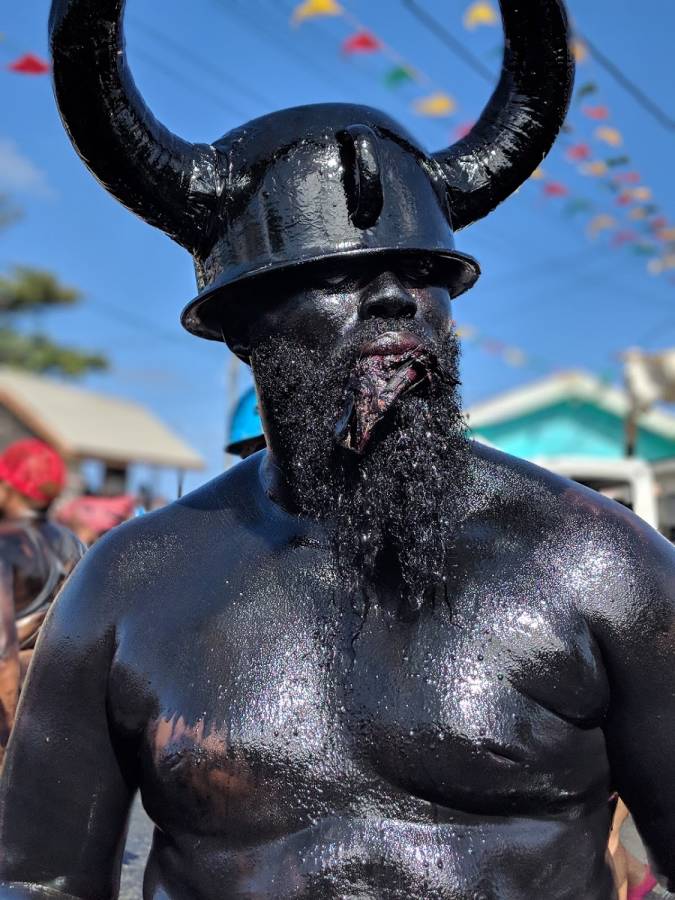
Traditional mas’ J’ouvert, particularly the “Jab Jab”—or “Diab Diab,” its original name—has lost much of its significance over the years. It has been reduced to a mere holiday for frolicking, excessive drinking, and vulgar behavior, showing little respect for this ancient spiritual practice of our African ancestors. While some aspects of the Grenadian origins of the Jab Jab are accurate, much historical context is missing, and valuable information has been lost in translation.
The concept of the devil in Christianity does not exist in ancient African spiritual traditions, including the Kemetic (Egyptian), Dogon of Mali, and Ifa traditions of the Yoruba people of Nigeria. To equate our ancient practices with devil worship is a direct affront to our ancestors. Scholars of African traditions can argue that the concept of the “Devil” as known today originates from the Hapi (Nile Valley) culture of ancient Kemet (Egypt), where Black Africans ruled for four Golden Ages, from 3200 BCE to 322 BCE, before Greek conquest (Ben-Jochannan, Black Man of the Nile and His Family, 1989). It is also significant that the word “Kemet” translates as “Land of the Blacks.”
From Kemetic cosmology, Europeans developed the concept of the Devil, derived from the deity Set, god of chaos, deceit, destruction, and war, who is in constant conflict with Heru (Horus). Associating Set with evil is incorrect. African-American scholars who have translated the Mdu Ntchr (hieroglyphics) explain that Set represents the night and Heru the day, symbolizing the cosmic cycle rather than moral evil. Set is also considered a protector, akin to our immune system fighting infections (Spiritual Warriors are Healers, M. Jhutyms Hassan Kamau Salim, 2003).
So, how does Kemetic history relate to the Jab Jab in Grenada? A connection may exist between the cultural customs of enslaved African descendants and the spiritual practices of their African ancestors. Africans in the diaspora often continue ancient practices, knowingly or unknowingly. For example, the pouring of libations to honor ancestors, which became widespread in African-American hip-hop culture of the 1980s and 1990s, reflects a deeply rooted tradition. Many pre-slavery practices were either fused with European influences or lost entirely over time.
Explaining the origins of artistic expressions in J’ouvert, such as the Jab Jab, including the symbolic use of black oil or grease to resemble molasses, we must recognize that this tradition is not unique to Grenada. Similar customs exist in Haiti (L’anse Kod), Martinique (Neg Gwo Siwo), and Cameroon (‘Nyang Nyang’ of the Fussep/Bafoussam people).
In Grenada, these traditions are often described as emerging post-emancipation, reenacting the brutality of slavery while celebrating liberation. However, a deeper exploration reveals parallels with African continental traditions, predating slavery.
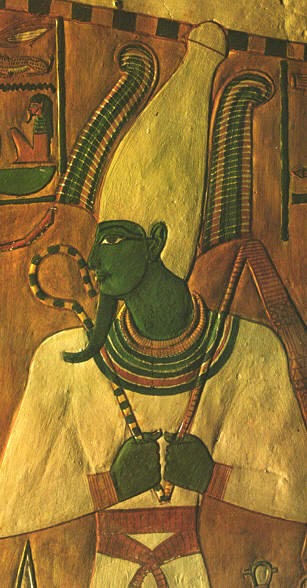
Returning to ancient Kemet (modern Egypt), our ancestors created an intricate cosmology expressing divine principles through the creation of animal-like deities with human bodies called Neteru. Four Neteru are particularly relevant: Ausar (Osiris), Hethert (Het Heru), Min (Fertility Neteru), and Yinepu (Anpu/Anubis). Ausar, who is referred to as the Great Black, is depicted as a Black or green-skinned man in white, holding the Heka (Crook) and Nekhakha (Flail). He is a merciful judge of the dead and lord of vegetation, essential for agriculture. Hethert, resembling a cow with human form, represents fertility and sacred motherhood. Anpu (Anubis), the jackal-headed god, oversees the preparation of the dead for judgment, while Min, depicted with an erect penis, symbolizes fertility.
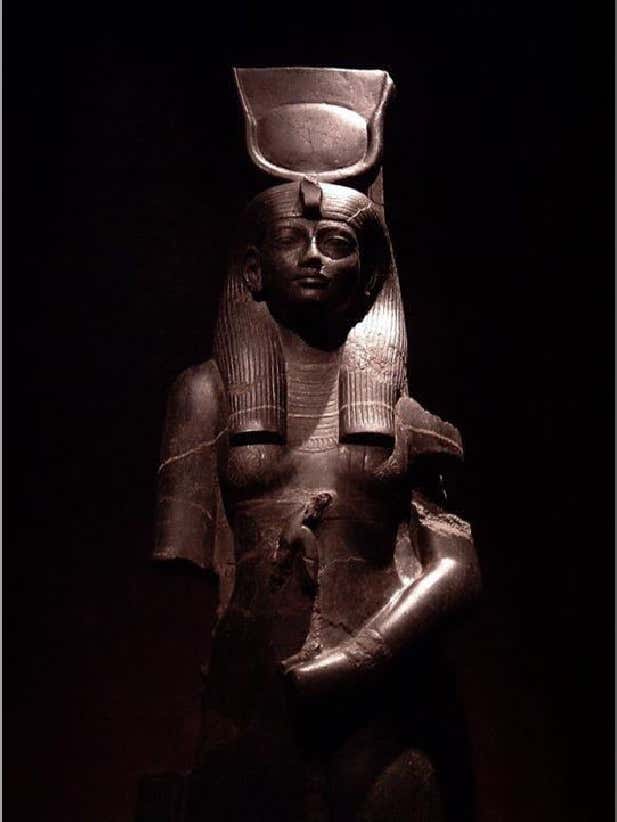
Photo credit: The Museo Egizio archaeological museum in Turin, Piedmont, Italy
Hethert (Hert Heru) is a female Neteru whose zoomorphic nature resembles that of a cow. In her human form, she is also depicted with locks or braided hair, cow horns on her head with the Sun disc in the centre and is said to represent the sacred mother and fertility. Anpu (Anubis) is another Neteru who carries great significance as he is responsible for preparing the body of the dead through a process called Sahu or the mummification process, to be brought before Ausar to be judged. In his zoomorphic form, Anpu is represented as either a full jackal or as a jackal-headed man with Black skin.
The significance of these Neteru can be linked to the tradition we today call Jab Jab, now we understand that the colour Black represents fertility in ancient customs. After each harvest, the Kemetic people who originated from the interior of Africa including Ethiopia, Sudan and later the land we today call Egypt, are known to conduct a ritual almost naked to the Neteru Min before and after each harvest or to initiate the process of procreation between men and women which is considered sacred. Min is depicted as having an erect penis that signifies fertility (Fertility Neteru).
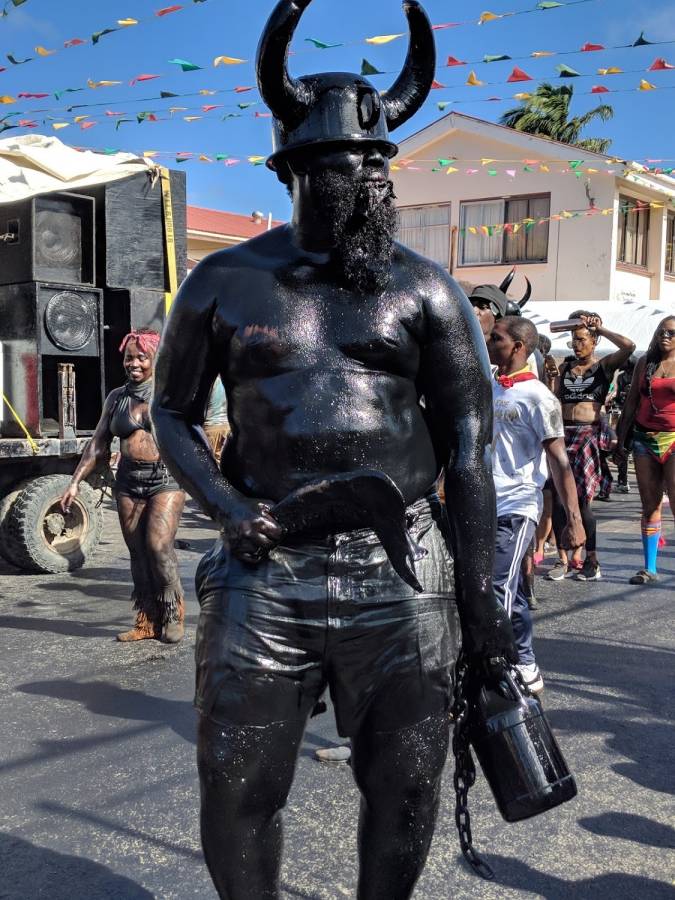
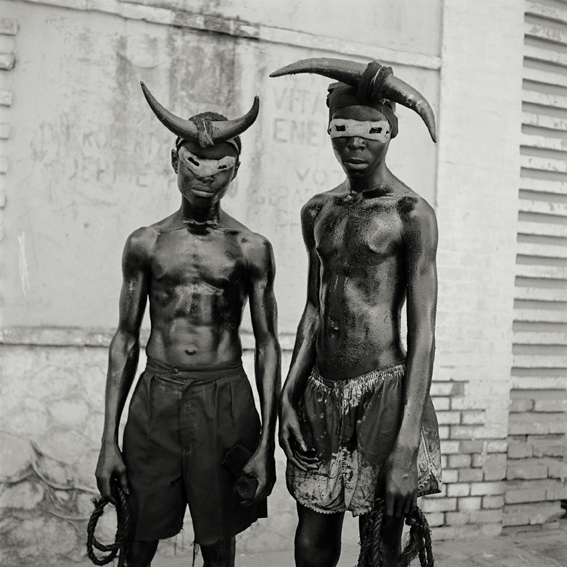
Now have you noticed how sexual the Jab Jab can be once the music hits him or her behind the truck on Monday morning? This recent portrayal is no coincidence since it is rooted in the ritual performed for the Neteru Min, which is characterised by drumming and dancing erotically before the High priest and the Nsut-Bity (Pharaoh), who will then be masturbated to bring an end to the ritual. During that ritual, the people would also adorn themselves in Black to represent the fertile soil. Furthermore, Neteru Hethert’s followers will also adorn themselves with horns on their heads just like the portrayal of the Jab Jab. The wearing of cow horns as seen worn by Hethert represents the nurturing characteristics of cattle which was considered sacred in Ancient Kemet. Interestingly the wearing of horns also has spiritual significance as the modification of the bull’s horn in ancient Kemet (Egypt) is symbolic and was used as decorative headpieces after the animal was sacrificed.
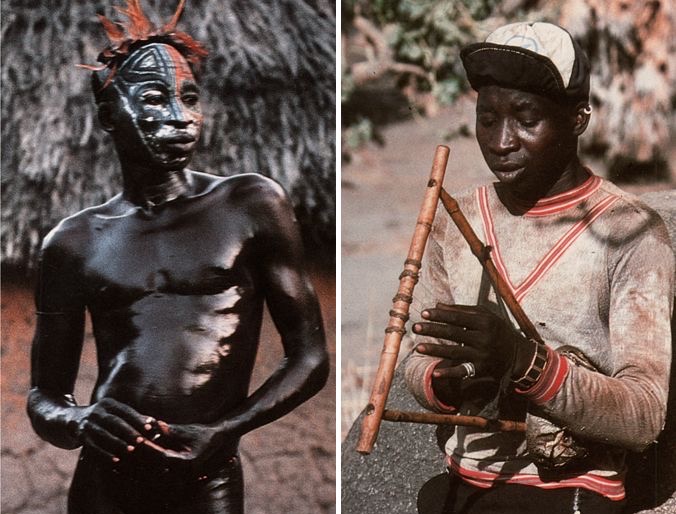
The use of bull’s, water buffalo’s or gazelle’s horns has various significances in other African cultures including that of Sudanese people and ethnic groups around the continent of Africa including Kenya, Ethiopia and parts of West Africa namely Lome, Togo. For instance, the Mursi people who are a nomadic tribe from the Lower Omo Valley Ethiopia, perform a ritual called the Donga stick fighting, where they adorn themselves in black and other pigments and before engaging in combat, the men will drink the blood of a cow before it clots, which is believed to give them strength to endure the battle. This custom makes his mouth red with blood, which resembles the portrayal of the Jab Jab, who will use red food colouring in his mouth. For most revellers, the dangling piece of saltfish in his or her mouth has also become inseparable from the Jab. Upon the conclusion of the Donga stick fighting, the champion will have an opportunity to pick a female companion of his choosing and as a symbolic gesture will offer her a cow’s horn which will be worn by her as a symbol of pride and honour. The Mursi people are most notably known for their elaborate clay lip-plate, elongated ear lobes and body scarification.
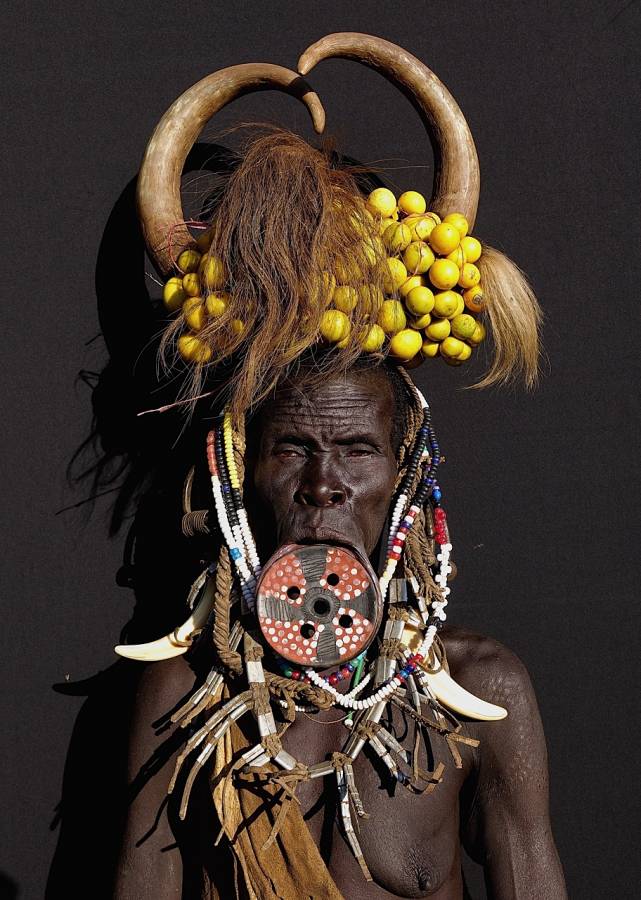
But last but not least, let’s discuss the Jab Jab obsession with death with the dragging of coffins on the streets. This can be linked to Anpu (Anubis) meticulous role in preparing the dead by removing their organs and preserving the body in ancient Kemet. Another aspect of the Jab Jab uniform is the use of snakes which also has ancient significance since the serpent represents enlightenment, higher intuition and spiritual awakening.
Other recent displays of the Jab Jab including the chains took elements from the experience during slavery and is now used during the portrayal which has taken on new meaning for Grenadians. It is no doubt that this portrayal has been passed down from our ancestors that predate slavery by thousands of years, but over time has taken on new meaning with additional practices infused into the cultural portrayals. I, therefore again, challenge our local historians to conduct more research into the origins of the Jab Jab since as the saying goes there’s nothing new under the Sun.









WOW! Thank you for this history lesson. I look forward to seeing this in person one day in Grenada
An excellent article. My compliments to Curlan. I also share is view that the origins of Jab Jab are not as immediate or as superficially linked to slave confrontation and the burning of cane. Curlan had identified the true origins of the Jab. Thank you!
And now we have the vaccines which are known as ‘Jabs’
Agree. I’ve always also suspected a connection between Jab Jab culture and the Festival of Santo Domingo in Nicaragua that features similar rituals with oil and iron
Thank you
Well done article. I luv history
Very well done… I always knew there was more about jab jab.. Some weeks ago I came across a video of a Sudanese ritual very similar to jab celebration and I was amused by the similarities.. Caribbean history is taught in school. But barely scratched the history of Grenada.. I wish ministry of education and culture made some kinda inicitive to incorporate Grenada history into our school curriculum.. It should be a mandatory subject
This article is extremely well done and researched. We often live an existence, whether we know it or not, under Eurocentric influences…even the Jab Jab has been penetrated. You have provided us with an accurate historical account of our existence today.
Well done!
Where did you do your research ?
Grateful for the some info as to where you got your info from.
Very interesting article. I look at tribal documtribal especially the mursa people the nomadic tribes and even the gods the horns,mummification etc and it adds up yes ancient Kemet had all the answers