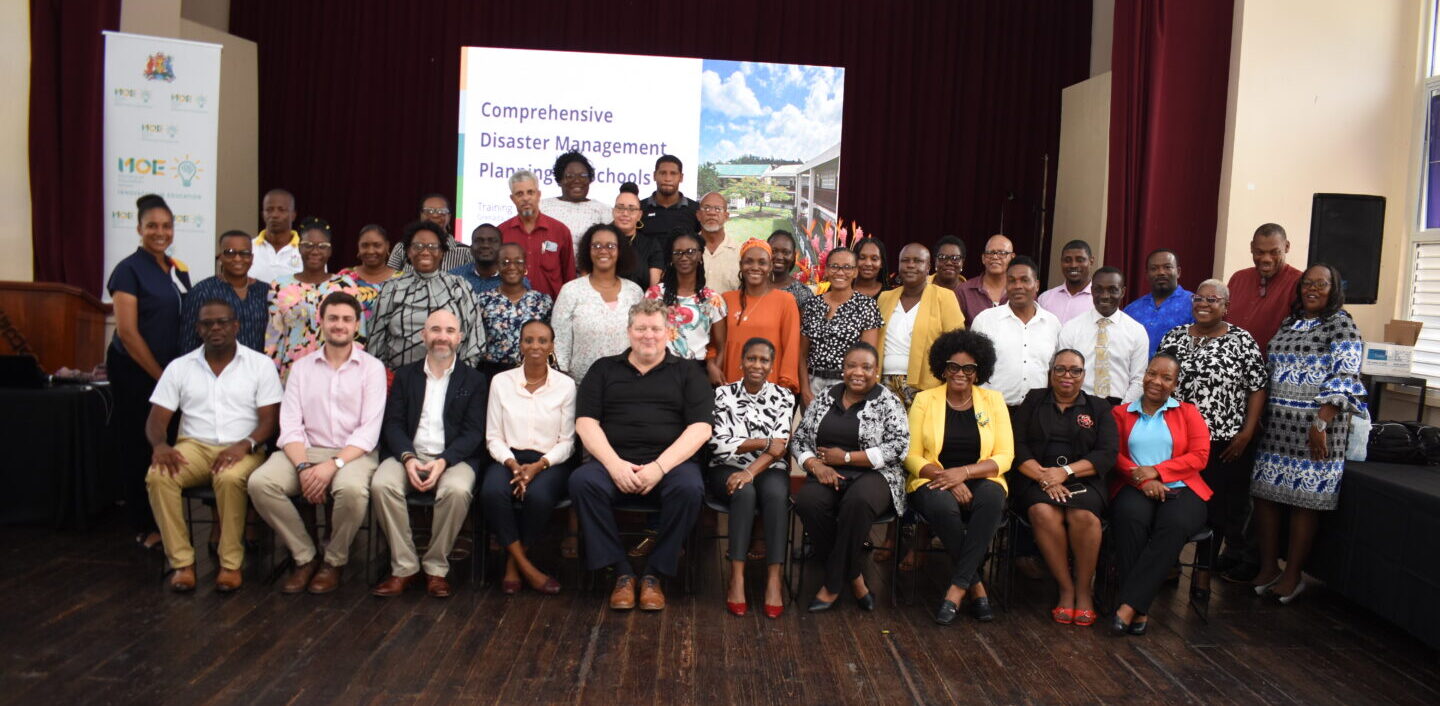
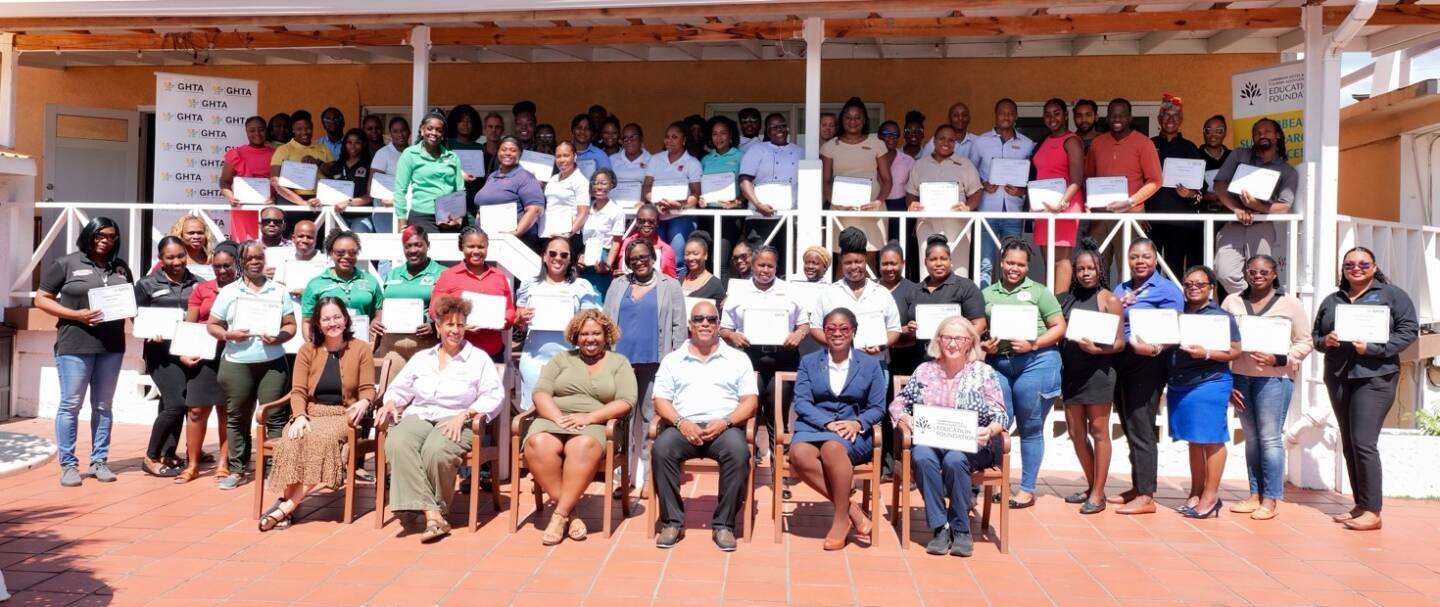










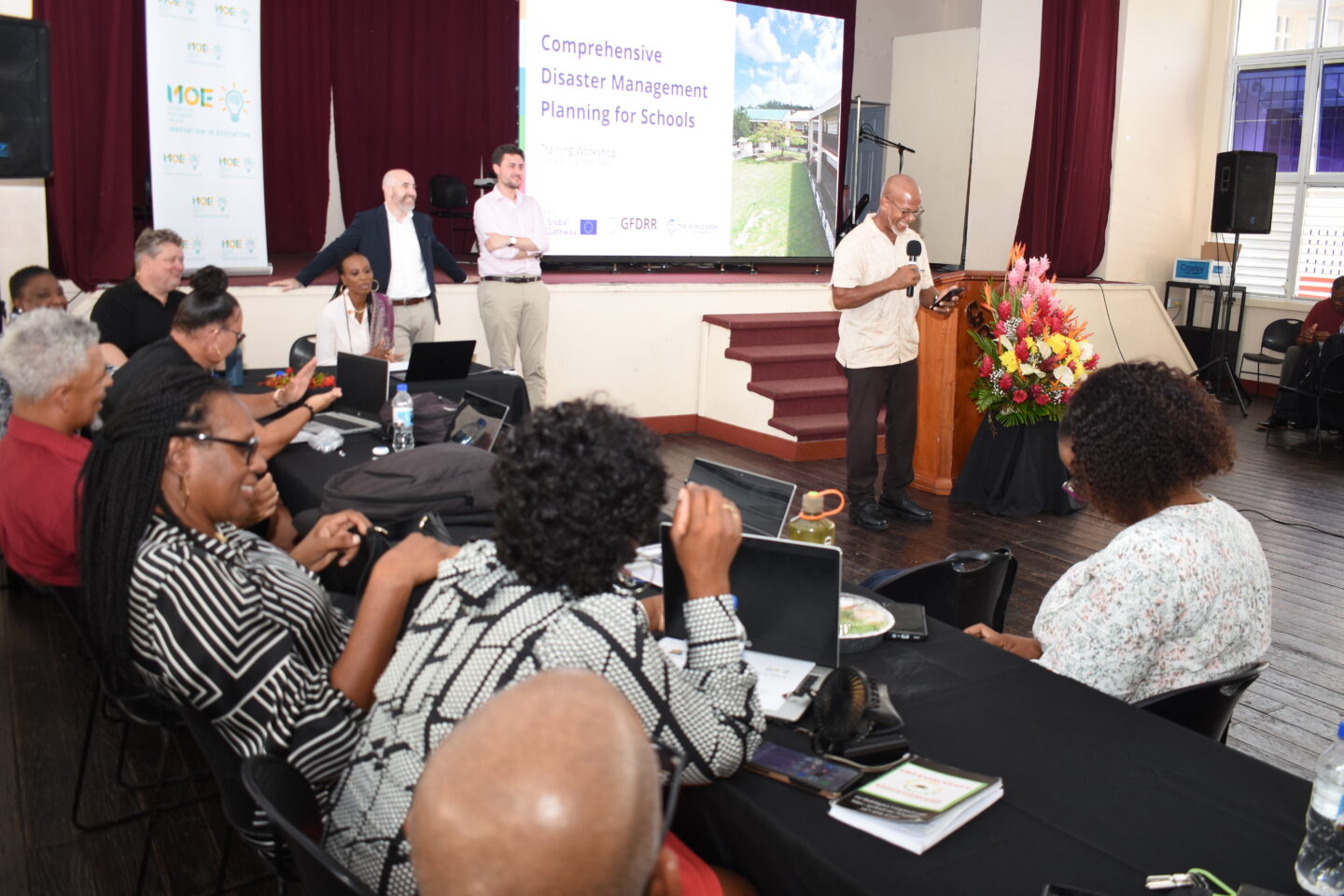
Ensuring schools across Grenada are better prepared to protect students and staff during disasters, was the core of a 3-day training session for school principals at the Grenada Boys Secondary School (GBSS), Tanteen, St George, from 16–18 July.
It was hosted by the Ministry of Education with the aim of strengthening disaster risk management.
With Grenada and the wider Caribbean facing increasing risks from hurricanes and other hazards, schools need to be ready to respond effectively, safeguard lives, and ensure that learning can continue even after disasters strike. To tackle this challenge, the training brought together 60 principals, with active participation from district education officers, and helped them develop Comprehensive Disaster Management Plans (CDMPs) tailored to the specific needs of each school.
The participants received hands-on training in understanding local disaster risks, assessing vulnerabilities, and designing practical response and mitigation strategies. Through group work, risk mapping, and planning exercises, each school principal developed a plan tailored to their school context, incorporating emergency procedures, risk reduction activities, and implementation strategies.
The capacity-building exercise was supported by the European Union through the European Union Resilient Caribbean Programme (EURECA). Managed by the Global Facility for Disaster Reduction and Recovery (GFDRR) and the World Bank, EURECA reflects the European Union’s broader partnership with the Caribbean in advancing climate and disaster resilience. The National Agency for Disaster Management (NaDMA) also played an active role, through a dedicated presentation.
Developing CDMPs for schools is a key policy action under the World Bank’s Development Policy Credit to Grenada, which includes a Catastrophe Deferred Drawdown Option (Cat DDO) — a pre-arranged financial instrument that provides the Government of Grenada rapid access to emergency financing in the event of a natural disaster. Following Hurricane Beryl in 2024, the full amount available under this instrument was disbursed, helping Grenada respond quickly in the immediate aftermath.
Grenada was the first country in Latin America and the Caribbean to access a Cat DDO under concessional International Development Association (IDA) financing, underscoring its pioneering role in disaster preparedness through financial protection mechanisms. As part of the broader support for the implementation of the Cat DDO, the European Union supported this three-day capacity-building workshop.
This training represents a significant milestone toward strengthening school safety planning in Grenada. By embedding disaster preparedness in the education system, the initiative protects students and staff while minimising disruptions to learning in the event of natural hazards. The training also reflects Grenada’s commitment to building resilience at all levels—particularly in the face of intensifying climate and disaster risks.
Catastrophe Deferred Drawdown Option (Cat DDO)
A Cat DDO is a contingent line of credit provided by the World Bank through its concessional lending arm, the International Development Association (IDA). The Cat DDO was approved on 6 February 2019, and the associated financing agreement was signed on 25 February 2020. On 31 January 2023, the Cat DDO was officially extended, and the new closing date is 16 February 2026. The agreement provided for up to US$20 million in immediate liquidity once a disaster is officially declared and key policy commitments are met.
Ministry of Education








Great work shop.