













by Linda Straker
- Cash Seizure Policy provides best practices for seizure, detention, and forfeiture of cash in Grenada
- Developed by Regional Security System Asset Recovery Unit and Financial Intelligence Unit of Grenada
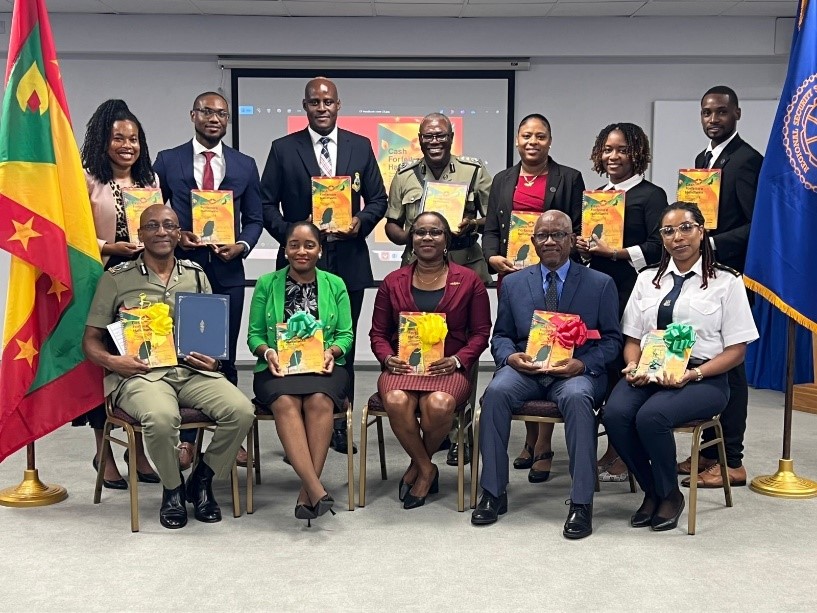
- Cash Seizure Policy and Guide handed over to authorities in Grenada on 28 August 2024
Police officers who find and seize cash while engaging in an operation, now have a cash seizure policy that will provide them with the relevant legal guidance on how to proceed forward after the confiscation.
In August, the Regional Security System (RSS) launched and handed over the Cash Forfeiture Handbook and Cash Seizure Policy and Guide to the various law enforcement authorities as well as the Office of the Attorney General. The Cash Seizure Policy is a document that provides best practices for the seizure, detention, and forfeiture of cash in Grenada. The policy was developed by the Regional Security System (RSS) Asset Recovery Unit and the Financial Intelligence Unit of Grenada. The policy’s goal is to improve communication between the police officer who first discovers cash and the legal or law enforcement professional who applies for its forfeiture.
“The handbook, a collaborative effort of the RSS Asset Recovery Unit and the Financial Intelligence Unit of Grenada, is a bespoke guide on Cash Seizure, Detention and Forfeiture which sets out the legislation of Grenada, relevant case law, procedures and best practices,” said a news release on the Regional Security Systems website.
“It sets out clear, actionable, transparent steps for lawfully and effectively seizing cash from criminals. It addresses the legal framework, the operational procedures and ethical considerations that are essential to conducting Cash Seizures in a manner that uphold the highest standards of justice.”
The RSS handed over the Cash Seizure Policy and Guide to the authorities in Grenada on 28 August 2024. The policy is a cogent document for cash seizure, detention and forfeiture best practices developed and prepared to create synthesis between the police officer who is the first point-of-contact with discovered cash and the practitioner (law enforcement or legal) who applies for its forfeiture, primarily from the Financial Intelligence Unit (FIT). It is is part of a call to action for member states to support the use of asset forfeiture to fight crime.
Christopher Nelson, Director of Public Prosecutions explained that before the guide, officers had to search through the various laws that have been enacted so they will know the next steps after cash seizure.
These laws include the Money Laundering (Prevention) Act and Proceeds of Crime Act, which provides for the confiscation and forfeiture of proceeds of criminal activity. “Now they can easily refer to the Cash Forfeiture Handbook and Cash Seizure Policy and Guide which will outline the steps to legally follow,” he said.
Annually, police seize thousands, even millions in cash, while conducting operations linked to drug bust and other criminal activities.