







by Brian Grimes
The Grenada Trades Union Council (GTUC) is one of the most effective trade union organisations in the Caribbean.
It was established on 13 March 1955, in the town of Gouyave, St John, and registered on 4 April 1955. It is currently located at the Grenada Public Workers’ Union building on Port Highway. As the umbrella body, it has performed admirably over the years, ensuring that May Day celebrations reach each parish on a rotational basis, thereby stimulating the economies of both rural and urban areas. The labour issues are passionately presented on May Day platforms by union presidents, while workers march with both cryptic and bold placards that describe the labour market. The largest employer, the Government of Grenada, has the opportunity to defend its policies through the Minister of Labour’s office. The day culminates with networking festivities at selected venues. A fantastic mix of camaraderie and militancy.
Yet, while we celebrate these achievements, the question must be asked: Can traditional unionism alone carry Grenada into the future? I believe the time has come for a strategic evolution, one that preserves worker protection while positioning trade unions as active partners in national development.
In 2026, the celebrations will be held in full on the sister isle of Carriacou, another strategic masterstroke by the GTUC. This first-time innovation will certainly lift the morale and economic well-being of the people of Carriacou, who are in the throes of recovering from the devastating Hurricane Beryl, which hit the island in July 2024. Initiatives like these, along with prior interventions, such as significant donations to citizens in need, including those affected by the Chantimelle fire in 2024, highlight the importance of the trade union movement in Grenada.
However, in the spirit of continuous improvement, all movements, organisations, and institutions must be constructively critiqued to ensure necessary adaptations and to remain fit for purpose. As stated before, the trade union movement in Grenada, competently led by Comrade André Lewis, is currently one of the strongest, if not the strongest, in the Caribbean. This is borne out by consistent wage increases in unionised workplaces to mitigate inflation, victories on the streets and in the courts, such as the pension saga that impacted the political landscape, and the minimum wage amendment, which was strongly advocated for by figures within the trade union movement. The movement now must ask itself, “Are we doing enough?”
As a former union leader and current public officer, I have a unique perspective on the evolution that trade unions need in the 21st century. I believe the current suite of services, such as wage negotiations, improved working conditions, credit unions, and health insurance, should be maintained and, where possible, enhanced. Modern unionism requires a visionary perspective, with national development as a clear point of focus. At the same time, the rapid expansion of the digital economy and the changing nature of work must be viewed through a sharper lens. The rise of remote work, freelance platforms, digital entrepreneurship, and automation is reshaping traditional employer–employee relationships, often leaving workers outside the protective reach of established union structures. Trade unions must therefore rethink their organising models, service offerings, and developmental ethos to remain relevant to a new generation of workers who may never enter a conventional workplace. This includes advocating for fair standards in the gig economy, promoting digital literacy, and ensuring that workers are equipped with the skills necessary to compete and thrive in an increasingly technology-driven labour market. A failure to innovate risks a gradual erosion of the union’s relevance in the future of work.
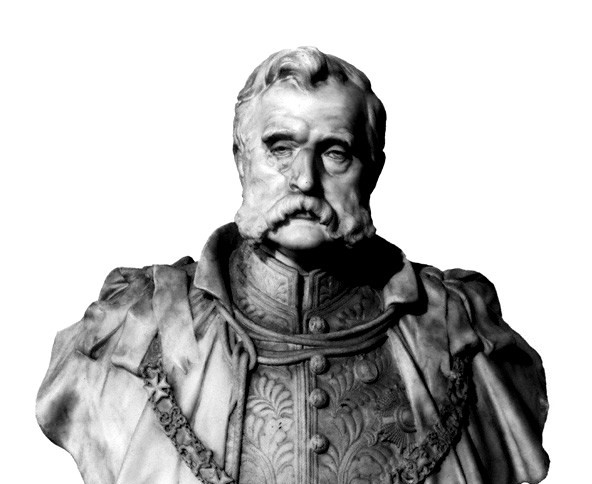
I strongly believe that for our country to move forward, the fundamental principle of productivity should be examined in a non-partisan way. It is well known that trade unions were born out of exploitative practices by the owners of capital, who profited from the sweat of the underrepresented and the underpaid. The greatest trade unionist in Grenada’s history, Sir Eric Gairy, led the 1951 social revolution commonly known as Sky Red to reduce inequalities in Grenadian society. The Grenada Maritime Manual and Intellectual Workers’ Union (GMMIWU) was a catalyst for change. However, we must examine where we are in 2026 and how unions can transition into even more impactful change agents. The unions must sit at the table with employers and the government to identify fair methods for measuring performance metrics that will drive mutually beneficial outcomes and ultimately the country’s growth. Employers should pay well, but unionists should also demand productivity from workers, thereby expanding the ‘pie’ for equitable sharing. In my view, it is impractical to ask a contracting business for higher wages. It is an uncomfortable conversation, but it is one that needs to be broached for a genuine paradigm shift in Grenada.
While Grenada’s scale differs from larger economies such as Singapore or South Korea, the underlying principle remains relevant: sustainable growth requires a shared commitment to productivity, discipline, and national purpose. This coalition or ‘Big Push’ must be the foundation of our thrust for national sustainable development.
In my time within the trade union movement, moving from ordinary member in the Grenada Public Workers’ Union, to youth representative, to public relations officer, to president, there was one constant I observed: the union leaders who placed the greatest emphasis on human resource development through training workshops and member development generated the most success. The greatest example was Sister Madonna Harford, who led the Grenada Public Workers’ Union (GPWU) from 2003–2013 and the Grenada Trades Union Council (GTUC) from 2005–2015. Her stint at the GPWU was marked by numerous development workshops that emphasised financial literacy, education, youth development, and self-care. In this era, this approach must be built upon. We are hearing cries from many quarters of society that skills are hard to find. These skills are not limited to the ‘hard’ aspects of building construction or technical know-how in information technology, but also extend to the ‘soft’ aspects, including punctuality, customer service, integrity, and collaboration. I will not be overstating my position by positing that the union should multiply its efforts in training its members, which will result in concomitant benefits for all stakeholders, including the union. A highly skilled or motivated worker produces more, increases company profits, and creates a firmer negotiating base for his/her bargaining agent.
The ideas in this article may or may not be considered revolutionary; however, if they are adopted and implemented across the trade union landscape, the outcomes and national impact will undoubtedly create a paradigm shift. The question is no longer whether evolution is necessary, but whether we are prepared to lead it.