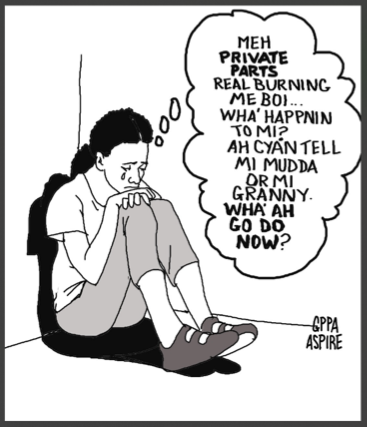








Try to imagine being 11 years old, fearful that you have contracted some dreadful sexual disease, and terrified of telling your mother or grandmother. What would you do?
At 11, you may not even know social workers, but you would certainly know pastors. But, very sadly, in our poll of older teens in August and September, not even one respondent mentioned a religious leader or church as a source of information about sexual reproductive health (SRH).
It gets worse. When asked a different question (How comfortable are you discussing SRH issues with each of the following people?), the results showed religious leaders were in a statistical tie with fathers and community leaders for being the least approachable (3%), and with whom they would expect most discomfort (54%).
Let’s put this in perspective. We have about 70 schools, 52 primary and 18 secondary. However, we estimate that there are nearly 185 churches distributed across almost every community. Churches can play a major role in correcting the massive problem of adolescent sex.
But they must grow beyond their aversion, their reluctance, and their avoidance to discuss sex. They must climb beyond blaming and shaming and overcome their misogynistic stigmatising women. They must help adolescents to shift from vulnerability and victimhood to positive agency.
The Age of Civil Responsibility Bill can only create the legal framework for this change. The social transformation requires support from churches, schools and parents.
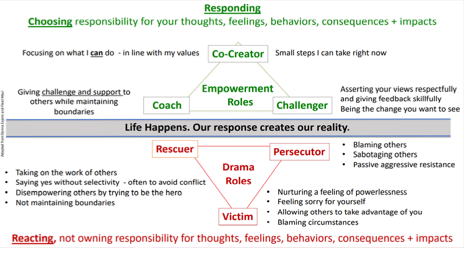
In 1968, Stephen Karpman described the dynamic of victimhood as a triangle of victim (powerlessness), persecutor (blaming others) and rescuer (taking on others’ responsibilities). We all play all these roles every day, and we change roles very quickly. This is a cycle of disempowerment.
In the 1990s, Acey Choy created a positive mirror, an empowerment triangle. He changed the blaming persecutor into a challenger providing constructive feedback; the take-over rescuer became a supportive coach; and these changes transformed the powerless victim into an empowered co-creator, someone with agency.
This is precisely what the ACR can do and how it can help victims to become positive agents. It can help adolescents climb above the line separating the two triangles. It creates an additional channel for the hapless teenager.
In our poll of teens, healthcare workers (29%) were second only to friends (55%) as the people they were most comfortable asking about sex. Mothers (27%) were third.
If we are serious about facing the calamitous state of sexual dysfunction in our society, we must revise and pass the ACR Bill, and set about investing seriously in HFLE, engaging parents, mobilising religious leaders, and training healthcare professionals in skills for working effectively with adolescents.
Sincerely,
Tonia Frame, President, Grenada Planned Parenthood Association (GPPA)
Fred Nunes, Consultant, Advocates for Safe Parenthood: Improving Reproductive Equity (ASPIRE)