











In August and September 2025, we conducted a poll of almost 230 older teenagers about the Age of Civil Responsibility (ACR) Bill.
We asked a few questions about sex education, for example, did they agree that the content should be limited to abstinence-only instruction? The majority, 68%, rejected that view, while only 18% agreed with it.
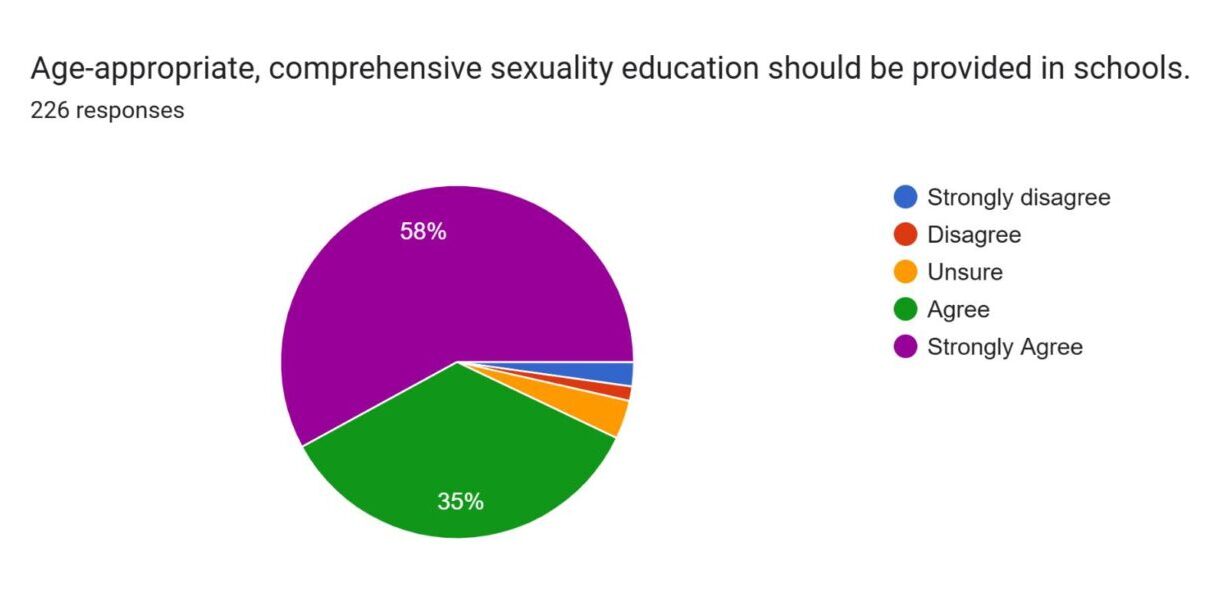
We also asked whether they agreed that age-appropriate, comprehensive sexuality education (CSE) should be provided in schools. This question yielded the strongest response in the poll: 93% agreed. What is more, as you can see, 58% strongly agreed.
Critics of the ACR Bill have observed that a law cannot solve the problem. That is correct. But we need the law to create the social space for actions to address the problem. Making bold improvements in how and what we teach in Health and Family Life Education (HFLE) is one vital component.
In his recent address to the UN General Assembly, Prime Minister Dickon Mitchell said, “Education is the antidote to ignorance.”
Nowhere does the absence of education have more life-long social and economic consequences than ignorance regarding reproductive health.
Our region has tinkered with HFLE for decades, yet not one Caribbean country has met the international standard for CSE. Indeed, none has even come close. We can be first across that threshold. Our chart shows that the older adolescents we polled have very high expectations of the quality of comprehensive sexuality education they want.
All that remains is for the adults in leadership positions in education and health to find the courage to respond and replace sexual ignorance with education.
Sincerely,
Tonia Frame, President, Grenada Planned Parenthood Association (GPPA)
Fred Nunes, Consultant, Advocates for Safe Parenthood: Improving Reproductive Equity (ASPIRE)









The first mistake was asking children what they should be taught in school. If that’s your approach you already know what your motive is. The responsibility for training and nurturing the young rests on adults. There are many scientific and moral reasons for that. It would be foolish to expose developing minds to information that they do not have the capacity to properly manage. Any decisions they make thereafter will be based on their limited understanding, the influences they are exposed to and the voices which are loudest in their ears. We also cannot assume that every child of the same age is on the same level.