









“A deep dive into youth displacement, crime and the erosion of hope and the urgency for evidence-based responses in Grenada and beyond.”
by Dr Justine Cleophas Pierre, Labour Market Consultant
Introduction: A region in crisis, a generation at risk.
Beyond the glossy postcards of white sandy beaches and lush rainforests lies a crisis that can no longer be ignored. Across Grenada, the OECS, and the wider Caribbean, youth are no longer simply surviving; they are sinking, casualties of a system that has failed to invest in their future.
The promise of education, work, and ownership, the fundamental pillars of development that our parents and school teachers told us back in the 1970s and 1980s, has crumbled for too many. In place of opportunity, they face unemployment, undereducation, poverty, and a growing allure of crime. This was one of the fundamental reasons why the Grenada Transformation Agenda was so popular among Grenadians, particularly our youths and university graduates.
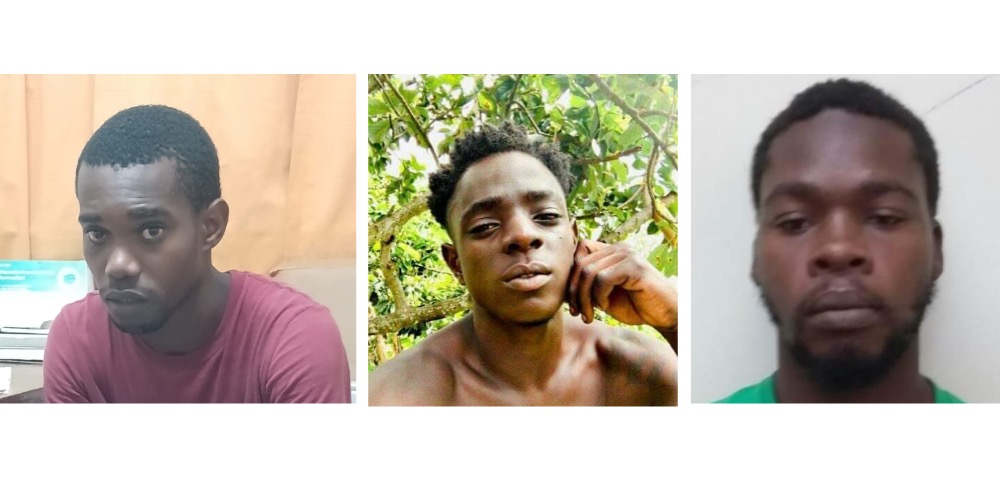
This quiet emergency is now erupting in waves of youth violence, drug trafficking, Human Trafficking, and brutal acts that shock not just the local conscience, but the world. One such case was that of Ron Mitchell (30), Atiba Stanislaus (27), and Trevon Robertson (21), three young men from Paradise, St Andrew, Grenada. Convicted on 30 July 2025 for the chilling 2024 murders of 2 American tourists, they were sentenced to a combined over 276 years in prison. The men had previously been arrested for a series of violent crimes, including rape and armed robbery. They were fugitives from police custody when they hijacked the couple’s yacht, bound and gagged them, and left them to perish at sea.
| Sentences imposed by the High Court of Grenada on 31 July 2025 Combined total time ordered: 276 years 4 months |
|||||
| Defendant | Offence | Sentence | Years | Months | Notes |
| Ron Mitchell (30) | Non-Capital Murder (x2) | Two 25-year sentences. Must serve minimum before parole | 50 | 0 | Earliest parole eligibility after 50 years |
| Housebreaking | 9 years + 1 month | 9 | 1 | ||
| Kidnapping (x2) | Two 5-year 4-month sentences | 10 | 8 | Sentences combined | |
| Robbery with Violence | 18 years 4 months | 18 | 4 | ||
| TOTAL | 88 | 1 | Before parole calculation – several consecutive sentences | ||
| Atiba Stanisclaus (27) | Manslaughter (x2) | Two 30-year sentences | 60 | 0 | Some sentences consecutive |
| Housebreaking | 9 years 1 month | 9 | 1 | ||
| Rape | 17 years 4 months | 17 | 4 | ||
| Kidnapping | 5 years 4 months | 10 | 2 | ||
| Kidnapping | 4 years 10 months | ||||
| Robbery with Violence | 17 years 9 months | 17 | 9 | ||
| TOTAL | 114 | 4 | One of the longest fixed-term sentences in recent Grenadian history | ||
| Trevon Robertson (21) | Manslaughter (x2) | Two 28-year sentences | 56 | 0 | |
| Housebreaking | 7 years 7 months | 7 | 7 | ||
| Kidnapping | 5 years 4 months | 10 | 4 | ||
| Kidnapping | 5 years | ||||
| TOTAL | 73 | 11 | No prior convictions | ||
However, while the heinousness of the crime made global headlines, few paused to ask: How did we get here? These men did not appear out of oblivion, nor did they appear from the shadows of society; they were always among us, along with the circumstances which birthed them. These men came from a fractured socio-economic landscape in Grenada, which has become the breeding ground for disenfranchisement and destruction.
Consider the following statistics for Grenada:
- Grenada’s youth unemployment rate (ages 15–29) stands at 36.8%, more than triple the adult average and among the highest in the OECS (Caribbean Development Bank, 2024)
- Over 43% of Grenadian youth under 30 are either unemployed, underemployed, or not in education or training (NEET) (ILO Caribbean Youth Labour Market Survey, 2023)
- Only 15% of secondary school leavers enrol in formal Technical and Vocational Education and Training (TVET), compared to 30% in St Vincent and 35% in Barbados (Grenada National Training Agency, 2023)
- More than 88% of youth under 35 do not own property or land, with less than 1 in 10 qualifying for mortgages due to low income, unstable employment, or lack of collateral (Eastern Caribbean Central Bank, 2024)
- Firearm-related arrests involving youth in Grenada have more than doubled between 2019 and 2024, with over 60% of gun crimes committed by individuals aged 16–29 (Royal Grenada Police Force Annual Report, 2024)
- Grenada has one of the highest rates of incest in the OECS territories
- 70% of drug-related arrests in Grenada involve youth under 30, according to the Caribbean Community IMPACS 2023 assessment
These numbers paint a devastating picture. The youth are not drifting toward crime; they are being systematically abandoned to it. The absence of responsive, well-structured and joined-up national development policies, such as Active Labour Market Policies, Decent Work Programmes, youth housing, entrepreneurship schemes and accessible lending facilities, employment schemes as well as health and well-being programmes along with civic engagement processes has left a vacuum now increasingly filled by gangs, guns, drug trafficking and underground economies.
In the case of Mitchell, Stanislaus, and Robertson, their individual choices led to unimaginable violence. However, the conditions that shaped those choices, such as chronic unemployment, lack of access to quality education, absence of social protection, absence of male guidance, and a disconnection from national development planning, are shared by thousands of young men across the Caribbean.
These crimes were not just the failure of 3 individuals. They were the failure of 3 generations of governance that ignored the youth until they became statistics or headlines.
It is time to confront the deeper sickness: when a country fails to invest in its young people, it inevitably pays multiple times in blood, trauma, and lost futures. The true cost of youth crime, death, incarceration and marginalisation is far greater than we dare to admit. Every life lost to crime is not just a personal tragedy but a permanent loss of talent, leadership, and potential that our regional communities need so desperately. Further, losing our youth today is a travesty on our future of diminished opportunities, reduced workforce and weakened society. The effects of the loss of our youth and the impact of their crimes cannot be isolated and bottled up, but instead have a real spill-over effect into society, which transcends time. The tragedy of these murders lies not only in what happened to the victims but in the dangerous normalisation of youth despair that allowed it to happen.
Independent research in the absence of political will.
At Dunn Pierre Barnett and Company Canada Ltd., we are building one of the largest and most comprehensive Black Data and Information Portals in the Global South, capturing over 200 indicators across 75+ predominantly Black countries. Through this platform, we have conducted dozens of independent, data-driven research studies, many of which would not have been undertaken by governments themselves.
Why? The harsh truth is that most Caribbean governments either lack the resources, the technical capacity, or, more troublingly, the policy understanding and political will to carry out meaningful research unless funded or demanded by international development partners such as the World Bank, the Caribbean Development Bank (CDB), UNDP, or the ILO. This external dependency model has created a reactive research culture, where data collection and analysis are only triggered by donor requirements, and not by national strategic planning and development agendas.
This is the wrong approach.
We conduct our research not to please donors, but to ensure culturally relevant data representative of our needs and values; to inform Caribbean people about better governance, and advocate for and deliver evidence-based policies, especially in neglected areas such as youth unemployment, crime, labour market gaps, human trafficking, TVET alignment, and housing affordability.
Crime isn’t just rising; it’s evolving.
The Caribbean’s violent storm: Guns, gangs, Trafficking, and digital crime.
According to the United Nations Office on Drugs and Crime (UNODC), the Caribbean currently holds the highest homicide rate in the world: 15.1 per 100,000 people, outpacing Africa (13.0), Latin America (11.6), and Southeast Asia (4.1). This disturbing figure is not a statistical anomaly; it is the result of a confluence of youth marginalisation, weakened institutions, and growing transnational criminal networks operating with alarming impunity across the region.
Alarming National Statistics (2023–2024):
- St Lucia: Recorded 74 murders, giving the island a homicide rate of 43.7 per 100,000, nearly 3 times the regional average. Over 78% of homicides were gun-related, with many linked to turf wars and youth gang violence
- Trinidad and Tobago: Surpassed 605 murders in 2023, its highest annual homicide toll on record. Nine out of 10 homicides involved illegal firearms, many smuggled through porous borders and maritime routes. Over 12,000 illegal guns seized in the past 5 years
- Jamaica: Recorded 1,393 murders in 2023, or 52.3 per 100,000, making it one of the most dangerous countries in the Western Hemisphere. Youth under 30 accounted for 60% of both perpetrators and victims, according to the Jamaica Constabulary Force
- Grenada: While homicides remain relatively low (9 in 2023), the Royal Grenada Police Force (RGPF) reports a 138% increase in illegal firearm seizures between 2019 and 2024. Over 60% of gun-related arrests involve males aged 16 to 29, indicating the growing involvement of youth in violent crime. Authorities have identified emerging youth gangs operating in St George, Gouyave, St John, and rural areas of St Andrew
These aren’t isolated incidents. They are symptoms of a region unravelling under the pressure of poverty, social exclusion, and institutional neglect, yet very few governments conduct independent studies to research the problem.
Case in point: A crime that shook Grenada.
In February 2024, a case that captured international headlines unfolded in Grenada. Ron Mitchell (30), Atiba Stanisclaus (27), and Trevon Robertson (21), all from the village of Paradise, St Andrew, escaped police custody and murdered American tourists Kathleen Brandel (71) and Ralph Henry (67) by stealing their yacht, binding them, and throwing them overboard.
These young men were no strangers to crime. They had extensive prior records, including charges of rape (which is very high in Grenada), robbery with violence, and sexual assault.
The judge in the case.
High Court Judge Paula Gilford described their crimes as “one of the most heinous” cases she had ever presided over, an act of unthinkable brutality involving the kidnapping, rape, and murder of 2 elderly foreign nationals, executed during a violent escape from police custody. The courtroom fell silent as she recounted the chilling facts: how the 3 young men bound their victims, hijacked a yacht, and cast their lives into the sea without remorse.
But while the savagery of their actions shocked the conscience of a nation, their journey into violence followed a tragically common pattern, one that is becoming all too familiar with young people across the Caribbean. It is imperative that we understand how these young men reached this point, and searching for this deeper understanding is not about excusing their actions or absolving them of responsibility. Rather, it is about identifying the root causes and systemic failures that contribute to this path, and by doing so, we can design effective prevention and intervention strategies. Only by addressing these deeper issues can we safeguard our communities and create healthier outcomes and a more hopeful future for our young people and our region.
These young men, like other offenders throughout our region, were not born monsters. They were once innocent babies. They were born into communities gripped by chronic unemployment, generational poverty, superstitions and social fragmentation. From an early age, they were surrounded by broken homes, absent fathers, underfunded schools, under-policed neighbourhoods, and limited access to any meaningful intervention, whether in the form of education, counselling, mentorship, or skills development. They were children who had been failed by every level of the system.
- Homes and families which could not adequately care for and support their psycho-social and economic needs and effectively parent them
- A public school system that did not catch them when they fell behind
- A youth development system that could not redirect them when they veered off course
- A justice system that interacted with them only after harm was done
- A society that labelled them “bad boys” long before they had a real chance at anything else.
Judge Gilford’s words were a stern condemnation of their actions; however, they also served as an unspoken indictment of the institutions that allowed these young men to spiral unchecked. Her courtroom became more than a place of judgment. It became a mirror held up to a nation and its people.
This is not merely a case about 3 criminals. It is a cautionary tale of what happens when a society abandons its youth, fails to provide them with alternatives, and ignores the early warning signs.
When children grow up in environments with no jobs, no mentors, no mental health support, and no hope of owning a home or living with dignity, their futures are already under siege. When they are raised in communities that condemn them even before they are born by condemning their parents, and society offers broken ladders out of hardship, then they are viciously trapped in cycles of inherited struggle. Inherently, we all seek belonging, and no differently, these young people also seek belonging. Unfortunately, too often the only systems that welcome them are gangs, guns, drugs, violence and crime.
It is often tempting to say that “we came from similar or even the same backgrounds and we came out just fine” but to make this claim is to overlook and diminish the weight of others’ lived realities — realities shaped by a different interplay of circumstances, challenges and choices.
It is a dangerous illusion to hold that youth crime and violence are someone else’s problem and not all of ours simply because we did not fall victim to our circumstances or to crime and violence. In fact, youth crime and violence affect all of us because we live in a deeply interconnected, symbiotic social ecosystem. Whether as victims or families of young offenders, as educators, clergy, health professionals, social and youth workers or as technocrats, policy makers, politicians and legislators, as members of the legal and judicial system — we are all touched by its consequences. Even as taxpayers, we bear the burden through the opportunity cost of tax dollars diverted away from health care, education, social, and infrastructure development.
Hence, one way or another, as members of and actors in society, we both shape and are shaped by these realities. As such, ignoring youth crime and violence does not protect us nor insulate us; instead, it only allows the crisis to grow, unfettered and unresolved.
When a country fails to protect, guide, and invest in its young people, it should not be surprised when they become its greatest threat.
The tragedy of this case is not only in the violent deaths of 2 innocent tourists. It is in the slow, preventable decay of 3 young lives, and the silent complicity of a system that watched it unfold.
No Jobs, no skills, no compass.
Grenada’s youth unemployment rate currently stands at a staggering 36.8%, one of the highest in the Eastern Caribbean, compared to a regional average of 29% (Caribbean Development Bank, 2024). For context, Guyana’s youth unemployment rate is 21%, Suriname’s is 23%, and St Lucia’s is 28.6%, all of which, despite their challenges, are still significantly lower than Grenada’s. This crisis has unfolded in plain sight over the past few years.
Grenada’s missing link: The absence of Big Data in a data-rich nation.
In the modern global economy, data is the new currency, a powerful enabler of informed decision-making, policy formulation, and strategic development. Yet in Grenada, despite having more than 32 major data-producing institutions, including ministries, national agencies, statistical offices, donor-funded projects, and sectoral research units, the country remains critically underpowered in big data utilisation, particularly in areas like youth and social development, economic planning, labour intelligence, education planning, and workforce development. Health transformation, safety, and security. This paradox, a data-rich but insight-poor environment, is one of the most significant barriers to national progress.
Nowhere is this gap more evident than in security and safety, labour market planning and workforce development. While countries around the world deploy artificial intelligence, machine learning, and predictive analytics to understand and forecast job market trends and set the price of wages, Grenada continues to rely on outdated methods, pen, paper, sporadic consultations, and even ‘ceiling’ statistics.
There is no centralised skills database, no integrated labour market information system, and no real-time tracking of employment trends, effect of minimum wage, certification outcomes, or sectoral skill shortages. As a result, education and training institutions operate blindfolded, developing curricula and certifying trainees with minimal connection to the actual needs of the economy. Graduates are often pushed into the world with qualifications that are either too generic, misaligned, or entirely mismatched with available opportunities.
The consequences of this data vacuum are visible in the lives of thousands of young Grenadians who complete secondary school each year. Many exit the system with CXC passes, fragmented TVET exposure, or no formal qualifications at all. Yet they face a future with no structured pathway into employment, entrepreneurship, or further education. Without proper and coordinated data to guide public investment and employer incentives, programs remain disconnected from demand. As a result, young people are left to drift into the informal economy, where wages are volatile and protections are few; become economically inactive, relying on family or government assistance; or choose to emigrate, discouraged by the lack of meaningful opportunities at home. The most vulnerable disappear into cycles of poverty, disenfranchisement, or criminal activity, untracked by any data system and unsupported by institutional safety nets.
The irony is that Grenada does not suffer from a lack of data generation. From the Central Statistical Office to the Ministry of Education, and from donor programmes to regional institutions, data is constantly being produced on school performance, employment rates, agricultural output, migration patterns, and more. However, what is missing is the ability to aggregate, analyse, and apply this information in a coordinated and strategic manner.
Without interoperability, data governance standards, or a national digital strategy focused on big data analytics, the country loses out on the insights that could transform its planning systems. This fragmentation means that even when data exists, it is underutilised, outdated, or inaccessible to decision-makers.
To address this gap, Grenada must prioritise the development of a national big data ecosystem. This includes investing in a real-time Labour Market Information System (LMIS), digitising TVET and education outcomes, linking employer data with training institutions, and building the analytical capacity within ministries to harness and interpret complex datasets. These were some of the ideals of the New Transformation Agenda. Equally important is the need for cross-agency collaboration, open data protocols, and a national strategy for skills intelligence. Grenada’s youth and economy deserve policies grounded in evidence, not assumptions.
“You can’t build a future for your children if you don’t know what the future demands”
Dr Justine Pierre, Labour Market Statistician
My final take: We need to ask the right questions.
As a father with children growing up in Grenada, and as someone with deep family roots on this island, I often ask myself a difficult but necessary question: How do we truly know how our country is doing?
It isn’t solely measured by the amount of foreign investment we attract, the number of tourists who arrive during the peak season, the towering hotels we construct, or the marginal increases in GDP. While these are the traditional metrics used by governments and international agencies to define “development,” they often tell only part of the story and sometimes, the wrong part.
True progress cannot be captured by numbers alone. Development must be measured not just in economic growth, but in human well-being. It’s about whether ordinary citizens, farmers, teachers, market vendors, and young people can live lives marked by dignity, security, opportunity, and hope. It’s about whether a young graduate can find meaningful employment, whether a family can afford safe housing and healthcare, and whether the elderly can retire with dignity.
Let me tell you what I believe we should be asking.
- Can a 28-year-old with a full-time job buy a home, start a family, and live with dignity in their own country?
- Can a teenager in a rural village access affordable training that leads to a job?
- Can a young man in an inner-city community find legal work faster than he can find a gun?
- Can a single mother get childcare and housing support so she can return to school or upskill for tomorrow’s economy?
- Can a single father get social services support to keep his young family intact while he ekes out a living?
- Can a recent college graduate find employment that matches their field of study, without migrating or accepting informal work?
- Do the youths in Carriacou and Petite Martinique have the same chances for higher education, meaningful jobs and a chance to build a decent life as their counterparts on the mainland?
- Does the young man who lost his leg to diabetes have a fair chance at decent work and dignity as his peers who have not suffered such loss?
- Can a young woman feel safe walking to work or taking public transportation without fear of harassment or exploitation?
- Can a 16-year-old in a low-income community name 5 career pathways available to them, and know how to pursue one?
- Can a vocational student graduate with both certification and a job offer in hand?
- Can our young people buy land priced in US dollars?
- Can young people access mental health support before they become statistics of crime, suicide, or incarceration?
- Can youth speak up in policy spaces without being ignored, tokenised, or silenced?
The answer is no.
If the answer to these questions is no, then a country is not developing. It is failing. Today, in Grenada and across much of the Caribbean, the answers are alarmingly negative. Young people, qualified, hardworking, and full of potential, are being locked out of opportunity. They are overeducated and underemployed, skilled but uncertified, hopeful but disillusioned.
- They cannot afford land
- They cannot access credit
- They are not being trained for the jobs of the future.
- And they are not being heard
This is not just an economic problem. It is a social crisis, a governance failure, and a moral reckoning.
Grenada, like much of the Caribbean, now stands at a precipice. Either we build bridges to ownership, opportunity, and dignity, or we continue to make more prisons, deportation lists, and mental health clinics to manage the fallout. The so-called Caribbean dream job, a home, a future, is not a myth. It is still a reality, and it is possible. However, it is currently being strangled by decades of mismanagement, political apathy, and elite disconnection from the realities of ordinary citizens.
The case of the murdered tourists in 2024 was a tragedy; however, perhaps more tragic is the quiet, daily erosion of life chances for thousands of young Grenadians, the youths of the Caribbean, and our people. They are dying slowly, through neglect, poverty, undereducation, exclusion, and despair. They are losing faith in systems that were never built for them in the first place.
- The price of being young in the Caribbean is now too high
- Too many cannot afford to live
- Too many cannot afford to stay
- And far too many have already been lost
Let us change the cost. Let us change the system. Let us stop asking the wrong questions and start building the right future before the next headline shocks us again.
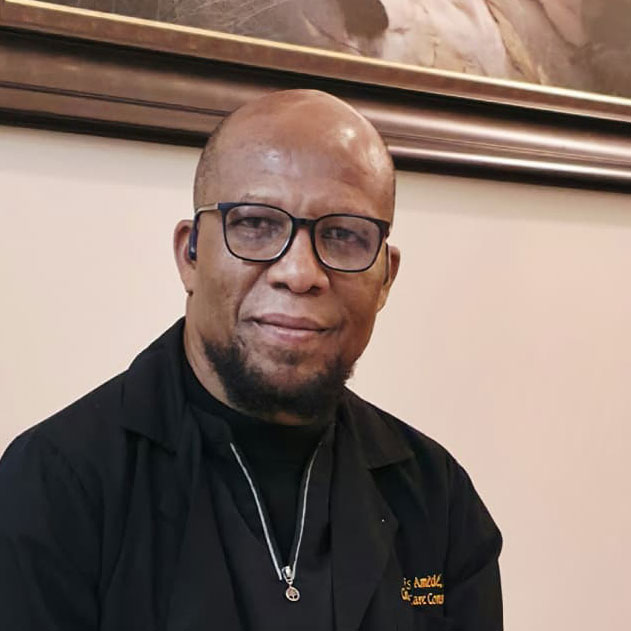
Dr Justine Cleophas Pierre is a Labour Market Statistician and Director of Research at Dunn Pierre Barnett and Company Canada Ltd. He has led over 370 socio-economic studies across 40 countries, with expertise in youth development, labour market systems, skills policy, and Black population research in the Caribbean, Africa, and North America.
References
United Nations Office on Drugs and Crime (UNODC)
Global Study on Homicide 2023
https://www.unodc.org
Provides data on global and regional homicide rates, with specific statistics for the Caribbean.
Caribbean Development Bank (CDB)
Youth Are the Future: The Imperative of Youth Employment for Sustainable Development in the Caribbean (2022)
https://www.caribank.org
Contains labour market data, youth unemployment rates, and skills mismatch information across Caribbean countries.
International Labour Organisation (ILO)
Youth Labour Market Analysis: Caribbean Regional Report (2023)
https://www.ilo.org
Includes NEET rates, informal employment statistics, and TVET recommendations for OECS countries, including Grenada.
Eastern Caribbean Central Bank (ECCB)
2023 Annual Economic and Financial Review
https://www.eccb-centralbank.org
Reports on macroeconomic indicators, housing affordability, credit access, and GDP trends across member states.
Grenada Royal Police Force (RGPF)
Crime Statistics Report 2019–2024
Official national crime data, including firearm seizures, youth violence, and gang activity trends in Grenada.
US Department of State Trafficking in Persons Report 2024
https://www.state.gov/reports/2024-trafficking-in-persons-report/
Documents human trafficking patterns, vulnerabilities, and government responses in the Caribbean region.
International Organisation for Migration (IOM)
Human Trafficking Trends in the Eastern Caribbean (2023)
https://www.iom.int
Highlights emerging trafficking routes and youth exploitation risks in Grenada and neighbouring islands.
INTERPOL & Caribbean Community IMPACS
Caribbean Cybercrime Threat Assessment Report (2024)
https://www.caricomimpacs.org
Covers the rise of cybercrime, digital fraud, and tech-enabled gang activity in the Caribbean.
Dunn Pierre Barnett and Company Canada Ltd. (DPBA)
2024 Youth Transition Study: Grenada and OECS Labour Market Challenges
https://www.dpbglobal.com
Proprietary research, including NEET data, skills gaps, TVET access rates, and policy recommendations.
World Bank
World Development Indicators – Housing, Employment, and Education in Small Island Developing States (SIDS)
https://data.worldbank.org
Offers comparative data on home ownership, labour force participation, and human capital development.








Dr. Pierre, this was a powerful and necessary read. You’ve taken a heartbreaking situation and explored it with honesty, depth, and clarity. What stood out to me most is how you didn’t just focus on the crime but on the years of systemic neglect and missed opportunities that led to it.
The way you connected real data with lived experiences made the message even more impactful. This isn’t just about one case. It’s about an entire generation being failed by the systems that were supposed to support them.
Thank you for writing this. It’s the kind of piece that makes us reflect, ask better questions, and hopefully push for real change in Grenada and across the Caribbean.
This is a well written article. Good job
Very complex issue that is plaguing the Caribbean. Those with family in the USA, Canada or Europe, have a buffer and continuous help, but those without have very little choices. The only way out of it is a stronger economy for the region.
Thought provoking analysis, asking very relevant questions!!!! Kudos to the writer.