



by John Angus Martin
“Emancipate yourself from mental slavery,
None but ourselves can free our minds.”
Bob Marley, “Redemption Song,” Uprising (1980)
These often-quoted lyrics from one of Brother Bob’s most inspiring songs echo across the Caribbean on this Emancipation Day, from the village of Accompong, Jamaica, to the forest-covered Bwa Neg Mawon in St John, Grenada.
“Redemption Song” insists that the work of emancipation is in “our hands” as they were made strong. And “none but ourselves can free our minds” of the centuries of colonial subjugation that still haunts us.
Today, 1 August, marks the 191st anniversary of the ending of slavery in Grenada, Carriacou and Petite Martinique, and across the region. It “freed” the 23,641 enslaved across the islands. Despite the forced servitude of the 4-year Apprenticeship period (1834–38), the former enslaved thus began the emancipative process that has been ongoing for the past 2 centuries. It has quickened since political Independence from the British in 1974, but much remains to be done.
That process continues as we debate constituting Grenada a republic that would (at least symbolically) end the last colonial shackles that bind Grenada to the British monarch, who remains Grenada’s head of state. Despite the debate over the method used to pass 2 legislative acts in Grenada’s Parliament only a week ago, an overwhelming majority of Grenadians seem to support the goal of the bills to change the pledge of allegiance to the British monarch King Charles III to that of the State of Grenada, which we already extol in our Pledge of Allegiance:
I pledge allegiance to the Flag,
and to the country for which it stands,
with liberty, justice and equality for all.
This bold step, coinciding with the commemoration of Emancipation Day, which was also legislatively recognised on its actual day and not the first Monday (or Bank holiday) of August, shows us that Grenada has the willpower to continue the process of emancipation, to “free our minds.” Thus, the question I pose: “Isn’t it time to retire the colonial Mace of the House of Representatives?”
As we commemorate Emancipation Day and the ending of slavery, should we retain a degrading colonial representation that we honour as the ultimate symbol of our own Parliamentary democracy and thus independence?
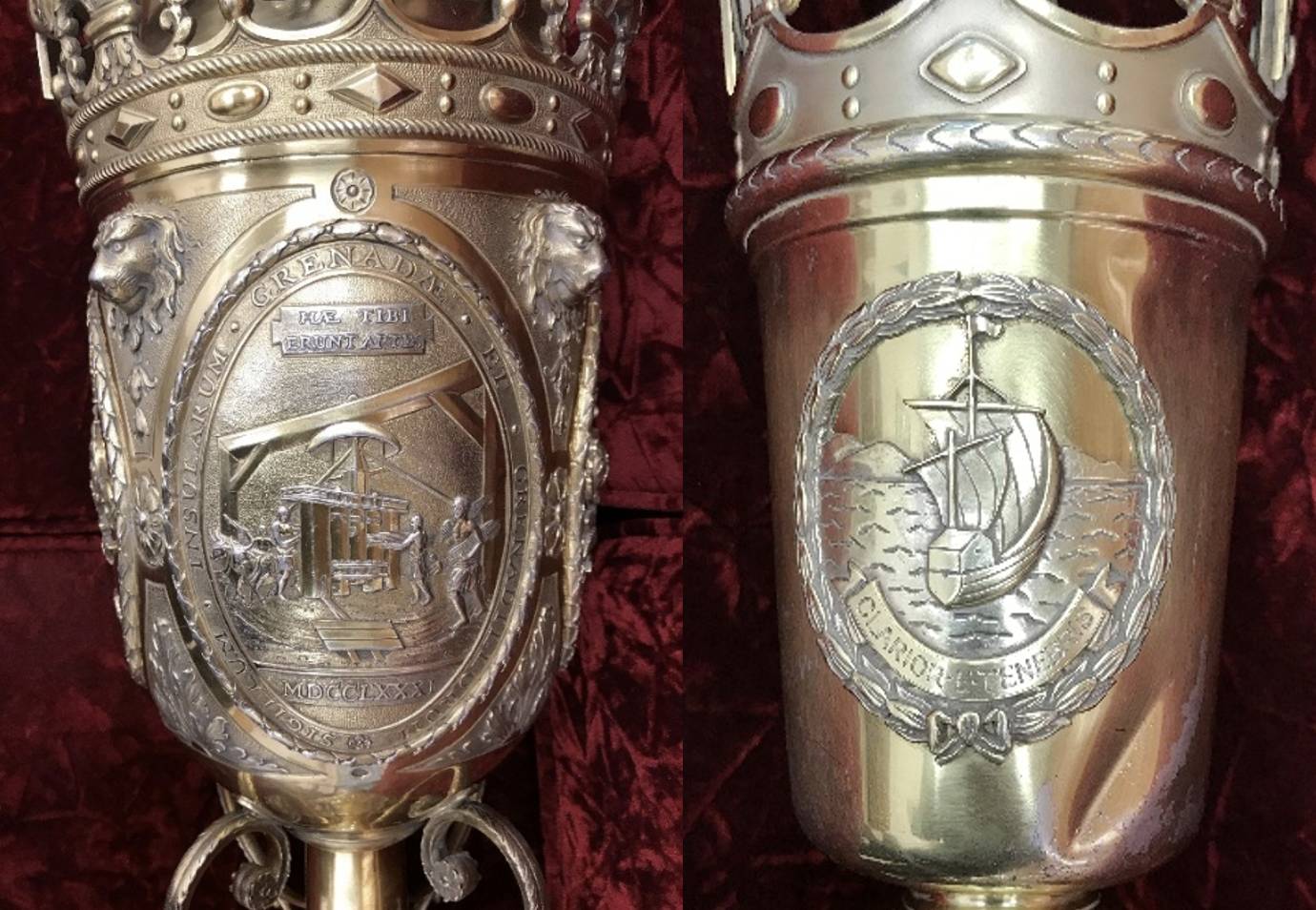
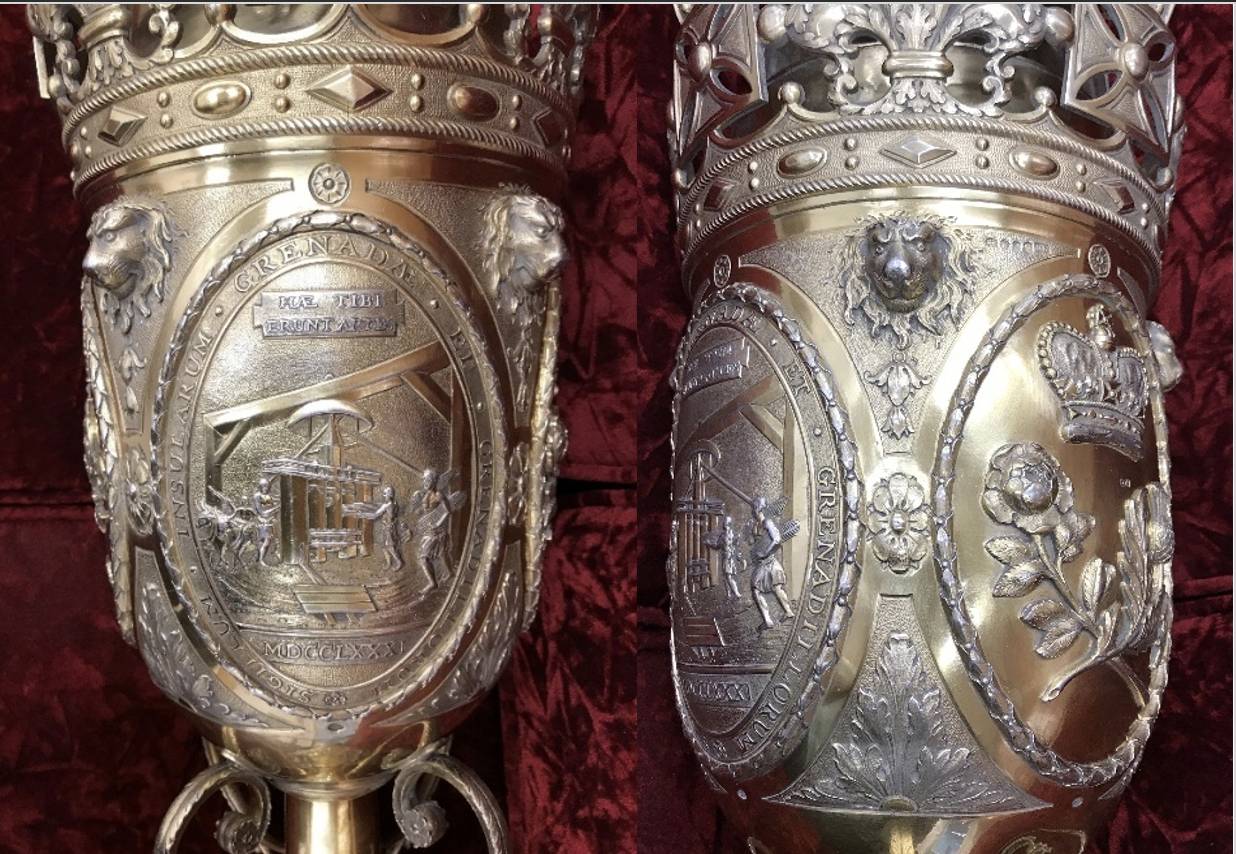
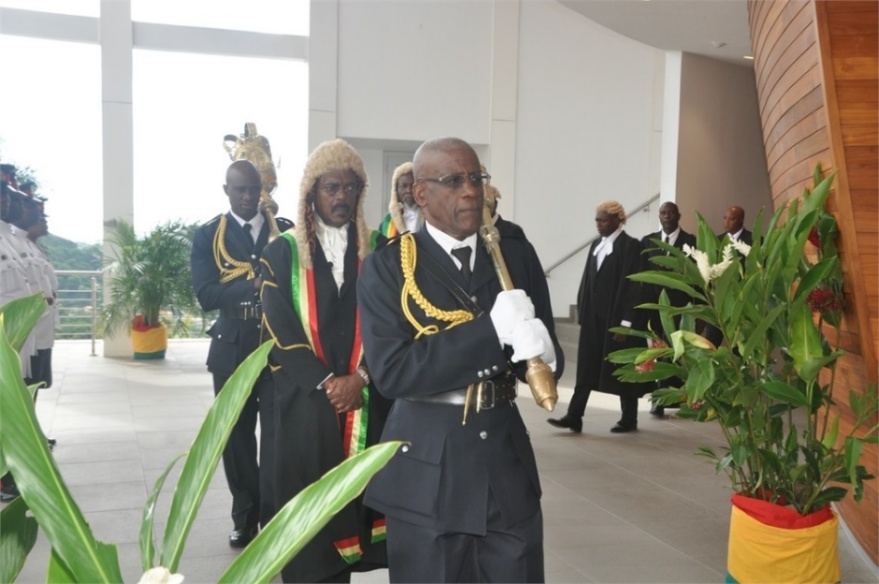
This 18th-century imperial Mace, branded with its anachronistic imagery of enslaved workers toiling at a sugar mill and embossed with Virgil’s admonition to Roman conquerors, “Hæ tibi erunt artes,” was once proudly carried aloft by a white-wigged clad Grenadian as a symbol of the state’s Parliamentary democracy. Each Parliamentary sitting, it rests in that lofty chamber in an honoured position, as is the practice. Why then do we keep this special place for this 245-year-old anachronism? Aren’t we offended by it? Should we be offended by it?
Its offence, the depiction of enslaved Grenadians forced to feed sugar cane into a cattle mill that represented the epitome of plantation slavery in Grenada! It carries the words “These Shall Be Thine Arts,” taken from Virgil’s Aeneid, the full quote: “Roman, govern the nations with your power; remember this! These shall be thine arts, to set forth the law of peace, to spare the conquered, and to subdue the proud.” The phrase was adapted by British colonials in Grenada as their inspiration following the capture of the islands from the French in 1763 and reflects their colonial aspirations. In 1903, the colonial government decided to change its coat-of-arms, replacing the ignominious slave scene with a ship, representing Christopher Columbus’ “discovery of Grenada.” However, as the historical Mace of the former Legislative Council, it automatically became such for the newly created House of Representatives when that change was made by the new constitution in 1967.
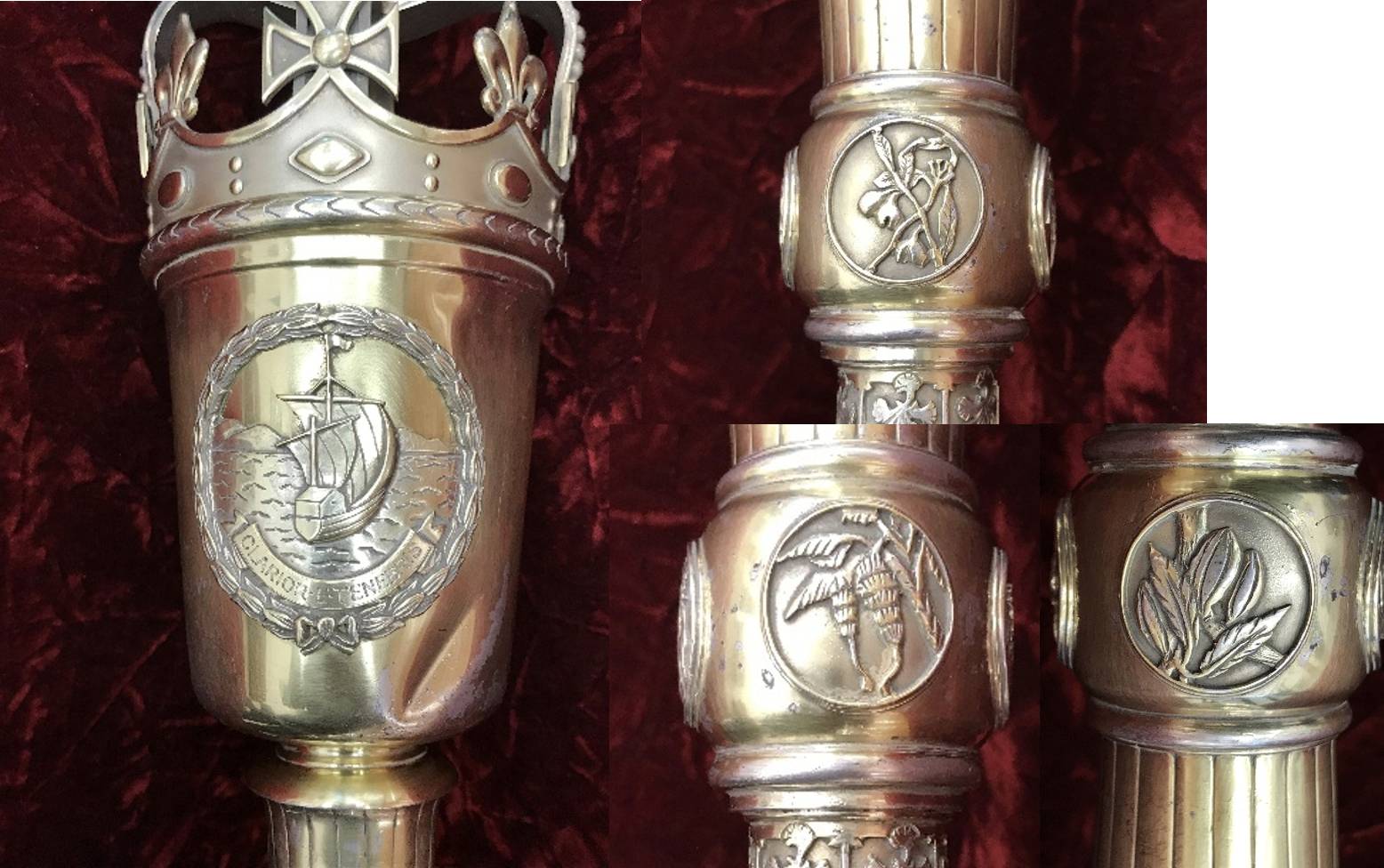
The creation of the Senate in 1967 upon Grenada becoming an Associated State resulted in a new Mace for the Upper House that replaced the General Council, which did not have a Mace. It carries the islands’ second coat-of-arms and the existing one at the time. Its motto, “Clarior e Tenebris” (“Brighter out of Darkness”), seems innocuous enough as mentioned in song by Walter “Mighty Dictator” Thomas and carries many symbols of our beautiful islands. But maybe it is time to take a deeper look at its core representation. That second coat-of-arms carries a ship representing Columbus’ “discovery of Grenada.” Maybe we should take a page out of Trinidad and Tobago’s book when it changed its coat-of-arms only this year by removing Columbus’ “ships of discovery” with that island’s unique creation, the renowned steelpan.
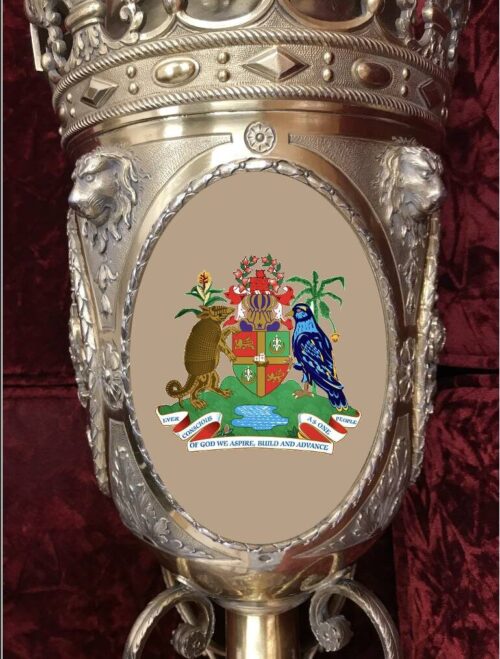
So here we are, almost 2 centuries after the emancipation of slavery in Grenada (longer than slavery existed here), and 51 years of Independence, still debating the symbols that should represent the people of the state of Grenada, Carriacou and Petite Martinique. For me, this is an easy one! I see it no differently that the pledge of allegiance to the British monarch, and I do not think it would be as controversial in requiring a constitutional change. I therefore implore our leaders to examine these symbols of our Parliamentary democracy and of the images that represent us to the world. And ask Grenadians if this is what we want to represent us?
As we begin the second half-century of Grenada’s Independence, what legacy do we want to leave for the future? Like so much of the past, including place names that carry the burdens of our history, there comes a time when we must seriously consider who we are and how we make the place where we live reflect us, be more like us. Our symbols should represent us. These colonial relics, like white wigs and gloves (already in the Grenada National Museum), are part of our history and belong in our museums where they can be contextualised as they tell the difficult stories of our past. This is not about erasing history; it is about making history whole again. It is about moving forward and leaving the burdens of history outside of our lives, thus leaving some of the trauma behind.








Great piece Angus. I fully agree with you, Doc