









by Dr Neals J Chitan
Although specifically worded to peek the readers’ curiosity and interest, this caption was seriously meant to cause folks to read and think about what can happen if we are not careful how we handle our law enforcers.
Mandated to serve and protect, I have seen thousands of purpose-driven, passionate police officers who risk their safety and lives on a daily basis to do so. However, if we are honest, we will also concede that just like local communities with their thousands of law-abiding citizens, there are a few rogue elements whose behaviour and reactions can quickly create mayhem and unfairly cause a negative, distasteful profiling of both community and police.
As an international crime reduction consultant, let me firstly disclose my level of work or networking with or within police agencies across Canada, USA, UK, Africa and from Jamaica’s Constabulary Force in the north to Trinidad and Tobago Police Service in the south of the Caribbean, and the powerful positive impact we were able to achieve together. I admire and applaud the professionalism and quest for academic advancement and specialised training I see within the rank and file of Caribbean police agencies as they prepare themselves to more ably confront the rise in crime and violence we see across the region. However, we must sound the warning alarm against officers whose untamed anger and uncontrollable impulses can cause public rebuke to their comrades while causing a triangular impact of loss, hurt, grief and incarceration for the community, for their personal families and for themselves.
Recently, we have seen a rise in social media and mainstream media reporting of alleged misdemeanours and malpractices of police in several nations of the region, sparking mass demonstrations, shootouts, burnings and beatings, as the public administers its vigilante justice on law enforcement. Despite what may be seen as blatant injustice on the part of the police, it is crucial to let the law and justice take their course, remembering that despite training, in an instant, human tendencies, personal shortcomings and financial gain can impulsively overpower good judgement and cause tragedy.
And so, in our attempt to demand justice, it is imperative that despite the hurt and pain we feel that we responsibly and respectfully engage the various levels of administration and accountability, holding officers accountable for their action instead of unfairly castigating and maligning the good men and women in uniform on account of a few so-called “bad apples.” This attitude and action can have serious effects on the law enforcers, depleting the morale of police agencies, incapacitating them both psychologically and physically, while creating a nonchalant attitude to the safety of the public. When this happens, it swings the door to crime and violence wide open as police become less enthusiastic and more relaxed in public engagements.
With my work in community engagements with Toronto Police Service, I vividly remember when public demonstrations, rioting and vandalism occurred against the police and, in a counter-protest to the perceived unfair treatment of them, Toronto Police Services officers put down their weapons and patrolled for a week unarmed. Similarly, in London England in 2023, as protest and demonstrations around the 2022 shooting of 24-year-old black man Chris Kaba erupted against Metro Police, in an act of counter protest and support for their “perceived” unfairly accused colleague, London Police officers also put down their guns on patrol, thus creating what could have been a serious spike in criminal activity.
I, therefore, as a crime reduction specialist who stands for justice and fairness, and one who trains young men in the social skills of respect and responsibility, I too must add my voice and use whatever platform available to respectfully denounce injustice while holding perpetrators accountable and demanding their consequences. However, it will be massively counter productive to disrespectfully attack our police on account of the bad decisions and reactions of a few, thus damaging the psyche of our officers and putting them on the defensive when crime, violence and homicides are steeply on the incline and police need to be on top of their game to confront these societal plagues.
Remember, our police officers are our neighbours, friends, relatives, church family and our human brothers and sisters. They, too, are affected by individual, family and community issues, and although as trained professionals, we hold them to a higher standard of behaviour, as humans, they can misstep. I pray for our men and women in uniform as they do their duties of serving and protecting our nations, and ask of us tolerance, patience and appreciation even in times when justice is demanded.
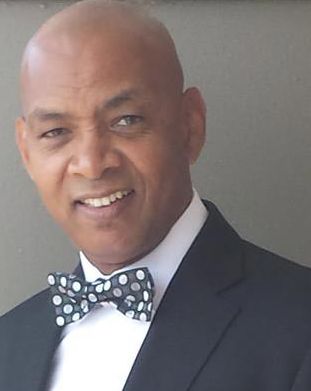
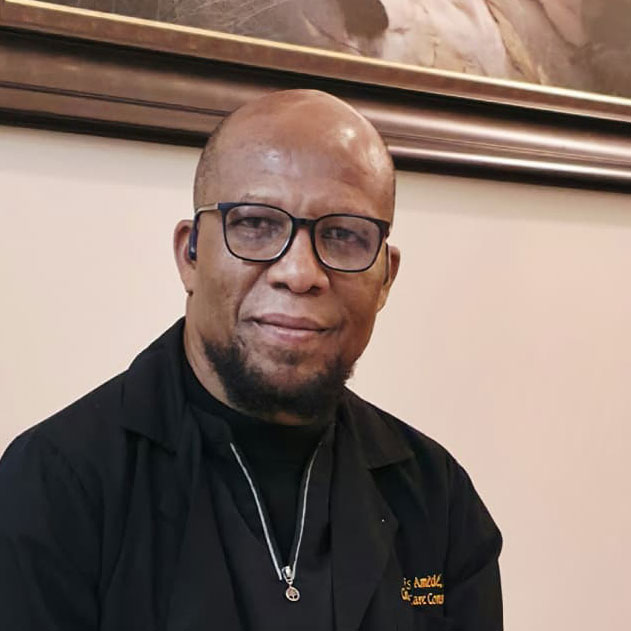
Dr Neals Chitan is an International Social Skill Consultant and Crime Reduction Specialist who holds a PhD in Social and Behavioural Sciences and currently works in Grenada. He is the President/Founder of Motiv-8 For Change International, a Toronto-based Social Skill Agency, and can be reached from North America at 647-692-6330 and locally 473-416-8377 or at [email protected]








I very much appreciate those who have responded to the sentiments and concerns in this article. Our Council General in Toronto and Loubeth have shared passionately and captured the essence of this piece. Hopefully our sentiments will be the catalyst of change! Blessings!
Since Grenadian people started growing up on a strick diet of Jamaicans called music, they started to hate our police officers, in most cases for no reasons and only because the so-called music they grew up on sys t
o do so.
One way to stop this is to ban this music from buses that cary our school children.
Dr Chitan!
What a resource we have in our Caribbean community!
We urgently need to utilize your knowledge and wisdom now more than ever.
Your essay brings awareness to yet another way towards Nation building.
Thanks.
I am unreservedly seconding all of the sentiments, observations and recommendations expressed by Dr. Neals Chitan in his article, “Be careful with the police — a word to the wise.”
We ought to generally respect and commend the sacrifices made by our police officers, just as we must identify and correct the shortfalls without blaming all officers for the failures of a few.
May God bless and protect our police officers in Grenada, Carriacou and Petite Martinique, throughout the Caribbean, in Canada, in the USA, in Britain, and elsewhere.
This is sound communal advise.
However moral words are loss on those without social and discipline consciousness.
In communities there are humans who are wild and uncontrollably. These are those who have no respect for themselves nor their neighbours more or less authorities.. For real they are unable to understand how their attitude, behaviour and manners would hurt, damaged or killed another. Infact you will hear them say I do not care. Recently I witnessed a situation and having spoken to one of the angry young men, he looked at me with cold eyes and angrily said, ‘miss ah dou care’. He meant it. Should his anger left unchecked the outcome could be tragic. There are humans in our society because of what they may have experienced in their early childhood years, socialisation and spiritual process , they really lack the emotional intelligence that enables caring. Thus they will be unable to take responsibility for their actions and are quick to blame others.
Social skills, such as self discipline, empathy, self respect, communial respect for life and property of others are thought from the cradle and matures with age.
It is impossible to apply these skill when out and about, especially at social events and crowdings if these were not taught and learnt during our early years. it is silly to expect application as adults
I respond to to the above article and Victoria event because of my professional experience. In the UK as a professional trained educator, I have taught in young people’s behavioural units, sat on my local police community consultant committee, worked as an education officer with my local government education authority in the role of teacher and parent and education department officer, I have coordinated multi disciplinary professional steering groups and as an influence, therefore I speak from experience and professionalism.
In earnest Grenada needs to do some urgent remedial early years childhood work involving parent partnership with the RGPF, schools, community centres, Church, children and parents before we became like our regional neighbors.
Nip it in the bud before it’s too late. You cannot bend trees when they are grown.The culturing and nurturing begins in the planting of the seeds.
We in Grenada are blessed to have at best communial living. Our police force and communities do experience positive relationships. I grew up in Europe, travelled through out several US STATES AND European countries both as a tourist and visiting speaker at least educational institutions. Now I have returned to my birthplace and have done voluntary communal work here on the Civil Society groupings, after school clubs and I have had an extensive meeting with officers at the police headquarters where I offered ideas and suggestions. Also I have attended one of Dr Chitan’s seminar. So when I say that We in Grenada needs to protect our society and serve one another from police to civilians with respect and dignity and that our type of Grenadian policing and society do not exist in countries that I have lived and researched, I mean it. Honestly I would say that we are truly blessed.
Of course there are many unruly humans in our communities, be it police officers or civilians. So,when something goes wrong, when a tragedy as the Victoria incident happened, let us Stop and Think through the cause and effect before casting blames and loosing selfcontrol. Our police needs us and we need them they are human as we are.We like them have had habits and good habits and the bad habits are not looked at with a view to challenge and change of mindset, the fall out will be tragic as seen in Victoria.
Grenada we are in a positive, communial society, let us nit take it for granted. Le us be mindful of it, else we will loose it in the wilderness of chaotic civil society breakdown.
To use Dr Chitan’s catchphrase: ‘STOP AND THINK.