














by Linda Straker
- Gastroenteritis is described as sudden onset of diarrhoea, with or without fever
- Ministry of Health attributes gastro cases to seasonal fluctuation
- Grenada declared gastro outbreak in 2024 attributed to sapovirus, salmonella and E coli
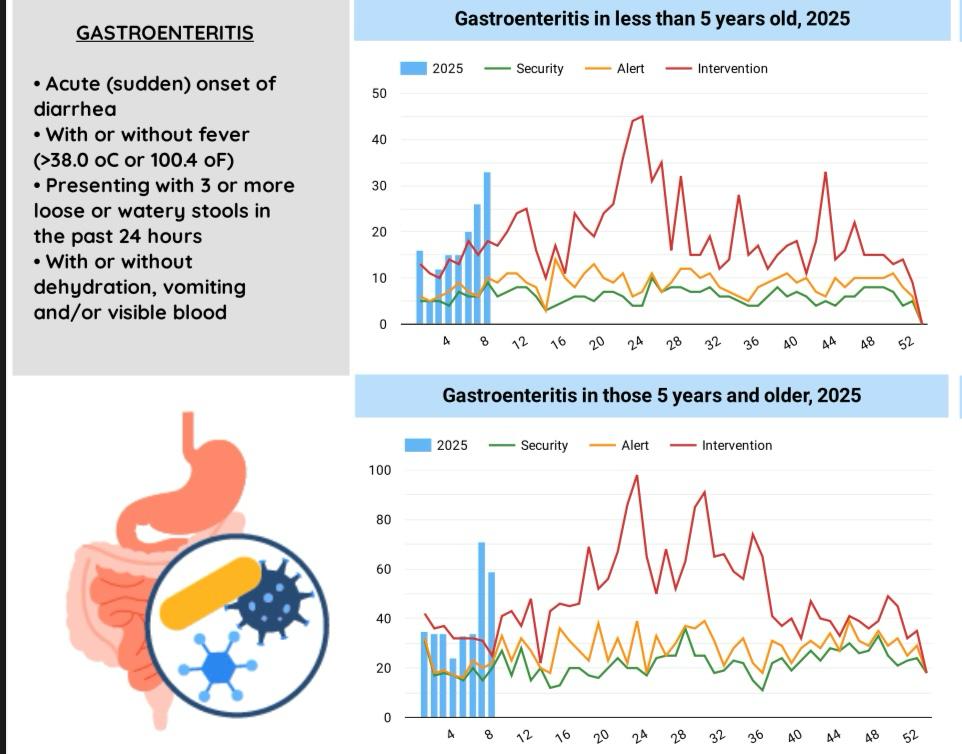
Grenada is experiencing a significant increase in gastroenteritis or “gastro” cases; however, the Ministry of Health is attributing it to seasonal fluctuation, and has not declared an outbreak on the island.
A comparison of data reflecting both the private and public sector records shows that in 2024, by the end of the second month of the year, the number of people who sought medical care because of gastro was lower than the amount recorded for 2025.
When asked if the ministry had declared an outbreak, Dr Shawn Charles, Acting Chief Medical Officer, said, “We are monitoring the fluctuations in cases; the pattern seems for gastro season so far.”
Gastroenteritis is described as an acute (sudden) onset of diarrhoea, with or without fever. An individual with gastro will experience 3 or more loose or watery stools in 24 hours, with or without dehydration, vomiting and/or visible blood.
Grenada declared an outbreak of gastroenteritis in 2024. Tests done on samples at the Trinidad-based Caribbean Public Health Agency (CARPHA) laboratory showed that the cause was attributed to sapovirus, salmonella and Escherichia coli (E coli), according to the analysis.
An internet search shows that sapovirus can cause food poisoning via raw or undercooked bivalves like oysters. In addition, sapovirus can contaminate food and infect those who eat it when infected individuals and those cleaning up stool and vomit containing sapovirus, fail to wash their hands thoroughly using soap and water.
E coli and salmonella are both bacteria that can cause food poisoning. The former occurs in infected animals or people, whereas Salmonella occurs in raw poultry, eggs, beef, and occasionally unwashed fruits and vegetables.
Gastroenteritis or stomach flu is usually treated with rest and fluids. The treatment depends on the cause of the gastroenteritis and the severity of the illness.
The World Health Organisation (WHO) states that symptoms of gastroenteritis usually last 24 to 72 hours; however, they can last up to 10 days. People with gastroenteritis are usually contagious when showing symptoms, and most particularly so when symptoms are severe.