












Grenada, famously known as the “Spice Isle,” is making significant inroads to improve the quality of its “Trinitario” cocoa and cocoa products.
This was the main objective behind the 5-day training workshop on cocoa agronomy, post-harvest processing, and sensory analysis from 20–24 January 2025, the collaborative effort of the Food and Agriculture Organisation of the United Nations (FAO), the Ministry of Agriculture and Lands, Forestry, Marine Resources and Cooperatives of Grenada, and the Grenada Cocoa Association. The training was attended by over 40 participants, including farmers, agro-processors, extension officers, agronomists, plant propagators, and chocolate makers and held at Grenada Cocoa Association’s Processing Facility in Mt Horne in St Andrew.
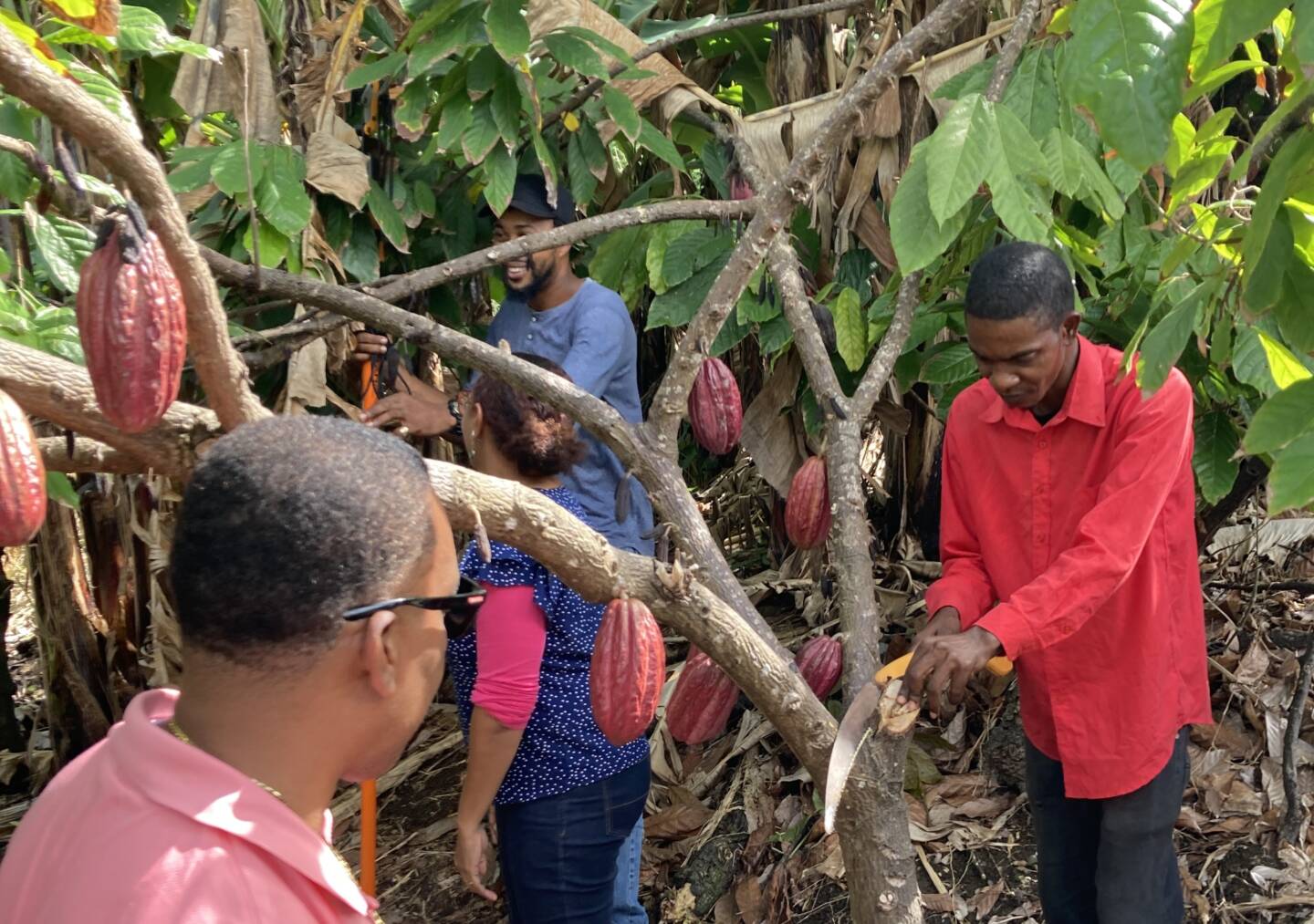
Led by experts from the Cocoa Research Centre of The University of the West Indies, including Professor Pathmanathan Umaharan, Head Cocoa Research Centre/Professor in Genetics and Dr Darin Sukha, Research Fellow and Food Technologist, the workshop provided comprehensive insights into sustainable practices, quality enhancement, and flavour profiling. The practical sessions focused on key field management practices such as pruning, grafting, soil fertility, managing pests and diseases, as well as understanding the principles driving cocoa fermentation and activities affecting the flavour profile of cocoa beans and chocolate through sensory evaluation, which equipped participants with tools to monitor how production and post-harvest practices influence flavour, ensuring the region’s continued excellence in speciality cocoa.
Anne Desrochers, FAO’s Plant Production and Protection Specialist highlighted, “The training was aimed at empowering farmers, agro-processor and other stakeholders to adopt sustainable practices, enhance productivity and promote the awareness of quality through sensory analysis. Through the knowledge gained, I believe the participants are better equipped to further safeguard the legacy of Caribbean cocoa while unlocking its full potential in the high-value speciality cocoa market.”
Reflecting on the knowledge gained, Trishia Marrast, Extension Assistant of the Northern Agricultural District, stated, “This training was highly educational, emphasising the importance of understanding and managing Witch’s Broom disease and mastering grafting techniques. It provided valuable opportunities for extension officers, farmers, and processors involved in the cocoa industry”.
Andel Findley, Production Supervisor at Diamond Chocolate Factory, added, “The sessions on post-harvest and fermentation methods were particularly beneficial, providing practical insights into cocoa fermentation and the evolution of new techniques. As a chocolate maker, I found the training refreshing, it reinforced past knowledge and introduced new materials, essential for maintaining high-quality cocoa products.”
The training also covered key challenges like mitigation of cadmium in cocoa, pest and disease control, food safety and farm rehabilitation, equipping stakeholders with the tools to boost productivity sustainably and enhance knowledge on industry standards.
Of the 7 countries designated by the International Cocoa Association as exclusive 100% fine-quality cocoa producers, 3 are from Caricom, including Grenada. The current demand on the international market for Caribbean fine flavour cocoa exceeds the available supply. However, through partnerships and collaborative efforts with the Ministry of Agriculture, revitalising and enhancing cocoa productivity in Grenada can pave the way for sustainable growth, increased production, and quality cocoa products.
FAO