











• Latest
The next new normal: The Caribbean post-Covid-19

What Caribbean citizens need to know about COP29

2 years ago
Lucy’s Straw Hat: A mirror held up to our society

Lucy’s Straw Hat: A mirror held up to our society

44 minutes ago
June in History

June in History

2 hours ago
CPEA external examination 2024

Official summary results of the 2026 Caribbean Primary Exit Assessment

21 hours ago
Temporary closure of Palmiste Lane, Mabouya Road, St John

Temporary traffic restrictions: Seamoon bridge, St Andrew

22 hours ago
Linda Straker: A fearless voice for human rights and humanity

Linda Straker: A fearless voice for human rights and humanity

1 day ago
Traffic notice: Settlement Road, Frequente

Temporary road closure: Ravine Public Road, St George

2 days ago

REOI: OECS Data for Decision Making Project – Consulting Services, Individual Consultant

2 days ago
People empowerment through construction 

People empowerment through construction 

2 days ago
OECS Heads of Government focus on trade, connectivity and economic resilience

OECS Heads of Government focus on trade, connectivity and economic resilience

2 days ago
Vacancy: Chief Executive Officer

GTA vacancy: Human Resource Manager

2 days ago
Grenada’s alcohol use reality

Grenada’s alcohol use reality

2 days ago
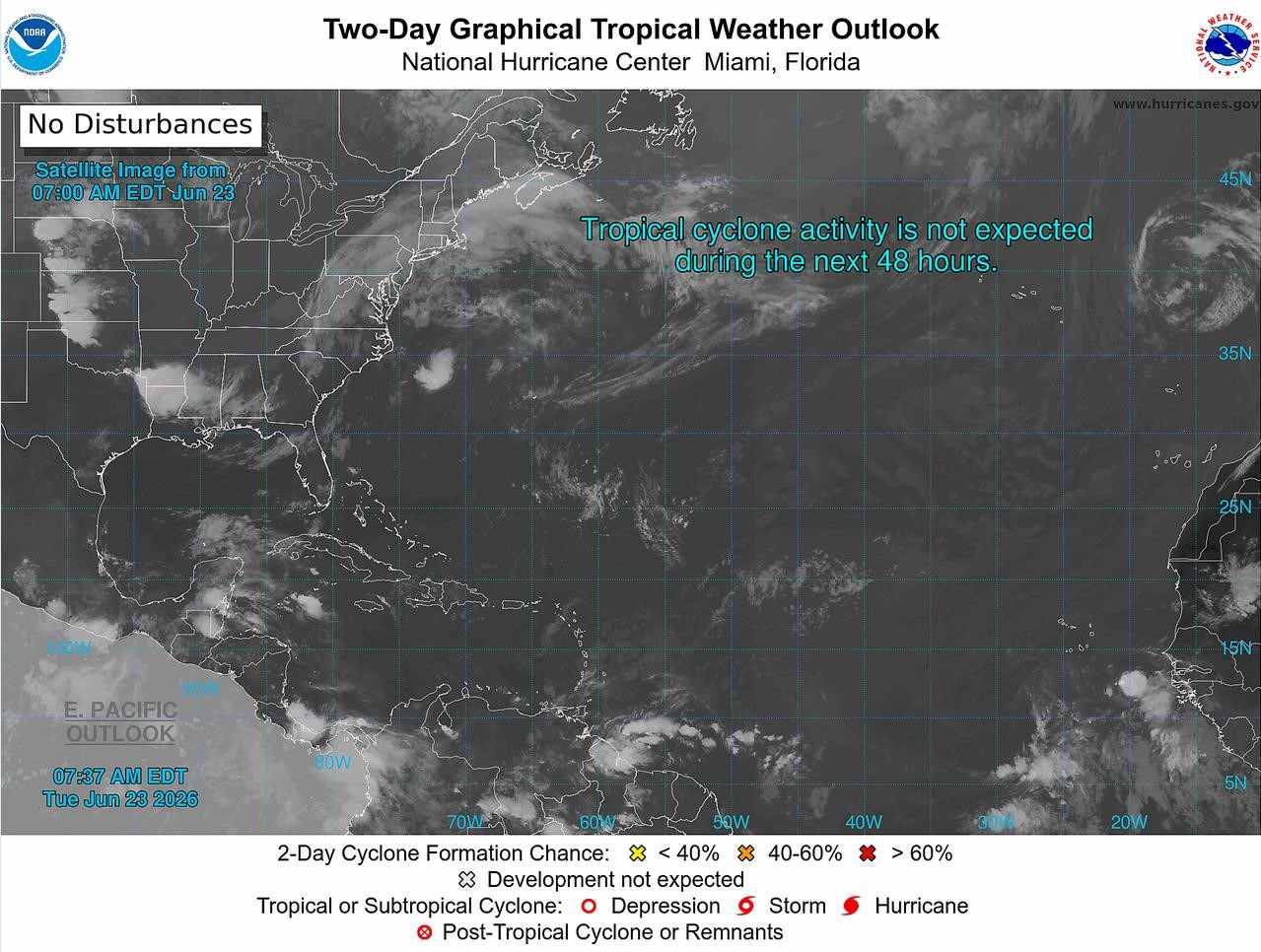
Tropical Weather Outlook:  Tuesday, 23 June 2026 (8 am)

Tropical Weather Outlook: Tuesday, 23 June 2026 (8 am)

2 days ago
NOW Grenada
  • Front Page
  • Categories
    • General News
      • All
      • Agriculture & Fisheries
      • Arts & Culture
      • Business
      • Education
      • Environment
      • Health
      • History
      • Lifestyle
      • Law
      • Politics
      • Technology
      • Travel & Tourism
      • Weather
      • Youth
    • Sports
      • All
      • Athletics
      • Cricket
      • Football
      • Watersports
    • Community
      • All
      • Tribute
    • Crime
    • Features
      • All
      • Today in History
    • Opinion/Commentary
    • Press Releases
      • All
      • Advertisements
      • Notices
  • Video
  • Notices & Vacancies
  • Advertise
  • Contact Us
No Result
View All Result
  • Front Page
  • Categories
    • General News
      • All
      • Agriculture & Fisheries
      • Arts & Culture
      • Business
      • Education
      • Environment
      • Health
      • History
      • Lifestyle
      • Law
      • Politics
      • Technology
      • Travel & Tourism
      • Weather
      • Youth
    • Sports
      • All
      • Athletics
      • Cricket
      • Football
      • Watersports
    • Community
      • All
      • Tribute
    • Crime
    • Features
      • All
      • Today in History
    • Opinion/Commentary
    • Press Releases
      • All
      • Advertisements
      • Notices
  • Video
  • Notices & Vacancies
  • Advertise
  • Contact Us
No Result
View All Result
NOW Grenada
No Result
View All Result

What Caribbean citizens need to know about COP29

This story was posted 2 years ago
4 December 2024
in Business, Environment, OPINION/COMMENTARY
3 min. read
Kari Grenade
0
VIEWS
Share

by Kari Grenade, PhD, Caribbean Economist and Macroeconomic Advisor

Each year representatives from countries that are signatories to the United Nations Framework Convention on Climate Change (UNFCCC) — an environmental treaty addressing climate change, meet at the global level in their annual Conference of the Parties, commonly referred to as COP.

This year’s COP was the 29th such conference, hence the acronym COP29; it was held 11–22 November in Baku, Azerbaijan. The first COP (COP1) was held in Berlin, Germany in 1995.

COP29 brought together thousands of government officials, experts, activists, youth and others from across the globe to discuss practical solutions to the climate crisis, among other strategic climate-relevant issues. COP29 was an important one against the backdrop of unprecedented climatic events, such as flooding at near-apocalyptic scales, heat waves, droughts, fires, and powerful tropical storms in recent months across the world.

COP29 was dubbed the “finance COP” because the primary focus of the Conference was to establish a new climate finance goal to scale up support for climate action in developing countries. Based on a bevvy of reports and articles from across the globe, there are mixed views on the outcomes of COP29, but there is a consensus view that it did not live up to its name as the “finance COP.”

COP29’s new collective quantified goal (NCQG) for climate finance failed to meet the expectations of developing countries. The NCQG, in principle, is an important step in the right direction. It is aimed at addressing gaps in adaptation and mitigation financing to build on the US$100 billion annual target set in 2009 by the Paris Agreement that has consistently fallen short of target. However, negotiators were able to finalise an agreement that rich countries would provide only at least US$300 billion annually to developing countries by 2035. That amount fell woefully below the US$1.3 trillion that developing countries were expecting and as such, many of their stakeholders left Baku embittered, referring to COP29 as a “COP out.” Moreover, there is no explicit requirement that the NCQG’s funding be new and/or additional to all development funding, and based on global reporting, developed countries only proposed a figure the last two days of the COP, which allowed very little time to focus on quality or quantity of resources.

While some have referred to COP29 as a “COP out”, others contend that the US$300 billion COP deal is better than no deal. Irrespective of one’s views, the fact is, the NCQG will have important implications for the Caribbean in the context of the varying climate finance estimates for the region, which range from around US$4 billion to US$175 billion up to 2030. It is reasonable to assume that the Caribbean’s access to climate finance is likely to remain a challenge, but it is hoped that this won’t be the case because Caribbean countries require significantly scaled-up climate financing (largely grants or ultra-concessional loans) for adaptation to build climate resilience and economic and social resilience more broadly. Crucially also, qualifying requirements by Caribbean countries to access finance from the various climate funds and multilateral development banks need to be simplified and procedural hurdles lowered (without compromising standards) to ease countries’ access to much-needed financial resources.

On loss and damage, another important issue for the Caribbean, while the Loss and Damage Fund has now been operationalised following the agreement at COP27 to establish the fund, it is hoped that Caribbean countries will be able to benefit from it. It will be important for Caribbean countries (in collaboration with other developing countries) to advocate for new monies to be used to finance the fund and that monies that have been already pledged for other climate-related purposes not be redirected to the fund.

We in the Caribbean are hopeful that in the coming year, tangible actions will be taken by the international community, including multilateral development banks, development institutions, and climate funds to adequately respond to the climate crisis as well as to the needs of Caribbean people in communities across the region who suffer from the consequences of failures of past COPs to deliver on promises commitments. Urgent and potent actions are required to frontally confront the greatest existential threat to life and livelihoods in the Caribbean and those actions require large amounts of concessional financing to enable and sustain their implementation.

The long march continues to Belem, Brazil for COP30. We press on.

NOW Grenada is not responsible for the opinions, statements or media content presented by contributors. In case of abuse, click here to report.
Tags: climate changeconference of the partiescopcop29kari grenadencqgnew collective quantified goalunfcccunited nations framework convention on climate change

Comment on post Cancel reply

Please enter your valid email address.
Your email address will not be published. Required fields are marked *

This site uses Akismet to reduce spam. Learn how your comment data is processed.

© NOW Grenada Ltd. All Rights Reserved. Terms of Use | Privacy Policy

No Result
View All Result
  • Front Page
  • Categories
    • General News
      • All
      • Agriculture & Fisheries
      • Arts & Culture
      • Business
      • Education
      • Environment
      • Health
      • History
      • Lifestyle
      • Law
      • Politics
      • Technology
      • Travel & Tourism
      • Weather
      • Youth
    • Sports
      • All
      • Athletics
      • Cricket
      • Football
      • Watersports
    • Community
      • All
      • Tribute
    • Crime
    • Features
      • All
      • Today in History
    • Opinion/Commentary
    • Press Releases
      • All
      • Advertisements
      • Notices
  • Video
  • Notices & Vacancies
  • Advertise
  • Contact Us

Copyright NOW Grenada

We are using cookies to give you the best experience on our website.

You can find out more about which cookies we are using or switch them off in . Visit our Privacy Policy | Terms of Use.

No Result
View All Result
  • Front Page
  • Categories
    • General News
      • All
      • Agriculture & Fisheries
      • Arts & Culture
      • Business
      • Education
      • Environment
      • Health
      • History
      • Lifestyle
      • Law
      • Politics
      • Technology
      • Travel & Tourism
      • Weather
      • Youth
    • Sports
      • All
      • Athletics
      • Cricket
      • Football
      • Watersports
    • Community
      • All
      • Tribute
    • Crime
    • Features
      • All
      • Today in History
    • Opinion/Commentary
    • Press Releases
      • All
      • Advertisements
      • Notices
  • Video
  • Notices & Vacancies
  • Advertise
  • Contact Us

Copyright NOW Grenada

Powered by  GDPR Cookie Compliance
Privacy Overview

This website uses cookies so that we can provide you with the best user experience possible. Cookie information is stored in your browser and performs functions such as recognising you when you return to our website and helping our team to understand which sections of the website you find most interesting and useful. Visit our Privacy Policy | Terms of Use.

Strictly Necessary Cookies

Strictly Necessary Cookie should be enabled at all times so that we can save your preferences for cookie settings.