



by Ayisha J John
Upon arrival at Bay House, I was greeted by a delicious glass of rum punch. When I walked into the space for the Caribbean Queen screening, I immediately saw Lyndra Robinson, the mother of Jonty Robinson, and I understood the gravity of the experience.
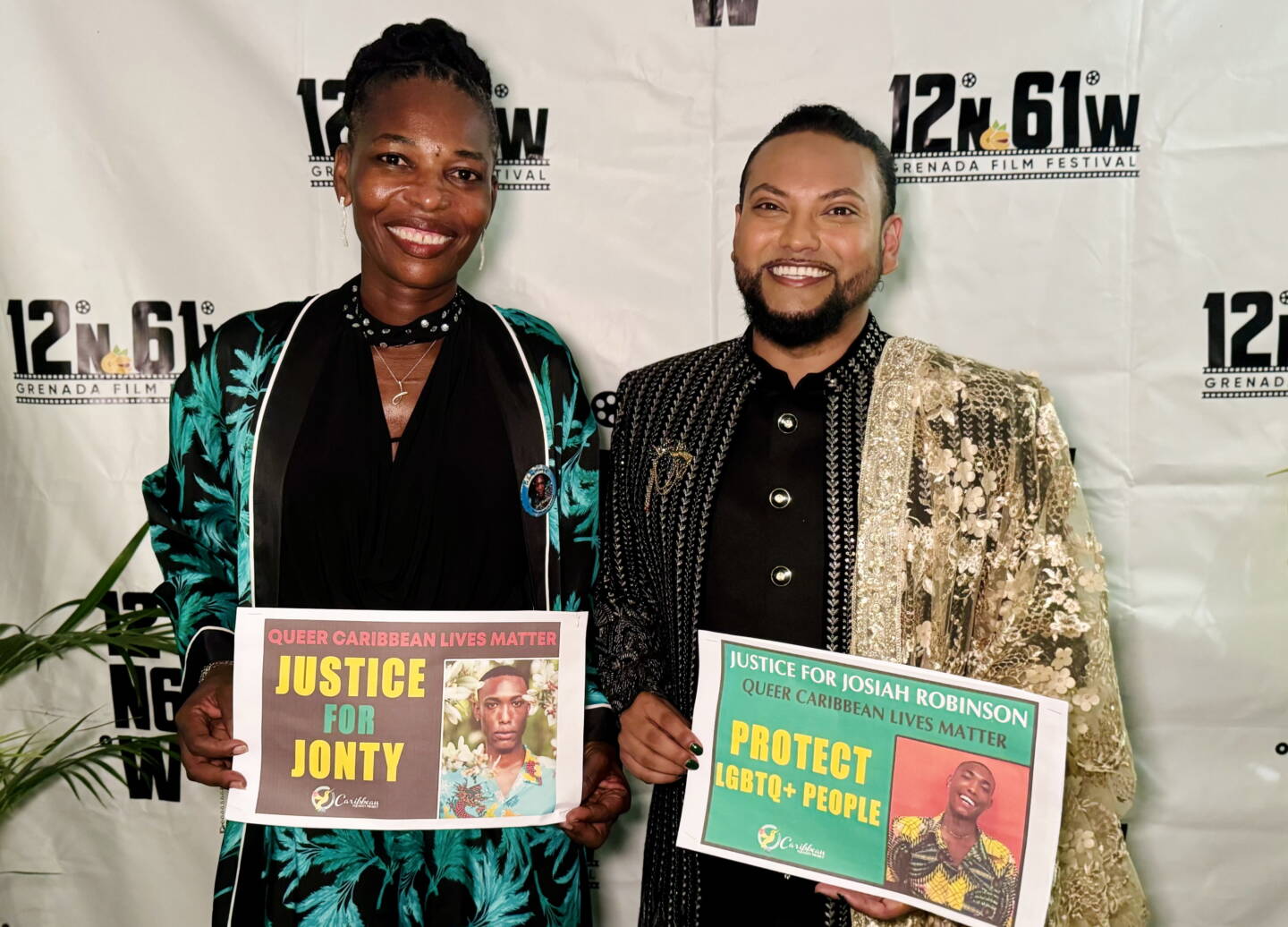
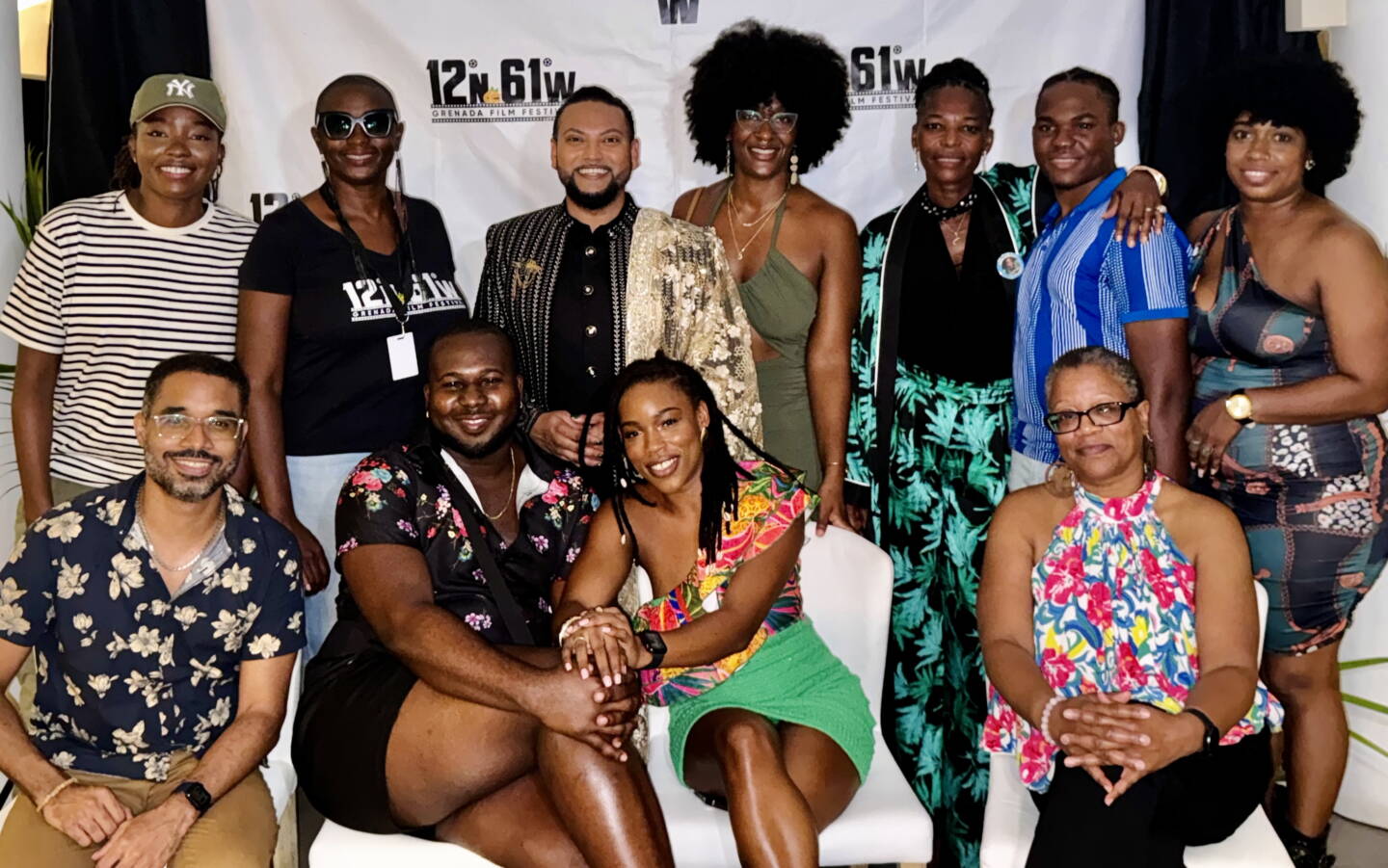
Beside her stood Mohamed Q Amin, the Founder and Executive Director of Caribbean Equality Project, a Caribbean LGBTQ+ immigrant rights organisation in NYC. Amin was dressed in traditional cultural wear to honour his Indian indentured ancestors. Ms Robinson wore a beautiful green outfit gifted by Grenadian Global Speaker Yvette Noel-Schure, a dear of Jonty, as they overlooked one of Grenada’s most iconic beaches, Grand Anse Beach. Bay House, the majestic boutique hotel, sponsored the private screening of the LGBTQ+ film selections of the 6th Annual 12°N 61°W Grenada Film Festival. Since its inception in 2019, the 12°N 61°W Grenada Film Festival has been a transformative force in cinema. More than just a film festival, it represents a cultural renaissance, fostering creativity and diversity in storytelling. This vibrant event celebrated global narratives while fortifying the Caribbean film industry and inspiring change through the power of film.
Amin was one of the film festival’s distinguished international speakers and was accompanied to the screening of Caribbean Queen by Robinson. I had only seen clips of Caribbean Queen on social media, but the film honours and is dedicated to the memory and legacy of Jonty. As community members arrived, I noticed two posters that read “Justice for Jonty” and “Protect LGBTQ+ People.” At this point, I realised the night of storytelling would be unique and continue calling for justice and accountability in the ongoing investigation of the murder of Jonty Robinson.
Caribbean Queen was among 3 LGBTQ+ focused short films screened at the festival. It tells the story of a young Queer Caribbean person who wants to be the Queen of the West Indian Day Carnival Parade in Brooklyn, NY. The film celebrates self-expression, acceptance, and the power of dreams. It also highlights the isolation and rejection that many Caribbean LGBTQ+ people experience while trying to live authentically. The film poignantly exemplified the nuances of what it means to be queer and Caribbean, including facing prejudice from family and community as one navigates safety and belonging in pursuit of their dream. An emotional surprise was seeing a touching homage to the late and beloved Trinidadian LGBTQ+ activist Colin Robinson featured during the exhibition scene, in which Amin also appeared.
In 2019, Amin curated “Queer Caribbeans of NYC | Stonewall 50,” a historic interdisciplinary exhibition that celebrated the work of 22 Queer and Trans Caribbean diasporic organisers, including Colin Robinson, known throughout the Caribbean as a pioneer of LGBTQ+ liberation. Amin said, “Segments of the exhibition were recreated for the film to honour Colin’s imaginative work and life, who left a blueprint of how to fight for freedom in the Caribbean.”
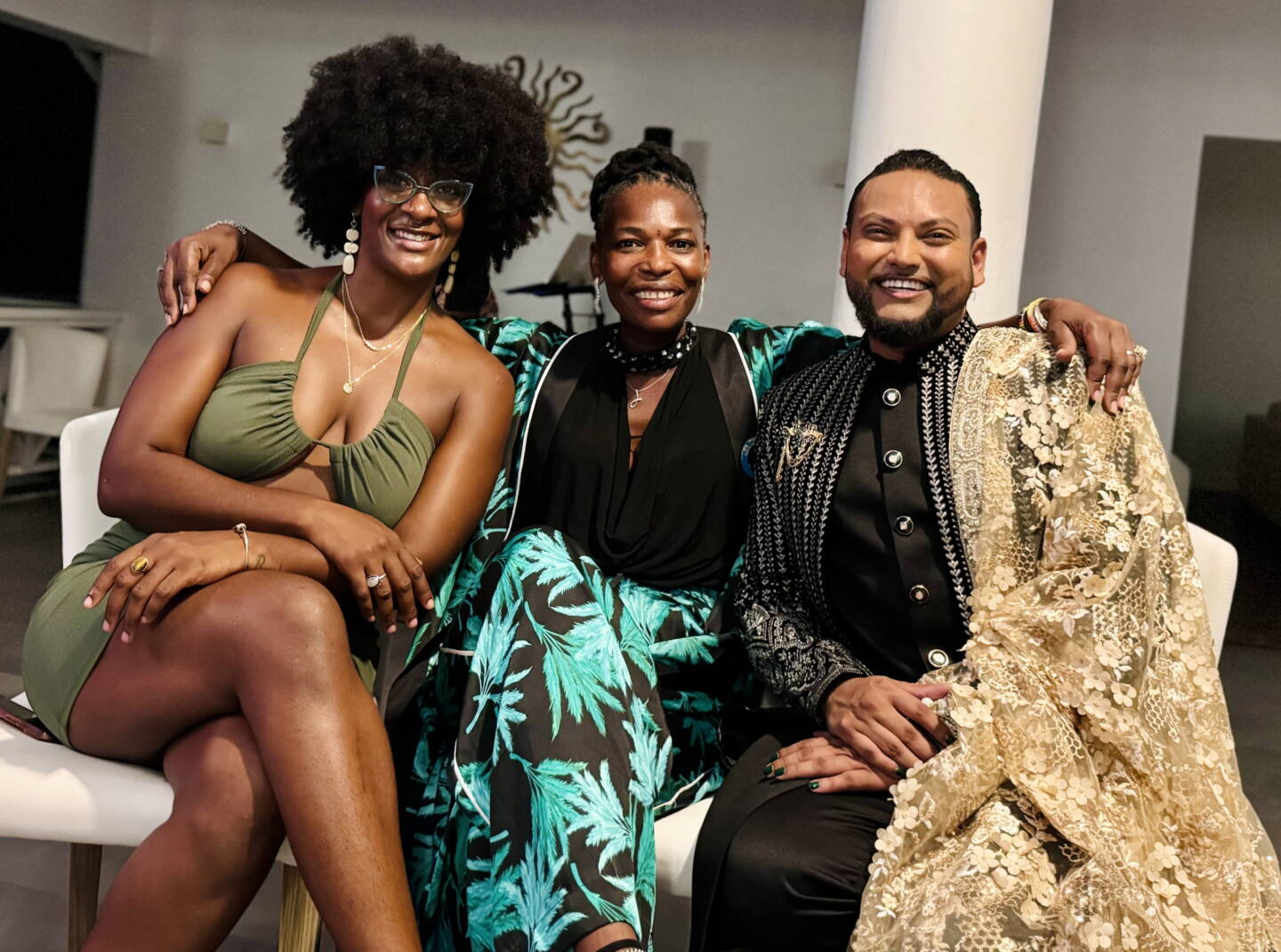
Amplifying unheard voices and showcasing underrepresented stories, Caribbean Queen was directed by Sekiya Dorsett and written by Karl O’Brian Williams, who also stars in the film as Uncle Pete. Mohamed Q Amin is the executive producer who participated in an hour-long intimate discussion titled “The Cost of Homophobia in the Caribbean,” moderated by activist and yoga therapist Malaika Brooks-Smith-Lowe. Bridging cultural and generational gaps to create a truly immersive experience beyond the screen, Amin boldly recounted his tearful coming-out story to his traditional Muslim Guyanese parents. Still, he acknowledged that his mother has always been his source of love and empowerment, similar to Aunt Cecille, making a parallel to a costume maker and affirming character in the film. He said, “Homophobia has cost Grenada a talented artist; a mother, her son, and a country robbed of Jonty’s dreams, but what it gave us is a fearless advocate that is now fighting for justice for her son.”
The audience engaged in a thought-provoking discussion centered around understanding and respect after Amin invited Robinson to join the conversation. She was emotional and reflected on how Q, the film’s main character, reminded her of Jonty. Robinson said, “It was like seeing my son’s joyful and creative personality on screen.” The film documents Caribbean Equality Project’s diasporic advocacy at the 2023 West Indian Day Parade to call for justice for Jonty. It ends with beautiful behind-the-scenes footage featuring the original song “The Crowd” by Jonty Robinson as the musical backdrop.
During the festival, Robinson shared her emotional journey since her son’s murder. For the first time, she publicly reflected on what the past year has been for her and her family. The discussion began with a question on consent and her relationship to the Caribbean Equality Project. She shared how the organisation has helped to raise international awareness of the case and consulted her for approval on all their mobilisation and advocacy efforts. “My son Jonty has been through so much, enduring multiple hate crimes because he was an openly gay guy. And the fact that he had to go through all of this when he was alive breaks my heart,” said Robinson. She shared how Jonty received a “100% religious education in school” and was “raised Catholic.” Robinson recalled how people would have the audacity to ask her often, “How do I live with it, my son being gay.” In all her vulnerability, her response would be, “My God, he is my child.” She courageously conveyed how Jonty was loved all his life, not only by her but by everyone who came in contact with his infectious smile and big heart. He was a “dreamer” and lived with purpose. “He was passionate about who he was. He wasn’t afraid to be himself. Now, I live for him because his life has been cut so short. He wanted to be accepted, and he wanted to be recognised as a person,” said Robinson.
The emotional conversation continued with Robinson pledging her unequivocal commitment to advocate for justice for her son. She called on mothers and parents to protect their LGBTQ+ children and not abandon them during their most vulnerable state. In 2021, Josiah Robinson survived a hate crime attack. He reported it to the police, but the incident was not investigated, nor was his attacker charged. Two years later, on 18 June 2023. Jonty’s body was discovered on the famous BBC beach in the south of the island. Josiah Robinson’s murder remains unsolved. In December 2023, his alleged killer was released on bail. Robinson said Jonty always shared who he was dating, and Javid Raymond was not romantically connected to her son. She persisted by saying the Royal Grenada Police Force has not been transparent with her, nor are they producing regular updates. Robinson fears her son’s death is not thoroughly being investigated and not given priority because he was gay.
During the festival, Robinson shared her emotional journey since her son’s murder. Her heartfelt reflections resonated deeply with attendees, emphasising the importance of protecting and standing by LGBTQ+ individuals. It’s been 17 months since Robinson lost her son Jonty, Grenada’s first openly gay artist. She said therapy has helped her heal, but it has also provided clarity on her purpose as a mother. Robinson has become a fearless advocate for LGBTQ+ rights, and the injustice her family endured has emboldened her passion and strengthened her voice for justice, accountability, and transparency. With the support of Caribbean Equality Project and GrenCHAP, Grenada’s sexual health and LGBTQ+ rights organisation, Robinson has professed to continue fighting systemic oppression and against the lack of human rights laws and protections for LGBTQ+ Grenadian citizens, including students who come to study in Grenada, and visitors to the beautiful spice island of the Caribbean.
The festival’s discussions underscored the urgent need for systemic change and police accountability in Grenada. Robinson’s courageous advocacy seeks justice for her son and calls for the protection of all LGBTQ+ individuals against hate crimes and discrimination. Her story serves as a powerful reminder of the resilience and strength required to challenge societal norms and fight for equality.