












by Suelin Low Chew Tung. From A Patch of Bare Earth, Short stories of the human Grenadian landscape, published in 2013 by The Grenada National Museum Press.
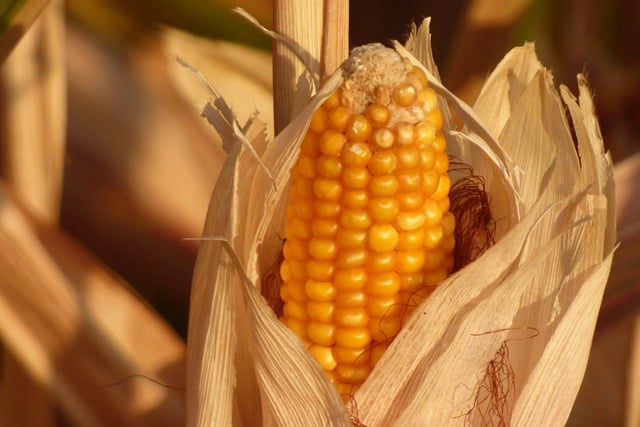
Ah Chuts! The plastic bag gives her swollen fingers trouble to open. A stingy label boasts a yellow and green corn small small, next to the word Asham and the name of the maker, Peter, big big in blue.
She remembers when Asham came tight packed in grey-blue paper cones with sharp points to jook your fingers if you were more hurry than the vendor to take out one from the basket — and if you bend a point on another cone, well you know, is two you buying.
It used to be, she muses, Asham was a whole day work. Shell the dry corn, parch it over a coals fire and then pound it in a mortar and pestle, until it resemble fine sand. A little white sugar — the brown too coarse and ugly — with a dash of spice and it done. Asham! But in these modern times, chaa! Asham making now for now, easy easy so, oui.
Is the day before All Souls, and people hurrying to finish freshening up the graves of the dearly departed, may they rest in peace, with a coat of white paint to look good next to the fresh flowers and to show off all the hundreds of lighted candles come the night, with hymns singing and eating of Asham — but not both at the same time. Asham is a close-your-mouth food. Plenty people does choke bad on sweet corn powder. Just day-before, one of them mo-vay-lang woman — every time she elbow bend she mouth open — she nearly dead from Asham. Talkative people so, CANNOT eat Asham. They go choke! The memory brings rolling laughter.
Ah gawd! Ah gawd! Ah gawd!
The old woman forgets to breathe through her nose and not her mouth. Fine dust blows into the lungs. Plenty coughing.
Aaaaaaaaaaaaaaaaah Chuts!
She knows to eat Asham in November for the souls of the deceased — the ones in a better place, even the ones who make you see hell when they was alive, the same ones you should never speak ill about. She puts some more corn powder in her mouth. The saliva makes loose cement under her upper denture which slips sideways from her mouth, long threads coming away that she sucks back in and swallows. Her tongue trowels her mouth, like a mason mixing mortar, moving the slurry to the back of her throat.
She rinses the dentures with watered down seville orange juice — the mayonnaise label stubborn on the wide-mouth bottle despite brillo pad, knife and fingernail — before pushing it back into place, cool against her gums.
In a pink petit-point apron, the old woman frets. She watches the road getting pelt with full sun taking the beating with limitless patience. A soft asthmatic crackle wheezes from melting paint, plastic and metal particles crushed into the mottled surface of a cold mix of oil, stone and asphalt rolled by transports belching black smoke and boom-boom noise. Not a soul around and she in a shop full of her children pinned to the wall, watching her watch the empty road. She thinks of her mother, father, and her sister all gone in one bloody before. She takes the plastic bag, opens her mouth wide, and pours.
A belching bus full of laughing people comes round the corner. She forgets, throws up her hand, opens her mouth to call out, and chokes. The children pinned to the shop wall watch the hands of her father, mother, and her sister reach down and help her into the sky.
Grains of asham add to the wheeze of the road.