










by Linda Straker
- Proposed reform plan mandates public officers contribute 3% of their salaries into pension scheme
- Funds transferable once individual is no longer working with Government
- Grenada’s constitution provides for charging of pension payment on Consolidated Fund
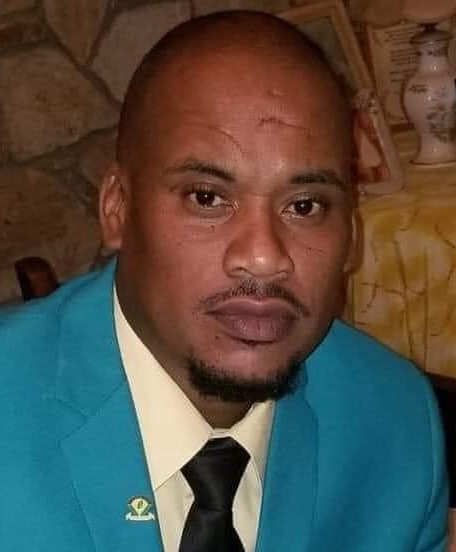
Brian Grimes, President of the Grenada Public Workers Union (PWU) has changed his support for the proposed pension reform plan as developed by Government. He will instead stand on the side of caution as is being done by other trade unions representing public workers.
The over 6,000 public officers in the service are represented by the Grenada Public Workers Union, the Grenada Technical and Allied Workers Union (GTAWU), the Grenada Union of Teachers (GUT) and the Grenada Manual, Maritime and Intellectual Workers’ Union (GMMIWU).
In February 2024, before the start of a series of consultations undertaken by the Department of Public Administration aimed at informing public officers about the proposed reform, Grimes said that the PWU believes that pension reform for public officers is necessary for it to be sustainable. “I may have been a bit out of bounds because I was thinking individually. I am the head of a union and we have to think collaboratively, so in speaking to a number of our members post that interview, I realise that there was some hesitation and some concerns.”
“Going further in dialoguing and having serious discussion with some of my executive amongst the PWU as well as the Trades Union Council, there was a lot of reservation concerning this proposed pension reform. So, I would want to reverse that position based on the fact that I had discussions with members post that interview,” he explained.
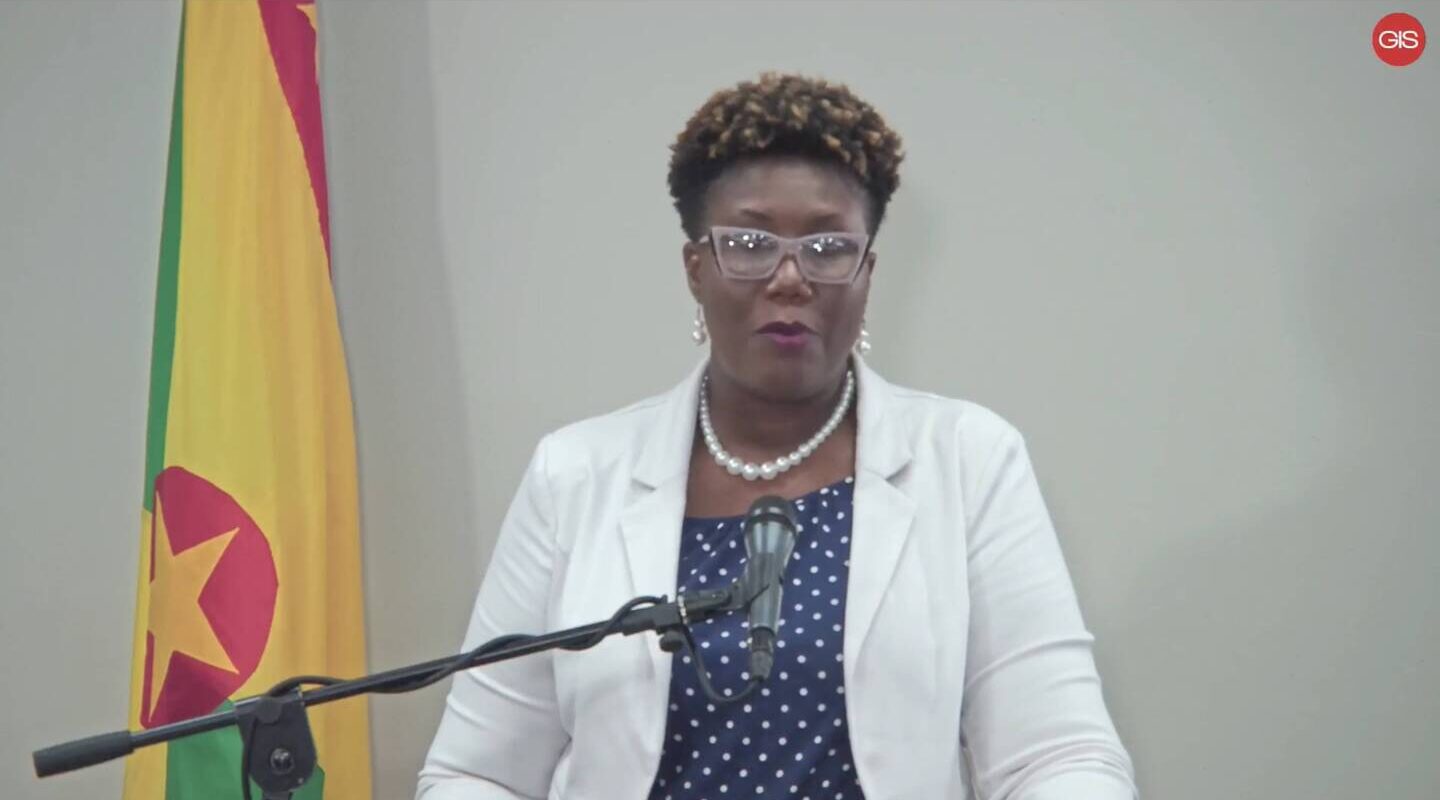
Grenada’s constitution provides for charging of pension payment on the Consolidated Fund. However, Legal Affairs Minister Claudette Joseph told a sitting of the Upper House in late 2022 that this must change because with the increasing retirement of public officers annually the payment can become a strain on the system that can lead to irreparable damage.
In November 2022, Prime Minister Dickon Mitchell told Parliament that although pension payment for appointed public officers is a constitutional right he believes that an amendment or adjustment is required to ensure that in the future this constitutional right should not be one on paper.
“The Constitution guarantees public servants the right to a pension, but if the State does not have the money to pay the pension, then there is a constitutional right that exists on paper and not in reality,” he said, pointing out that growth in public service could result in Government’s inability to pay future pension to public officers using the existing non-contributory format.
The proposed reform plan mandates that public officers contribute 3% of their salaries into a pension scheme that will be transferable once the indidivudal is no longer working with Government.