










The Caribbean is confronting a grave and escalating crisis as the National Oceanic and Atmospheric Administration (NOAA) confirms the fourth global coral bleaching event, imperilling the region’s already fragile marine ecosystems.
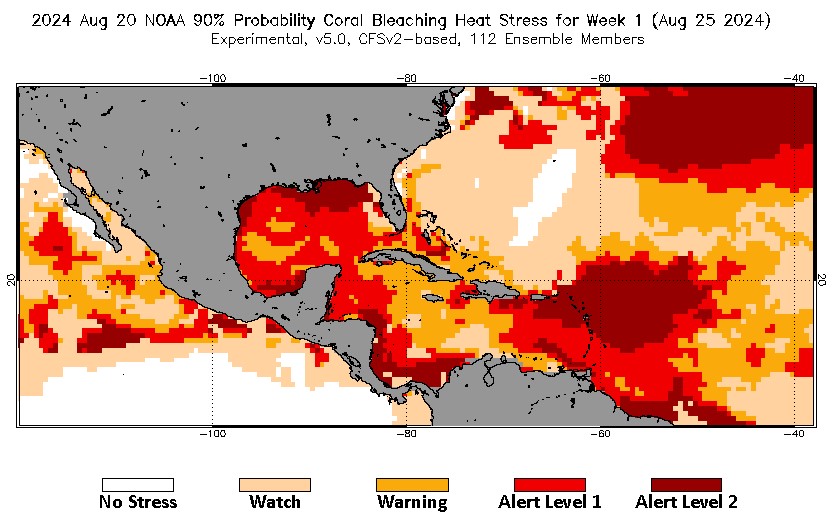
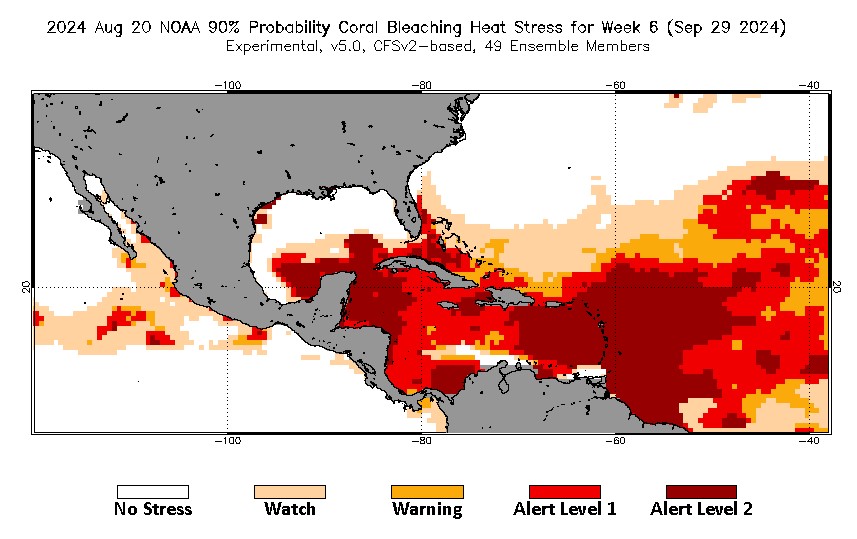
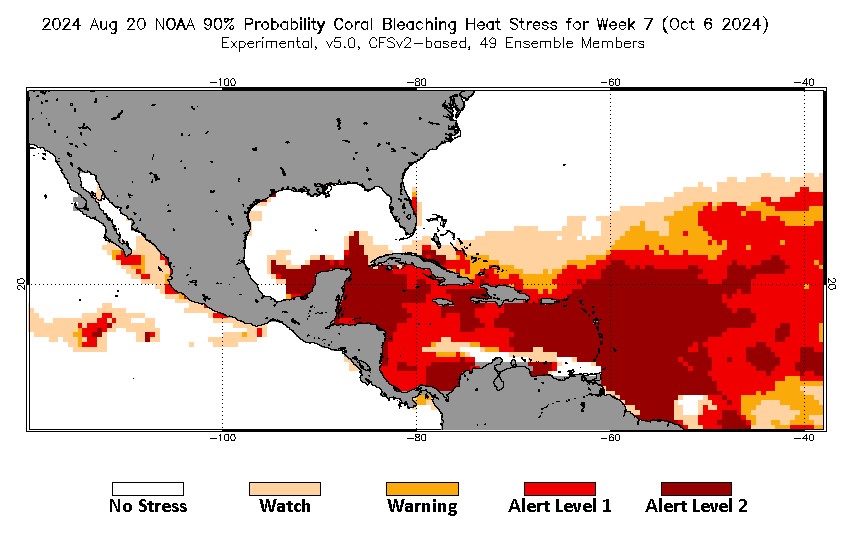
NOAA’s projections reveal that vast areas of the Caribbean, including Grenada, are poised to endure severe heat stress, placing many regions under Alert Level 2, the highest threat level for coral bleaching. This dire outlook foreshadows significant damage to coral reefs, which are vital to the region’s marine biodiversity, fisheries, and coastal economies.
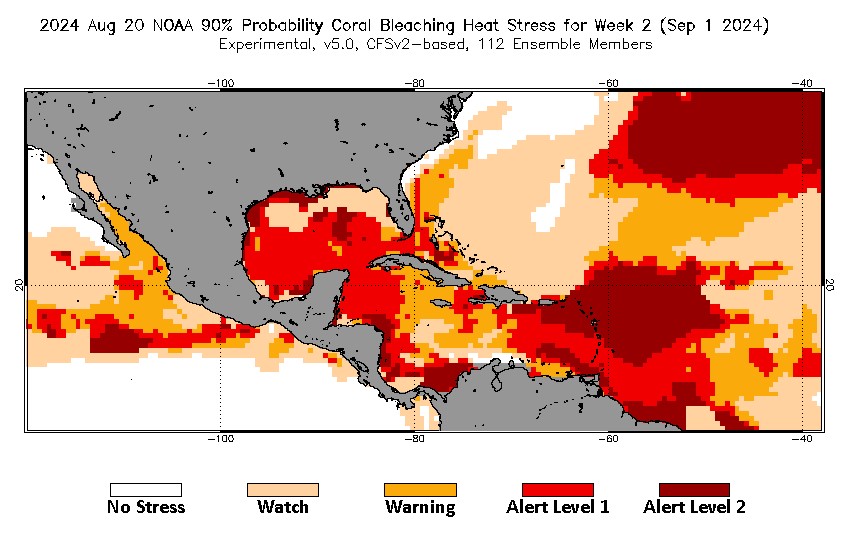
Coral reefs are not just natural wonders; they are the linchpins of marine ecosystems, offering habitats to thousands of marine species, sustaining fisheries that underpin local food security, and acting as natural barriers that shield coastlines from erosion and storms. Furthermore, these reefs are integral to the region’s tourism industry, a cornerstone of many Caribbean economies. However, the relentless rise in ocean temperatures due to climate change has amplified thermal stress on corals, triggering widespread bleaching. If this stress persists, it could lead to mass coral die-offs, with devastating consequences for both marine life and human livelihoods.
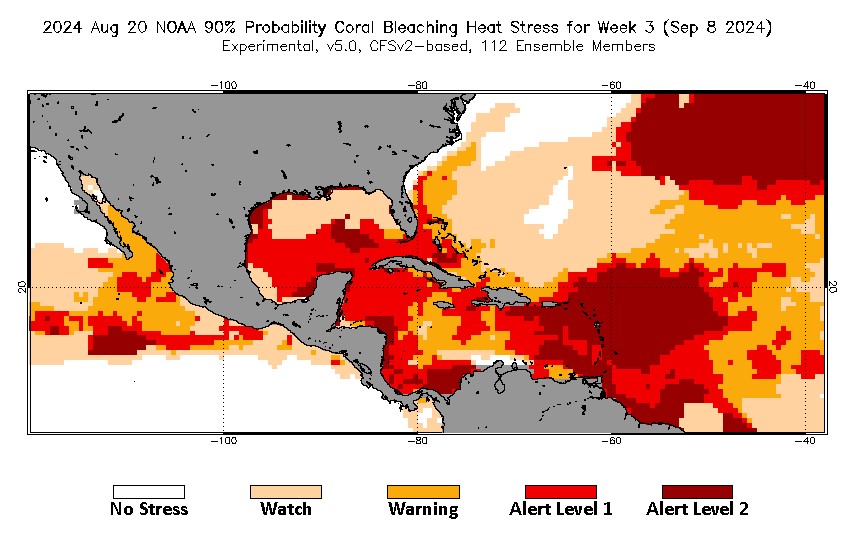
Ambassador Jerry Enoe, Grenada’s Special Envoy for Oceans, underscored the economic significance of Caribbean reefs, stating, “Recent analyses emphasise that the 15,000 square kilometres of coral reefs across the Caribbean generate approximately US$3.4 billion annually in economic benefits. Nearly 90% of this value is rooted in tourism, with fisheries contributing the remainder. These figures starkly illustrate the profound economic and social ramifications of coral reef health for our region.”
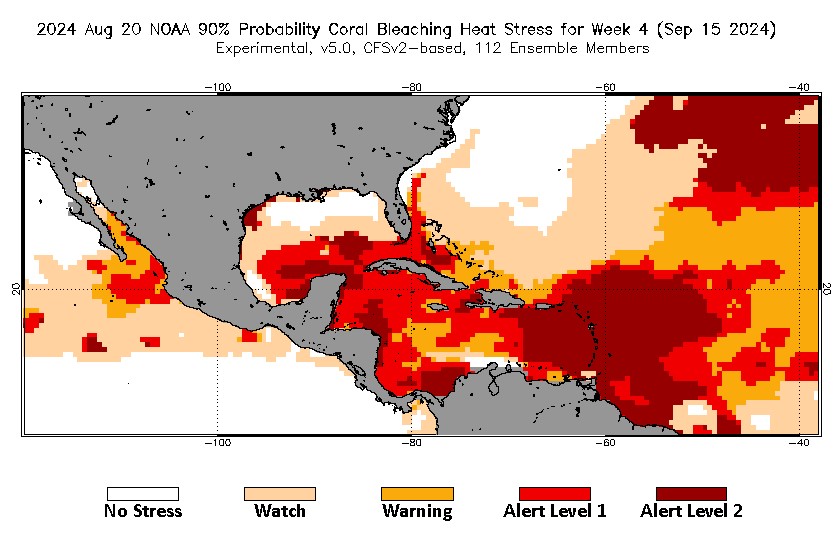
NOAA’s findings indicate that bleaching will extend into September and October 2024, with the southern and eastern Caribbean bearing the brunt of the impact. This stark projection underscores the urgent need for immediate conservation actions and the implementation of climate resilience strategies. Without decisive intervention, the degradation of coral reefs could jeopardise food security, tourism, coastal protection, and the livelihoods of millions of people across the Caribbean.
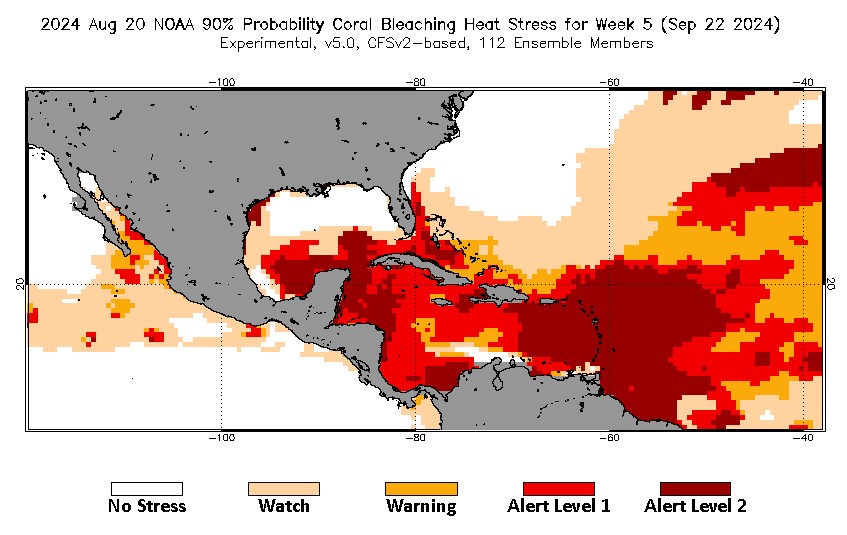
“As global temperatures rise inexorably, our coral reefs face unprecedented threats. The potential consequences are nothing short of catastrophic for both our environment and the economies that depend on these ecosystems,” said the Honourable Minister Kerryne James, Minister for Climate Resilience, Environment and Renewable Energy. “The moment to act is now. We must intensify our conservation efforts, mitigate local stressors, and bolster our climate resilience initiatives to safeguard these critical ecosystems.”
Grenada is unwavering in its commitment to protecting its marine environment through collaboration with regional and international partners. Ongoing efforts include adaptive management strategies aimed at reducing pollution, overfishing, and habitat degradation while simultaneously expanding coral restoration and climate adaptation initiatives.
In a strategic move to bolster its climate resilience, Grenada undertook a comprehensive revision of its National Adaptation Plan (NAP) in 2023, extending its vision through to 2027. This revision builds on the achievements of the initial NAP, addressing the increasing urgency posed by the accelerating impacts of climate change, including the intensification of tropical storms and rising sea levels. The updated plan strategically focuses on key areas such as strengthening ecosystem resilience, ensuring food security, and advancing infrastructure development. These priorities are embedded within a broader commitment to sustainable development and the overarching goal of fortifying Grenada’s climate resilience.
Recognising the critical importance of these objectives, the International Institute for Sustainable Development and the NAP Global Network have stepped forward to provide specialised support to Grenada. Through the Ministry of Climate Resilience, Environment, and Renewable Energy, 3 expert consultants have been integrated into the national framework to enhance the coordination and monitoring of vital sectoral policies. These include the implementation of Grenada’s National Climate Change Policy and the newly revised National Adaptation Plan. Their work further aligns with international environmental agreements, ensuring that Grenada remains at the forefront of global efforts to anticipate, prepare for, and effectively respond to climate-related threats.
Minister James further emphasised, “These ecosystems are not merely environmental assets; they are the very bedrock of our economies. Their protection is not an option but an absolute necessity for the future of our oceans and the well-being of the communities that depend on them.”
The ongoing global coral bleaching event serves as a clarion call for action at the international level. It demands stronger climate policies and a resolute commitment to reducing greenhouse gas emissions, coupled with immediate measures to alleviate local pressures on coral reefs.
Footnote:
Coral bleaching refers to the phenomenon where coral polyps, the tiny animals that build coral reefs, expel the symbiotic algae (zooxanthellae) living within their tissues. These algae provide corals with their vibrant colours and, more importantly, supply them with essential nutrients through photosynthesis. Bleaching occurs primarily due to elevated sea temperatures, which disrupt the symbiotic relationship between the corals and the algae. Without these algae, corals lose colour, turn white (hence “bleaching”), and become more susceptible to disease and mortality. Prolonged bleaching events can lead to the widespread death of coral reefs, with severe repercussions for marine biodiversity, coastal protection, and human livelihoods that depend on these ecosystems.
Ministry of Climate Resilience, Environment and Renewable Energy