







by Linda Straker
- US$30 million damage equivalent to roughly a third of Grenada’s annual economic output
- Grenada will defer bond payments totalling over $12.5 million for next scheduled dates
- Money will be added to bond’s lump sum “principal” payments until end of term in 2030
Grenada will defer over US$17 million in total payments to government bondholders because of the devastation caused by Hurricane Beryl on 1 July. The estimated loss from the hurricane is US$30 million.
Government is yet to issue a news release about its decision, but numerous international media houses have confirmed that Grenada has become the first country in the world to use a so-called hurricane clause in a government bond — a special feature that allows authorities to postpone debt payments in the wake of a major natural disaster.
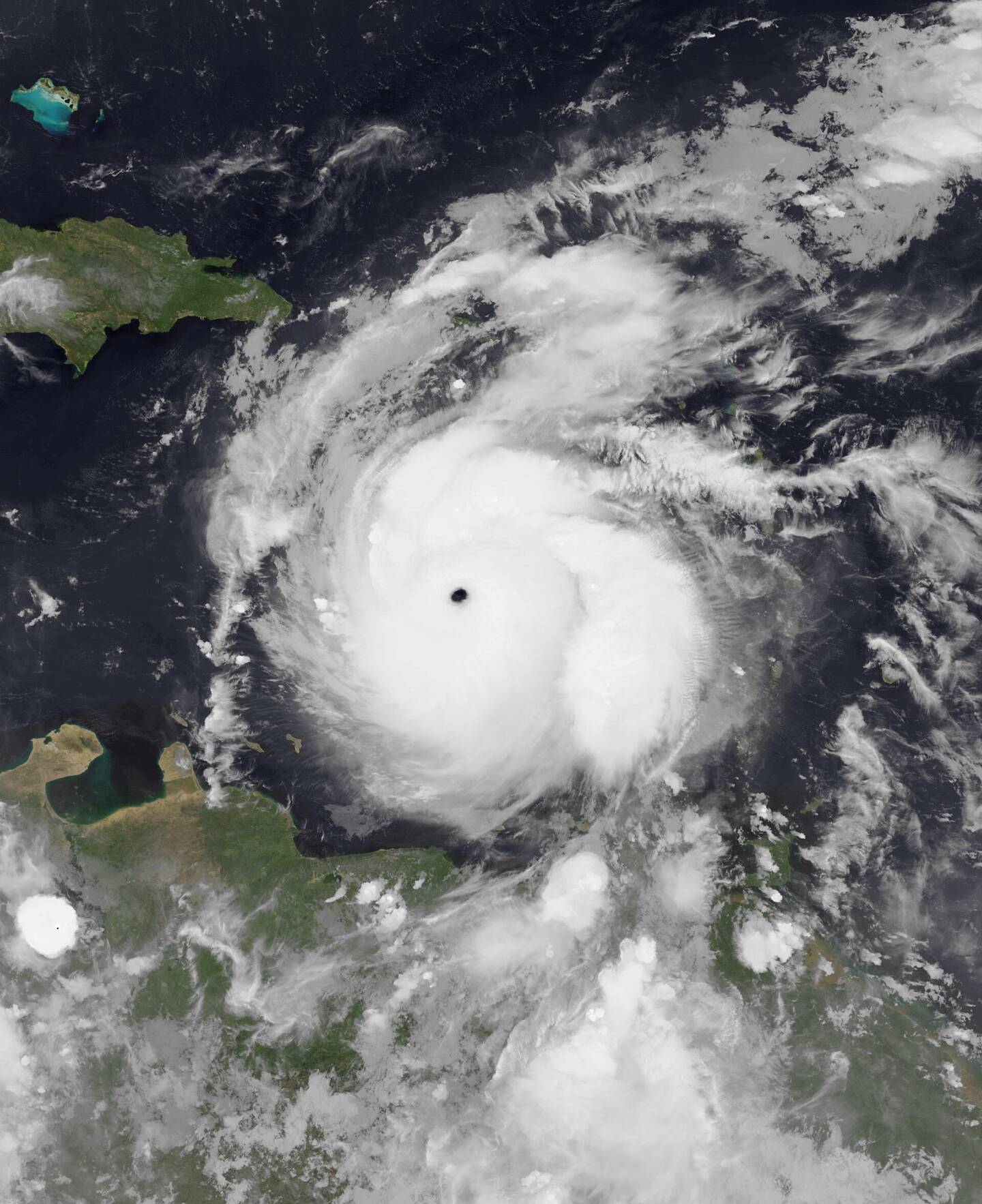
The move comes after Hurricane Beryl ravaged Grenada and other parts of the Caribbean with winds that reached Category 5 strength at times. Prime Minister Dickon Mitchell estimated it had caused damage equivalent to roughly a third of the country’s annual economic output.
In a notice to the holders of one of its only international bonds, the finance ministry said it had “elected to make a Deferral Claim as a result of the Event” adding the “modelled loss” to the economy from Beryl was greater than $30 million.
“It means Grenada will not make the bond’s next scheduled payments due on 12 November and May 12 next year, which combined, add up to just over $12.5 million. Instead, the money will be added to the $112 million bond’s subsequent lump sum “principal” payments until the end of its term in 2030,” said Reuters news agency.
The finance ministry told bondholders that the country activated this clause after estimating losses exceeding $30 million due to Beryl. Consequently, Grenada will defer bond payments totalling over $12.5 million for the next scheduled dates and an additional $5 million from smaller loans and a bilateral loan from Taiwan.
Grenada was the first to be included in the hurricane clause in 2015 after a previous hurricane led to 2 debt restructurings in the space of a decade. These legal provisions enabled the deferral of principal and interest debt service payments, or the possibility of fast-tracking debt restructuring operations, in the event of a hurricane (or other insured natural disaster).
Over the period December 2014 to November 2015, debts amounting to US$318 million or one-third of Grenada’s total public debt were restructured with 3 creditors: the Export-Import Bank (Eximbank) of the Republic of China (Taiwan), holders of Grenada’s previously restructured 2025 sovereign bond, and Grenada’s Paris Club creditors hurricane clauses were negotiated in all 3 agreements.
Their provisions differed markedly, with Eximbank’s deal most closely aligned to Grenada’s request. The 2025 bondholders offered a less flexible version of Eximbank’s hurricane clause, while the Paris Club provision differed considerably.








“US$30 million damage equivalent to roughly a third of Grenada’s annual economic output”
Uhh, what? Missing a zero there…
This is crazy and totally unnecessary.
The monies they waste on a year-long independence day celebration could have been used to pay our debts.