







It’s been a week since the climate change crises came home to Grenada in a very personal way.
While we prepared and waited the entire day for the wind and rains to start lashing us, in the south of the island, Beryl passed with just the strength of a tropical storm. The silence from the north of the island and from the little islands of Carriacou and Petite Martinique was deafening. We were hearing nothing. No phone calls were getting through. Then, slowly, pictures started appearing on social media.
The small islands were devastated because the eye of the hurricane had passed directly over them. Wind force of 150 mph ripped away houses in their entirety, sunk boats, downed power lines, disrupted water supplies. 95% of the buildings were damaged or destroyed. Agriculture was laid waste by the salt water blast and wind. People died from being crushed in their fallen houses. The jetty at the main port was damaged, as was the runway of the airport.
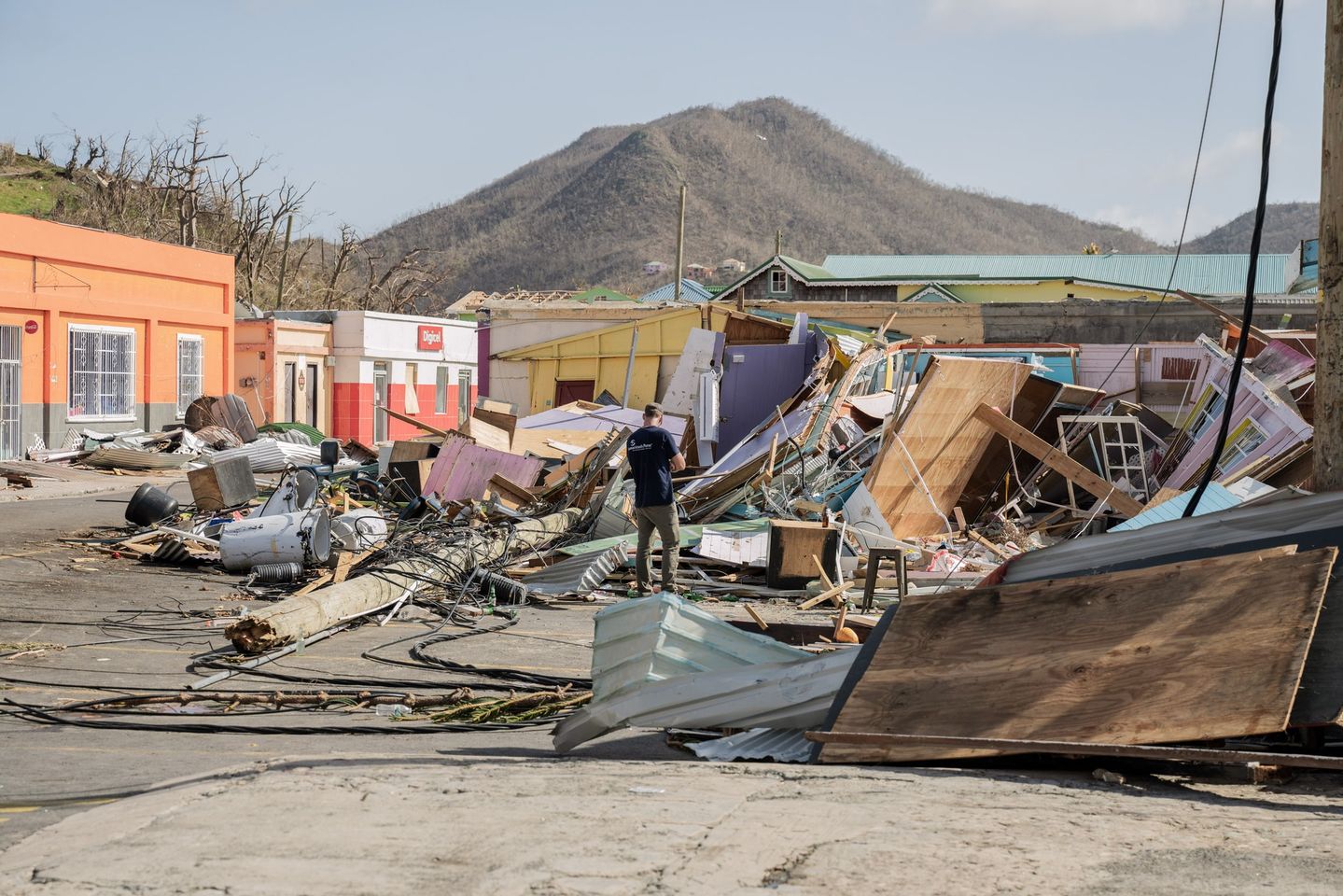
.So, how can we talk about art at a time like this, when so many basic survival needs must be met?
The Grenada Pavilion at Biennale di Venezia is directly affected because of our artists. Jason deCaires Taylor had just shipped a container full of sculptures for a large new underwater sculpture park just off the island of Carriacou. He has been working on this for over a year. Since the inception of his work many years ago, the emphasis of his art has been on the dangers of climate change. His first response was to consider the needs of the survivors in Carriacou. “It’s hard to talk about art when people are suffering.”
Benaiah Matheson, whose family hails from Carriacou, reported that they were all ok, with little damage. However, as Dr Beverly Nelson reported, “The house in Carriacou got some damage, recognised after Thomas did a site visit. In the current barren environment, everything is bad.”
Suelin Low Chew Tung blogged about her third hurricane experience, with every time carrying baggage from the last. Health and art are both directly impacted by this traumatic experience. For everyone. She said, “Art is a way to make visible how we feel and how we process our trauma.”
Alumni artist Billy Frank didn’t hear from his family in Petite Martinique for over a week. They were completely cut off. When he encouraged them to come off the island, they were adamant in their determination to stay and rebuild.
The boat-building families featured in the Grenada Pavilion for Architecture in 2023 were not terribly damaged in their homes, but Danny Donelan reported that their lovingly crafted wooden sloops are sitting on the bottom of the sea—their means of income has been completely taken away. We doubt that the annual regatta on the first weekend of August will come off.
The immediate response for provided essentials from the surrounding islands was phenomenal. Food, water, clothing, tarpaulins were ferried in boats of all kinds. Immediate needs were very quickly attended to. This truly speaks to the identity of Caribbean people. In a disaster, they step up for each other. However, recovery from a hurricane is not a sprint; it is a marathon. The housing stock is essentially gone. Rebuilding homes with a more hurricane-resistant structure will be years in the making. Medical services, educational facilities, shipping, commerce — every area of life will need to be resurrected.
The role of the Grenada Pavilion in this moment is clear. It sits in the heart of Europe, in the city of Venice which is also threatened by climate crises. It sheds light on our tiny islands. Thousands of visitors will pass through. For the following months until the end of the exhibition on 24 November, the light on Grenada shines. While the small island states of the Caribbean contribute very negligibly to the carbon build-up by humans that affects climate change, they bear the brunt of the effects.
Simon Stiell of Grenada, as Executive Secretary of the United Nations Framework Convention on Climate Change, heads the most powerful body in the world for attention to the climate crises. His parents in Carriacou could not be reached following the storm. It is personal. All of the resolve and conventions will not make a difference unless they are enacted.
Prime Minister of Grenada Dickon Mitchell eloquently and passionately expressed his feelings: “This hurricane is a direct result of the climate crisis that Grenada, the Caribbean, and other Small Island Developing States are on the front line of,” he stated. The Prime Minister further pointed out the responsibility imposed on these countries to rebuild every year from borrowed funds. Mitchell said that the Caribbean countries are most prone to these natural disasters despite being the least responsible for the global climate crisis.“Grenada’s economy, and Grenada’s environment, both physically built and natural, have taken an enormous hit from this hurricane. It has put the people of Carriacou and Petite Martinique light years behind and they are required to pull themselves up by the bootstrap on their own. This is not right, it is not fair, it is not just.”
This resolve cannot be carried out alone. The rich nations of the world must be an active part of the solution. The artists of Grenada will loudly contribute to the voices of the victims. Let it become a roar.
Grenada Arts Council







My issue: will our governments now make it mandatory that building construction only be approved if it meets Best Practice building codes? In most islands, there are no Government-endorsed building codes. If we continue to avoid or delay adopting them, we would be achieving little. Instead, we would be “back to square one” as we await the next set of extreme hurricanes that will arrive at our shores. Hope our Governments do the logical thing to protect our existence in these turbulent time.