






by Linda Straker
- Released on 20 June, IMF consultation preliminary findings recommended several changes
- IMF’s recommendation for transparency has to do with budgeting process and how Ministry of Finance accounts for CBI revenue
- Grenada earned EC$531.4 million through CBI programme from 2022 to 2023
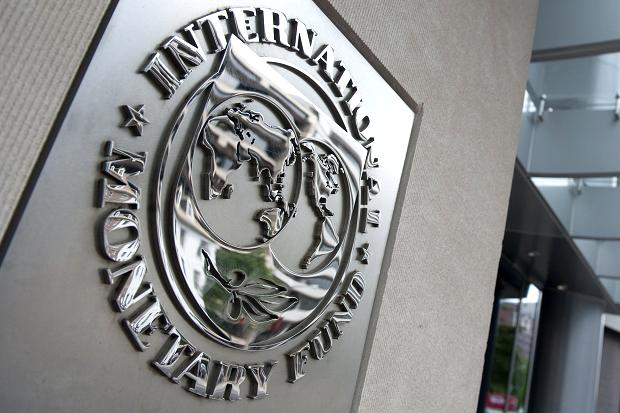
Prime Minister Dickon Mitchell is objecting to the International Monetary Fund (IMF) recommendation following its latest Article IV consultation, that Grenada should establish a more coherent and transparent framework for managing Citizenship by Investment (CBI) revenues, as this would strengthen budget and investment planning.
“Given the volatility in CBI revenues, a rules-based mechanism should be put in place that allows for annual transfers from the NTF to the budget. This would reduce uncertainty over budget revenue and guide the degree to which CBI inflows should be saved or used to finance fiscal spending,” said the statement.
“Applying the primary balance rule to a definition that is based on the NTF transfer (rather than the CBI inflow) would provide for a more predictable annual budget constraint. All NTF assets should be externally managed under a clearly specified investment policy and subject to a strong transparency and accountability framework, with operationalisation of regular financial reporting on the size, asset allocation and performance of the NTF,” the statement recommended.
“I objected to that statement and I still object to it. However, it is the IMF statement and they are entitled to say whatever they want,” Prime Minister Mitchell said during an interview with the Bubb Report — a weekly Sunday talk show produced and hosted by Dr Kellon Bubb, a Grenadian communications expert residing in the USA.
Released on 20 June, the preliminary findings of the consultation which occurred from 5–14 June, recommended several changes aimed at Strengthening Public Finances; Advancing Structural Reforms to Boost Growth and Resilience and Addressing Financial Sector Vulnerabilities.
Prime Minister Mitchell told the programme that the IMF’s recommendation for transparency has to do with the budgeting process and how the Ministry of Finance is accounting for the revenue earned through CBI. Over 2-year period of 2022 to 2023, Grenada earned revenue of EC$531.4 million through the CBI programme.
“When we formed the government, CBI revenues were being recorded in some instances as grants, and my position is that it is not a grant, no external partner is giving us a gift. This is essentially Government of Grenada revenues specifically attributed to the CBI programme,” said the Prime Minister who served as Finance Minister up to 31 March 2023. “The prior administration used to be recording the funds as grants. We do not record it as grants, I certainly don’t think it is a grant nor a gift from anybody. It’s an investment that is being made into the country either as in the fees we earn from the real estate projects in the direct investment, or in the person who wishes to become a citizen of the country,” he said.
Sharing his views about the suggestion, the Prime Minister said that questions were raised as to whether or not the balances of funds from previous years should be published, as opposed to showing the current balance.
“I thinks those are some of the issues they are speaking about, as to how the funds are treated but unfortunately, words like transparency in the literal sense means to see through, and when you use some of the these words in the context of economic management, it sometimes gives the impression that someone is hiding something or so, and that is why I objected to the use of the word, because of the connotation that it normally has in the context of politics,” said the Prime Minister, who is an attorney.
“Our view is that we may have a difference of opinion from them to how we record and treat those funds. For instance, should the budgetary and management system reflect the current state of the financing that comes from CBI or whether it includes for example all the previous years, and what are the balances that you are holding over from those accounts and to ensure that it is added to the current situation,” he added. “These are really what I will call technical financial different perspectives or views as to how those things are to be treated, but at the end of the day it is a matter for Grenada, not the IMF. It is really for us to decide how we wish to categorise and treat the funds.”