






by Curlan Campbell
- MOU signed by Federation of St Kitts and Nevis, Antigua & Barbuda, the Commonwealth of Dominica and Grenada
- 4 countries have agreed to increase their minimum investment to US$200,000 starting 30 June
- Many islands relied on funds generated from CBI programmes in order to recover
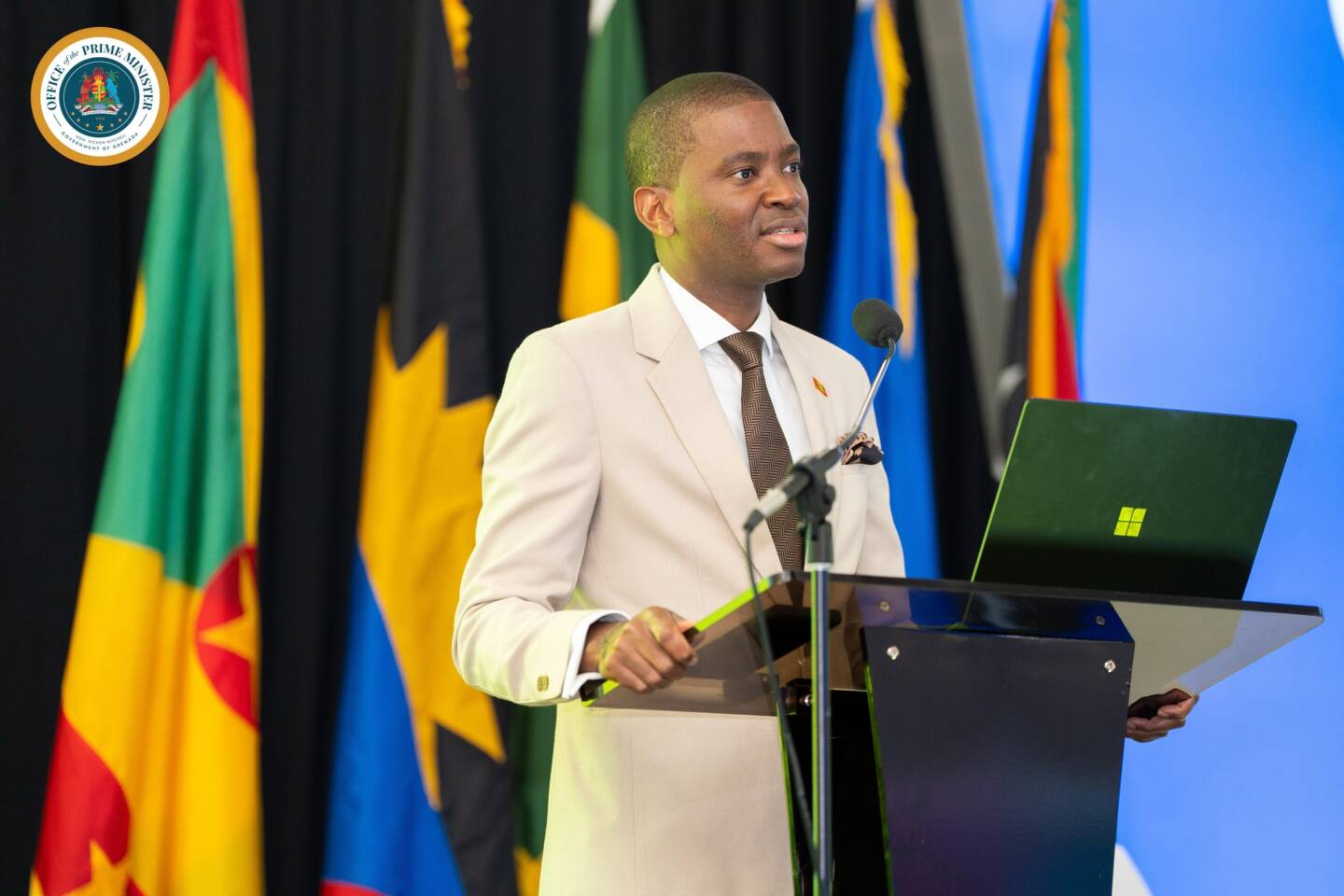
Prime Minister Dickon Mitchell expressed strong commitment to addressing any security risks associated with the country’s Citizenship By Investment (CBI) programmes. He delivered a keynote speech titled “The Future of Investment Migration” during the opening of the Caribbean Investment Summit at the Radisson Grenada Beach Resort.
The Caribbean Investment Summit (CIS24) which began on 22 May 2024, aims to promote resilience, market alignment, product innovation, and improved risk management. The summit’s theme is “Resilience: Strengthening Caribbean Investment Migration’s Adaptability and Sustainability in Response to Global Market Changes and Increased Scrutiny from the EU, UK, and USA.” The event will run until 25 May 2024.
The Prime Minister’s speech was delivered in the presence of heads of CBIs, prime ministers, global investors, and industry innovators who all gathered in Grenada for the summit. He stated that upon assuming office, extensive engagement with development partners revealed their concerns revolve around processing Russian CBI applications and the associated risks.
Last year, the EU expressed concerns about the sale of “golden passports” to 88,000 citizens from countries like Iran, Russia, and China according to a report published by the European Commission.
Caribbean Citizenship by Investment programmes, which offer visa-free travel to countries like the EU and the US, were dealt a blow when the EU proposed stricter rules in March 2024. These rules would allow the suspension of visa-free travel for nations whose citizens are typically exempt from visa requirements when visiting the Schengen area unless specific conditions are fulfilled. This measure is part of the EU’s broader plan to address migration and security challenges.
Prime Minister Mitchell stated that every effort has been made to address those concerns by strengthening CBI programme’s due diligence process. “We’ve allowed them to see the extent of our due diligence both the extensive and intensive nature of it and we’ve said to them we are happy to be transparent to share and to show you how we go about our due diligence process and that should you have any concerns with those that we are happy to address this and the dialogue is ongoing.”
He recalled the devastating impact Covid-19 had on the tourism industry, particularly in the Caribbean, which heavily relies on tourism. He stated that many of the islands had to rely on funds generated from the CBI programme in order to recover.
“The economies of islands like Barbados, Grenada, St Lucia, St Kitts, and Antigua came to a standstill due to the absence of tourism. This led to high unemployment rates and the additional challenge of ensuring rigorous sanitisation and addressing health concerns. Governments had to find ways to generate revenue to support their populations. Investment migration played a crucial role in helping these islands survive and remain resilient,” he said.
A Memorandum of Agreement (MOA) was signed with the Federation of St Kitts and Nevis to implement harmonised standards for CBI programmes in 4 of the 5 Caribbean nations offering citizenship by investment, leading to a major shakeup of operating standards. The MOA was also signed by the Prime Ministers of Antigua & Barbuda and the Commonwealth of Dominica and Grenada. A June timeline was set to implement various aspects of the MOU. As part of the agreement, the 4 countries have agreed to increase their minimum investment to US$200,000 from current US$100,000 starting 30 June.