









• Latest
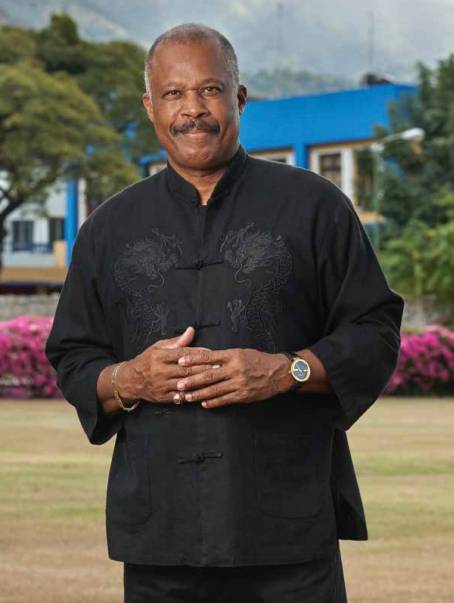
Celebrating the Centenary of Indian Emancipation

Celebrating the Centenary of Indian Emancipation

9 years ago
Mental Health ministry hosting planning retreat 7 days before Budget Day

Grenada to launch National Suicide Prevention Hotline

15 hours ago
ECCU economic industry transformation

The cost of money in the ECCU

15 hours ago
GWP-C participates in critical regional meetings in The Bahamas

GWP-C participates in critical regional meetings in The Bahamas

17 hours ago
Grenada outlines ambitious tourism agenda

Grenada outlines ambitious tourism agenda

17 hours ago
Grenada Transport Commission: Career Opportunity – CEO

Grenada Transport Commission invests in public transport sector

17 hours ago
The watchman has walked off the wall

The watchman has walked off the wall

18 hours ago
Peters shares Diamond League lead after 2nd-place finish in Rome

Peters shares Diamond League lead after 2nd-place finish in Rome

18 hours ago
Grenadian senator appointed VP Inter-American Commission for Women

Grenadian senator appointed VP Inter-American Commission for Women

2 days ago
Notice of Annual Meeting of Shareholders

Notice of Annual Meeting of Shareholders

2 days ago
Demolition of old pavilion at Beausejour Playing Field commences 4 June

Demolition of old pavilion at Beausejour Playing Field commences 4 June

2 days ago
Bonanza Stables owner alleges Government wrongly euthanised imported horses

Bonanza Stables owner alleges Government wrongly euthanised imported horses

3 days ago
Temporary suspension of services at Physical Ministry of Education location 

Temporary suspension of services at Physical Ministry of Education location 

3 days ago
NOW Grenada
  • Front Page
  • Categories
    • General News
      • All
      • Agriculture & Fisheries
      • Arts & Culture
      • Business
      • Education
      • Environment
      • Health
      • History
      • Lifestyle
      • Law
      • Politics
      • Technology
      • Travel & Tourism
      • Weather
      • Youth
    • Sports
      • All
      • Athletics
      • Cricket
      • Football
      • Watersports
    • Community
      • All
      • Tribute
    • Crime
    • Features
      • All
      • Today in History
    • Opinion/Commentary
    • Press Releases
      • All
      • Advertisements
      • Notices
  • Video
  • Notices & Vacancies
  • Advertise
  • Contact Us
No Result
View All Result
  • Front Page
  • Categories
    • General News
      • All
      • Agriculture & Fisheries
      • Arts & Culture
      • Business
      • Education
      • Environment
      • Health
      • History
      • Lifestyle
      • Law
      • Politics
      • Technology
      • Travel & Tourism
      • Weather
      • Youth
    • Sports
      • All
      • Athletics
      • Cricket
      • Football
      • Watersports
    • Community
      • All
      • Tribute
    • Crime
    • Features
      • All
      • Today in History
    • Opinion/Commentary
    • Press Releases
      • All
      • Advertisements
      • Notices
  • Video
  • Notices & Vacancies
  • Advertise
  • Contact Us
No Result
View All Result
NOW Grenada
No Result
View All Result

Celebrating the Centenary of Indian Emancipation

This story was posted 9 years ago
11 July 2017
in OPINION/COMMENTARY
4 min. read
Professor Sir Hilary Beckles, Vice-Chancellor of The University of the West Indies. Photo The UWI
0
VIEWS
Share

The UWI Vice-Chancellor, Professor Sir Hilary Beckles issues the following statement in recognition of the centenary of the abolition of the Indenture Act.

“This year the Caribbean Community is rising to celebrate the Centennial of the defeat of post-slavery Indentured Servitude and the final Emancipation of the Indian Community from labour bondage. The Abolition of Indenture Act of 1917, following the Emancipation of Slavery Act in 1838, brought to closure, the process of violent social subjugation of ancestors in the criminal plantation complex that served to enrich Europeans while unleashing hell upon Africans and Asians.

The colonial enterprise in the Caribbean had evolved through 3 distinct but interacted stages. The integration of indigenous people into the slave labour market, subsequent to their land dispossession, in short time led to a genocidal circumstance. The importation into the region of over 5 million enchained Africans over 300 hundred years; of which less than a million were accounted for when slavery ultimate ended. Finally, the importation of near 500,000 Indians under deceptive and violently enforced indenture, led to the creation of a kind of neo-slavery regime in the region that ignited in the Indians an endemic culture of resistance and rebellion.

These phases were in fact the three acts of a single play that constituted the Crime against Humanity perpetrated against oppressed and colonised persons in the Caribbean by European governments and their colonial representatives. For these crimes, the descendants of these violently oppressed ancestors are entitled to Reparatory Justice.

In order to sustain the politically discredited plantation system, the British government led the way in Europe with the importation of some 3.5 million Indentured Indians into their global empires during the decades after the defeat of chattel slavery. From Calcutta to Madras these colonised and largely displaced Indians were shipped out to the plantations while colonial investors imagined creative ways to greet them with an updated and modernised kind of slavery.

Guyana, with its enormous sugar and rice plantations, took the lion share of 238,909 while Trinidad and Tobago followed with 143,939. Every sugar planter who had lost brutal control over their enslaved Africans wanted a piece of the Indian action. Jamaica took in 36,412, St Lucia 4,350, Grenada 3,200 and St Vincent 2,472.  St Kitts, one of the oldest sugar kids on the block, not to be denied, imported 337. Finally, the Bajans, seeing no need to reach into India as their emancipated Africans remained sufficiently entrapped for sugar to be sustained, took not one.

The deception embedded in the indenture led to violent and non-violent resistance and rebellion within the Indian community. The terms and conditions of work promised in India, and the texts of Indentured contracts, varied dramatically from the reality of work and general living. Workers were commonly criminalised on estates for minor matters and forced to pay onerous penalties. Women were not spared within the brutal labour regime and, despite testimonies to the contrary, were treated equally under the plantation driver’s directions.

By 1900 it was clear to the Indian community that they had been deceived by their employers and colonial powers, and that they were subordinated under a racialised social system that was more than a labour regime. In some places, their rebellion was based on an accurate reading of the structures of oppression, and involved collaboration with the African community. In other places, they struck out alone to address their specific and peculiar circumstances. But altogether they contributed to a culture of collective mobilisation and opposition to colonialism that was long in place. In this regard, they consolidated and enhanced the broader struggle for liberation and social justice.

The colonial administrators struck back by offering them cash, land, and more humane labour terms with a view to enticing those bent on returning to India to stay. Many accepted these packages but the damage done to the credibility of indenture, and the momentum of movements of resistance, could not save the institution from a final demise. By March 1917, the Indian people had turned their backs on the indenture system, and broke the spine of the last vestige of Caribbean servitude. This development led to the forging of a collective labour struggle for decolonisation and independence in the Caribbean.

A full century has now passed. The Indian community has effectively shaken off the shackles of servitude and have joined with Africans and other ethnicities in crafting and forging a democratising Caribbean civilisation, fashioned upon the principles of plural participation and social equality.

The negative legacies of Indenture continue to be discernible in some places and still shape aspects of societal norms and national sensibilities. But the bigger, bolder spirit of freedom resides everywhere in the robust rejection of oppression. Caribbean society is thus enriched and enlightened at this centennial moment by the Diwali of multiple Indian contributions to our common civilisation. We all have good reasons to rejoice.”

Professor Sir Hilary Beckles
Vice-Chancellor, The University of the West Indies

NOW Grenada is not responsible for the opinions, statements or media content presented by contributors. In case of abuse, click here to report.
Tags: africancentenarycolonialemancipationhilary becklesindentureindianslaveryuwi

© NOW Grenada Ltd. All Rights Reserved. Terms of Use | Privacy Policy

No Result
View All Result
  • Front Page
  • Categories
    • General News
      • All
      • Agriculture & Fisheries
      • Arts & Culture
      • Business
      • Education
      • Environment
      • Health
      • History
      • Lifestyle
      • Law
      • Politics
      • Technology
      • Travel & Tourism
      • Weather
      • Youth
    • Sports
      • All
      • Athletics
      • Cricket
      • Football
      • Watersports
    • Community
      • All
      • Tribute
    • Crime
    • Features
      • All
      • Today in History
    • Opinion/Commentary
    • Press Releases
      • All
      • Advertisements
      • Notices
  • Video
  • Notices & Vacancies
  • Advertise
  • Contact Us

Copyright NOW Grenada

We are using cookies to give you the best experience on our website.

You can find out more about which cookies we are using or switch them off in . Visit our Privacy Policy | Terms of Use.

No Result
View All Result
  • Front Page
  • Categories
    • General News
      • All
      • Agriculture & Fisheries
      • Arts & Culture
      • Business
      • Education
      • Environment
      • Health
      • History
      • Lifestyle
      • Law
      • Politics
      • Technology
      • Travel & Tourism
      • Weather
      • Youth
    • Sports
      • All
      • Athletics
      • Cricket
      • Football
      • Watersports
    • Community
      • All
      • Tribute
    • Crime
    • Features
      • All
      • Today in History
    • Opinion/Commentary
    • Press Releases
      • All
      • Advertisements
      • Notices
  • Video
  • Notices & Vacancies
  • Advertise
  • Contact Us

Copyright NOW Grenada

Powered by  GDPR Cookie Compliance
Privacy Overview

This website uses cookies so that we can provide you with the best user experience possible. Cookie information is stored in your browser and performs functions such as recognising you when you return to our website and helping our team to understand which sections of the website you find most interesting and useful. Visit our Privacy Policy | Terms of Use.

Strictly Necessary Cookies

Strictly Necessary Cookie should be enabled at all times so that we can save your preferences for cookie settings.