











by Curlan Campbell
- Euthanasia decision based on legal obligations and guidance from CAHFSA
- Horses were imported without mandatory permit under Animal Disease and Importation Act
- Ministry of Agriculture’s summary of standard operating procedures to be distributed to all ports of entry
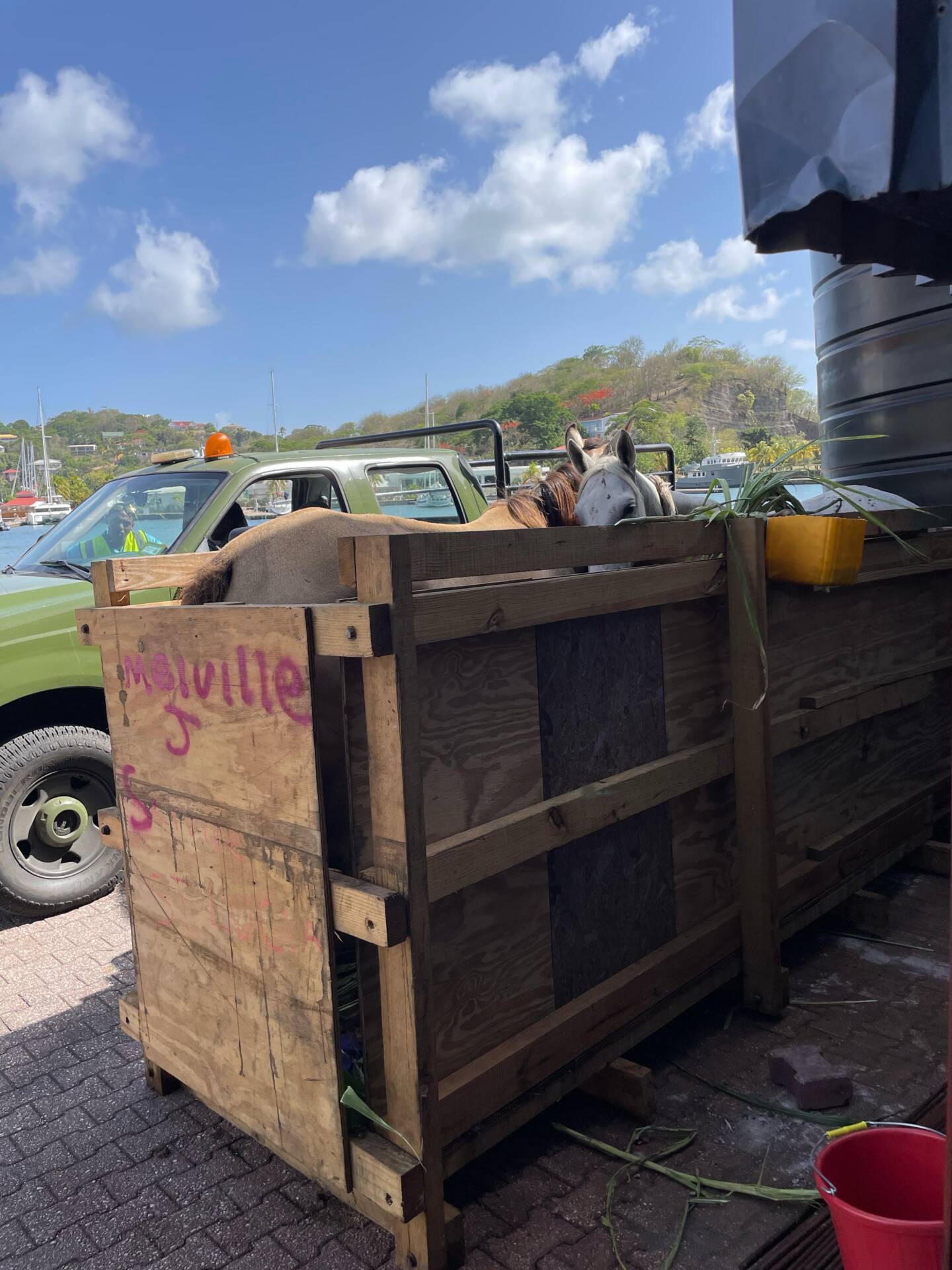
The Grenada government has initiated legal proceedings and is strengthening enforcement measures following the illegal importation of 2 disease-positive horses from St Lucia, according to Permanent Secretary in the Ministry of Agriculture Javan Williams.
Addressing concerns about the incident during a post-cabinet briefing on Wednesday, Williams emphasised that the matter is being treated seriously and that authorities intend to uphold the country’s animal health laws. “Let me first say that this matter will not be treated lightly. The ministry will take actions according to the law, so we can establish the expected standard that the law tries to put in place.”
As part of the government’s response, the Ministry of Agriculture has already prepared a summary of standard operating procedures that will be distributed to all ports of entry, including airports and seaports. The initiative is intended to ensure that stakeholders are familiar with the legal requirements governing the importation of animals and animal products.
Williams also announced a public education campaign aimed at increasing awareness of the procedures and regulations surrounding animal imports. “We are going to be doing some PR processes on steps and stages that deal with animals and animal products, so we’d have a series of actions coming forward to sensitise the public.”
On the issue of possible criminal charges, Williams confirmed that the matter has been formally referred to law enforcement authorities. “We have already written to the Commissioner of Police, we have laid a report in the CID department, a complete report has been laid.”
According to Williams, police are reviewing the evidence to determine whether charges can be brought under Section 20 of the relevant legislation. “If they are satisfied that they have sufficient information to lay charges according to Section 20 of the act,” he said, “legal action will proceed.”
Williams further revealed that the individual involved has already been notified of the government’s intentions. “The offender was formally notified that the government intends to press charges.”
The Permanent Secretary also clarified that discussions regarding an import permit had taken place between the individual and veterinary authorities. However, he noted that applying for a permit does not guarantee approval, as regulatory requirements must first be satisfied.
“When you apply for an input permit based on regulation three, you will check that going to regulation four, there is some processes that must satisfy the issuance of the permit,” Williams explained.
He added that veterinary authorities in Grenada and St Lucia had been engaged in ongoing discussions before reaching a final decision. Although St Lucia has treatment protocols in place for equine babesiosis, Williams said Grenada lacks the infrastructure required to safely manage infected animals.
“We have no regimen, no protocol in place within it, so we are not prepared, we are not capacitated to handle it,” he said.
Williams maintained that the decision to block the movement of the horses was made jointly by authorities in both countries. “That is why the decision was taken through St Lucia and Grenada to not allow the horses to be exported, and we did not allow the horses to be imported.”
The government has maintained that its actions were necessary to protect Grenada’s livestock sector and prevent the introduction of a disease not currently present in the country. Meanwhile, the Ministry of Agriculture has defended the euthanasia and incineration of the 2 horses illegally brought from St Lucia, describing the action as a necessary biosecurity measure to protect the country’s livestock sector from a potentially devastating animal disease.
In a public statement, Chief Veterinary Officer Dr Daniel Johnson said the horses were imported without the mandatory permit required under Grenada’s Animal Disease and Importation Act, making the attempted entry unlawful from the outset.
Compounding the violation, official veterinary documentation from St Lucia confirmed that both animals tested positive for Babesia species, the parasite responsible for equine babesiosis, a tick-borne disease that affects horses and other equines. The release stated that Grenada is currently free of the disease and maintains a strict policy prohibiting the importation of infected animals.
Authorities said the country lacks the specialised quarantine facilities, medications and treatment resources necessary to safely isolate and manage Babesia-positive horses. Efforts to identify local partners capable of providing quarantine or treatment were unsuccessful.
As a result, veterinary officials denied the animals entry and, after determining that returning them to the exporting country was not feasible, ordered their humane euthanasia and immediate incineration under official supervision.
The ministry said that the decision was based on legal obligations and internationally accepted animal health standards, including guidance from the Caribbean Animal Health and Food Safety Agency (CAHFSA). Officials warned that introducing equine babesiosis could have led to infection of local horses, long-term establishment of the disease, increased veterinary costs, and possible restrictions on regional and international animal trade.
The government stressed that the matter is not political but a technical animal-health issue. According to the ministry, the actions taken were intended solely to safeguard Grenada’s disease-free status and protect the economic viability of the nation’s livestock industry.