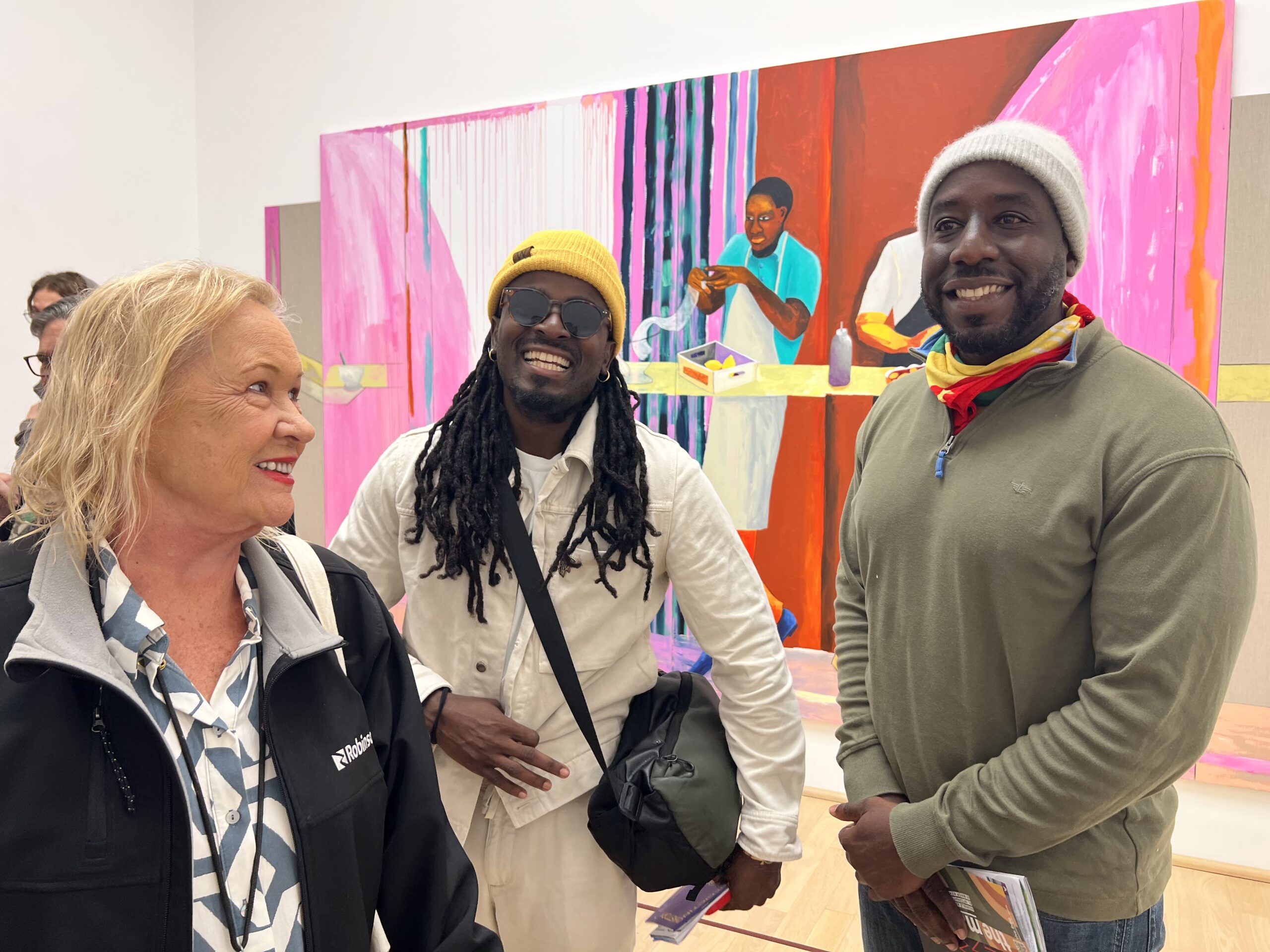






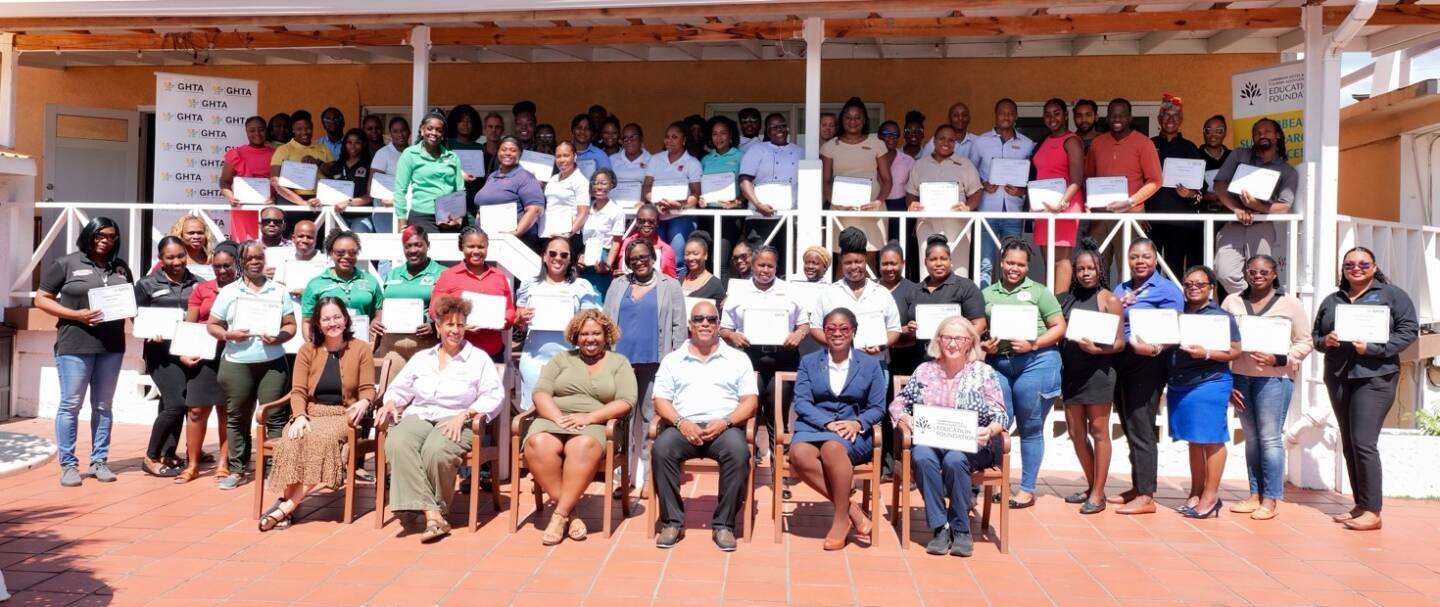





On Day 2, of the over 25 national pavilions present in the Giardini of La Biennale d’Arte di Venezia that the Grenada delegation visited, the national pavilions of Great Britain, Germany, France and Japan provided our group with much thought and conversation.
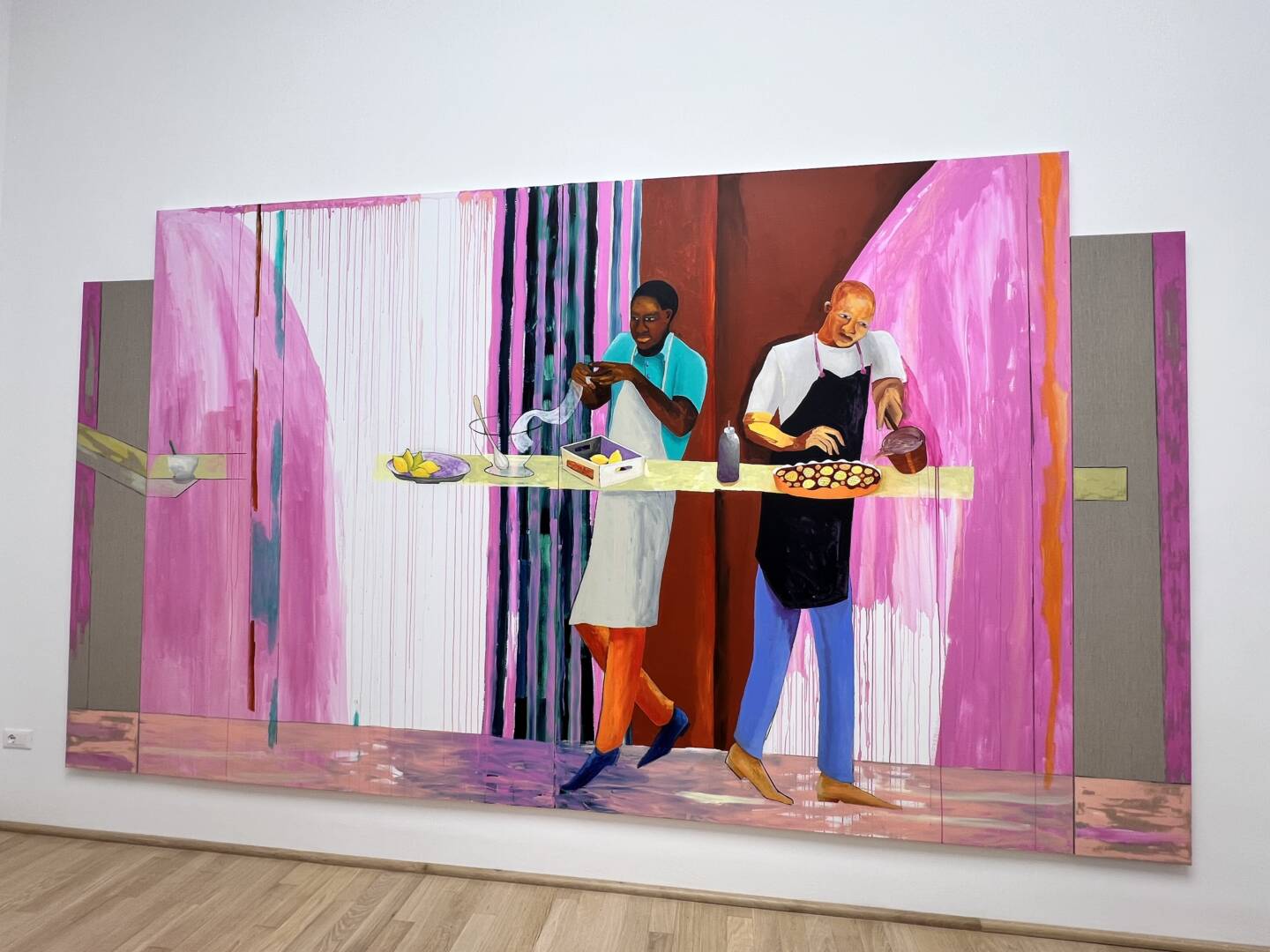
Lubaina Himid, CBE RA, offered brilliantly hued, oversized multi-panel paintings which commanded the rooms of the Great Britain pavilion. Works such as Boatbuilders, Gardeners and Chefs resonated strongly, as we shared our personal experiences engaging with the works, elevating the labour of ordinary people and asserting it as both sacred and deserving of public attention.
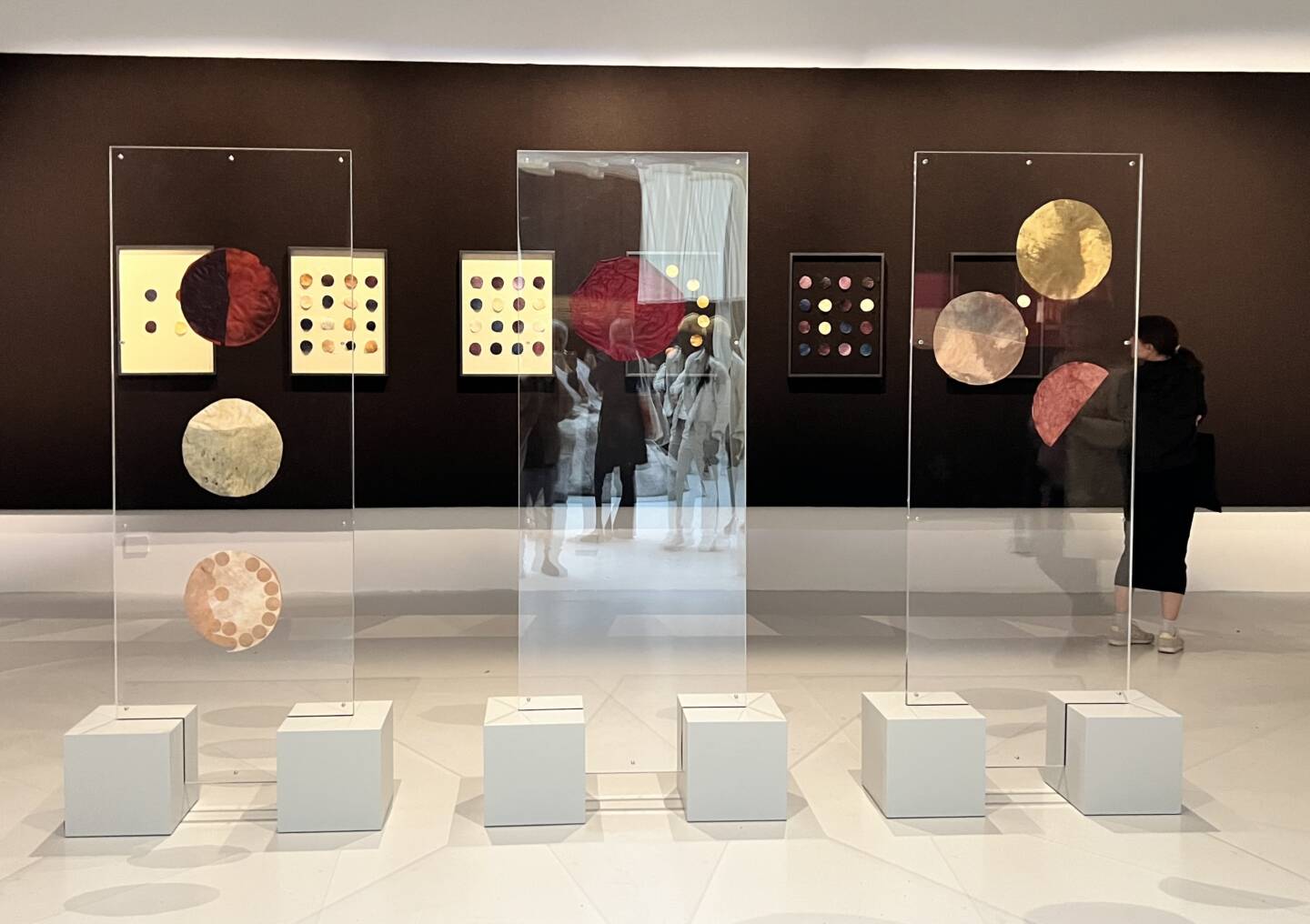
Yto Barrada’s Comme Saturne at the French Pavilion drew on the imagery and mythology of Saturn, the Roman god and planet. In Melancholy Room, Barrada presented a striking celestial arrangement of colour across circular fragments of silk, goat-skin leather, and fabric, materials aged, removed, and reborn. While the installation referenced melancholy as paralysis and creative genius, the room radiated energy and invention, producing an atmosphere that was anything but mournful.
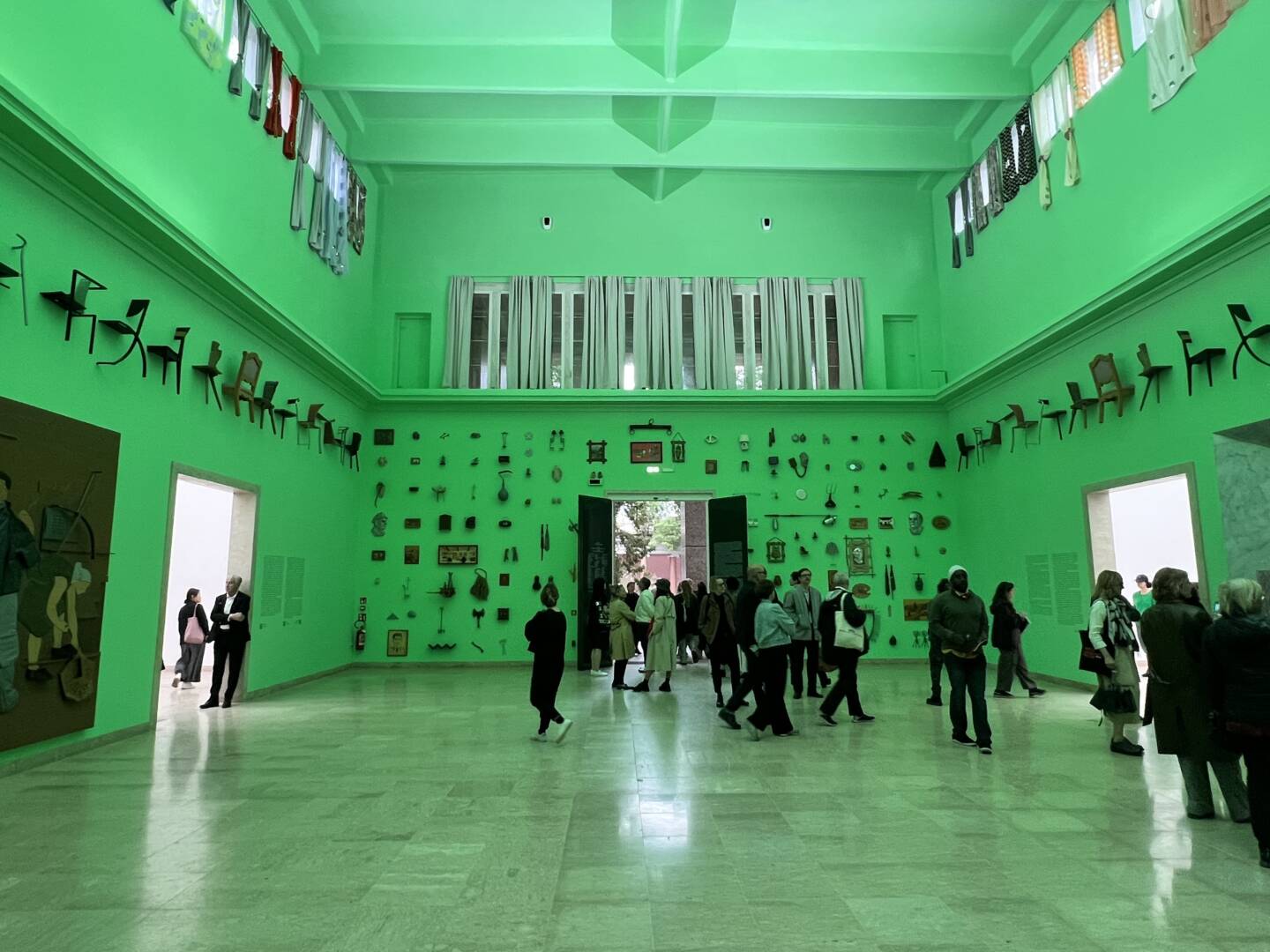
Germany’s pavilion, Ruin, featured a compelling multipart installation by Henrike Naumann that drew on the stark visual language of former Soviet Army barracks in East Germany, exaggerating their distinctive mint-green interiors. Naumann’s cut-chair formations evoked echoes of Grenadian petroglyphs, while damaged curtains and walls layered with everyday objects transformed the pavilion into an unconventional museum of lived experience. The installation read as a text of ordinary life, examining how people endure and adapt amid social and political change. Particularly striking was the upholstered mural depicting everyday workers — a contemporary reinterpretation of a 1960 mural created by the artist’s grandfather.
Ei Arakawa-Nash’s Grass Babies, Moon Babies in the Japanese pavilion, proved to be among the most memorable presentations. The installation featured dozens of baby dolls dressed in garments hand-sewn by the artist’s mother and her friends, sprawling throughout and beyond the pavilion space. Visitors were encouraged to hold, carry and interact with the dolls, creating an atmosphere of tenderness and communal care. At first glance, the work evoked familial warmth and parental empathy, but that sense of comfort was unsettled by a hidden detail: beneath each diaper was a QR code linking to a poem written for a baby as a gift for the future. The discovery transformed the installation from playful intimacy into something more haunting and reflective.
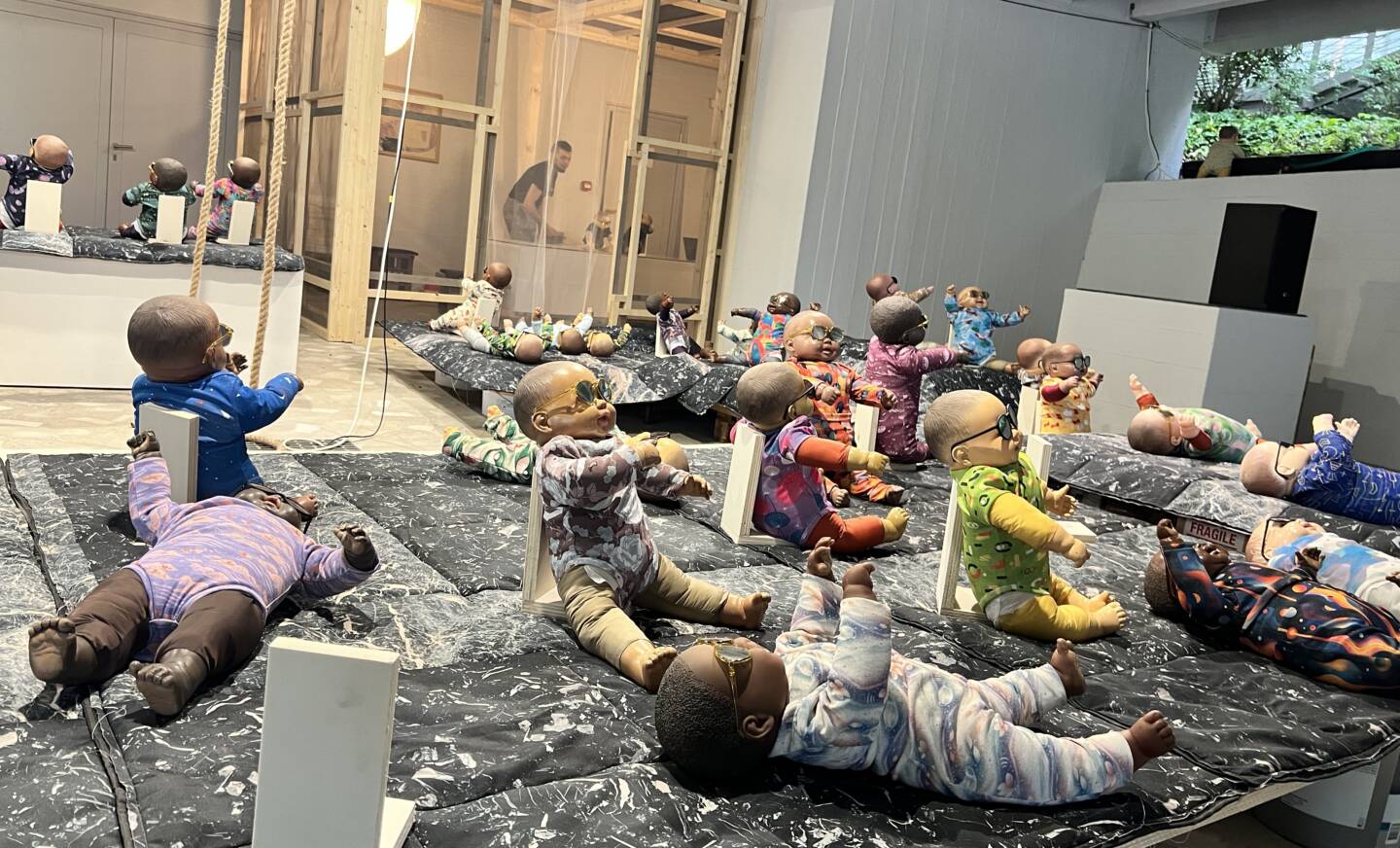
For the Grenada delegation, the experience of the contemporary practice moving fluidly between history, memory, labour, family and social transformation sparked lively discussion about how art can preserve overlooked narratives, challenge accepted histories and create unexpected emotional connections. Ordinary materials and everyday experiences were elevated into powerful reflections on humanity, reminding us that contemporary art is often at its strongest when it invites both personal reflection and collective conversation.

So much more to see while we anticipate opening the Grenada Pavilion this Friday at La Biennale d’Arte di Venezia.
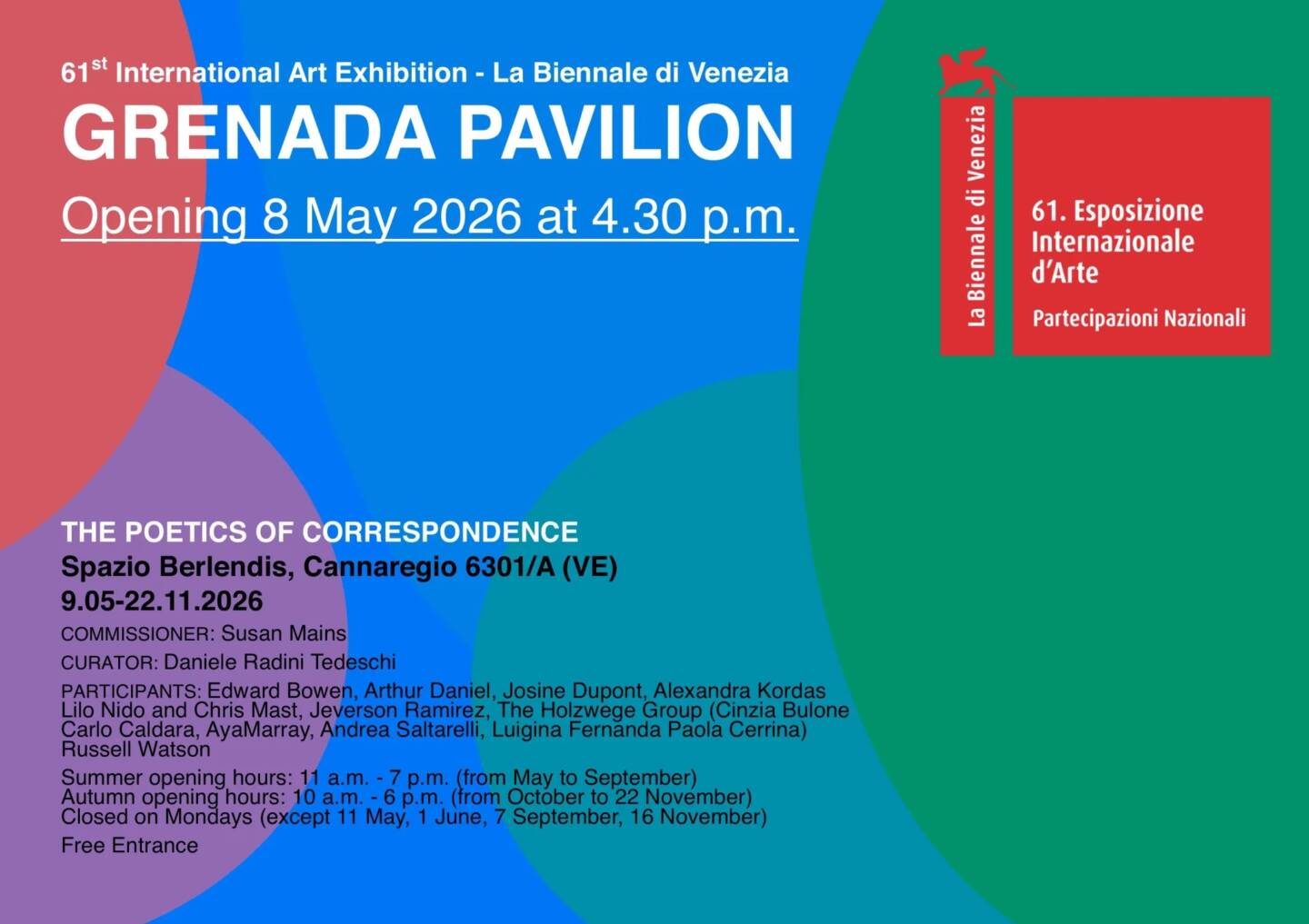
Grenada Pavilion









My main issue: What is the objective and theme of the Grenada exhibition? It would be useful to understand that . . . .